Filter Results
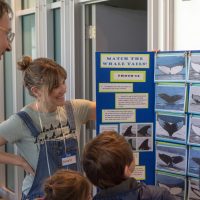
Join the SAFS community for the SEAS 2021 Open House, May 19–22! This year’s free virtual Open House offers four days of family-friendly activities to safely celebrate science and research that relates to water.
Read more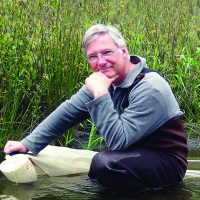
When Jeff Cordell was around nine years old, he decided that he wanted to be a marine biologist. Growing up near Puget Sound, he spent many summer and weekend days at the beach and in the water, collecting and identifying all kinds of invertebrates. Later, as an undergraduate at Huxley College of Environmental Studies, Jeff worked in a lab, sorting and identifying biota from Puget Sound beaches; he also spent three summers working in the Arctic, collecting invertebrates before oil drilling commenced there.
Read more
Up until last March, the classrooms, labs, offices, and even the hallways and lobbies of the Fishery Sciences and Fisheries Teaching and Research buildings were bustling with the regular activities of a vibrant academic unit. During this past year, however, our daily routines have changed dramatically; our days now consist of Zoom calls and juggling an increasingly stressful workp-life balance at home. Amidst all of these changes, building coordinator Jon Wittouck’s role has become even more vital. Jon, along with co-worker Jason Ching, is still coming to campus nearly every day, working behind the scenes to ensure that the SAFS facilities are safely maintained and operations are running smoothly for critical employees.
Read more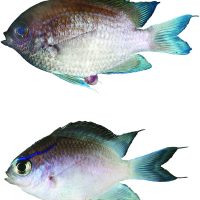
Capstone research projects provide an exciting opportunity for students to put classroom learning into practice—and sometimes even publish their work. These senior projects are the culmination of the undergraduate experience here at SAFS.
Emily McFarland (BS 2020) published her capstone, “A new species of Chromis damselfish from the tropical western Atlantic (Teleostei, Pomacentridae),” this past December. The new species—Chromis vanbebberae —was revealed through phylogenetic analyses to be distinct from Chromis enchrysurus, commonly known as the Yellowtail Reeffish.
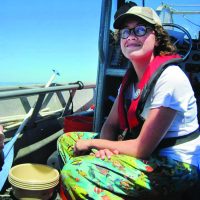
Each year, our students, faculty, and staff win regional, national, and international awards. Please join us in congratulating this year’s group of award winners!
Read more
In the midst of a pandemic, civil unrest after a democratic election, and their interconnections to our work, education, and relationships at SAFS, many in the SAFS community are pondering our roles in advancing diversity, equity, inclusion, and justice (DEIJ). These are immensely challenging tasks, which for some may invoke a state of paralysis or exhaustion, and for others a call to action. The SAFS Equity & Inclusion (EI) Committee, which has recently been raised to the status of an official school committee, strives to play a part in making SAFS a welcoming place, where people work together as a diverse and inclusive community.
Read moreThree SAFS researchers have become principal investigators on two of the School’s long-term projects. Although new to their positions, they are not new to SAFS. Rebecca Buchanan and Jennifer Gosselin are the recently appointed PIs at Columbia Basin Research (CBR). Both came to CBR after earning doctoral degrees (Rebecca 2005; Jennifer 2015) and completing postdoctoral research. Jason Toft works on the Wetland Ecosystem Team (WET), where he has been a research scientist since obtaining his MS degree at SAFS in 2000.
Read more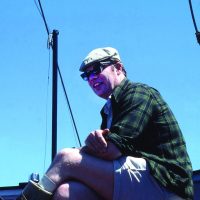
SAFS thanks the Miller family and the many faculty, students, and staff for their contributions to this memoriam. Some content was adapted from the obituary written by Craig and Catherine Miller and published in The Seattle Times on November 8, 2020.
On 31 October 2020, Bruce Stuart Miller, SAFS professor emeritus, passed away at the age of 84.
Born in Worcester, Massachusetts, Bruce was raised in Iowa City, Iowa, with his three brothers.

The Chignik Regional Aquaculture Association (CRAA) has been involved with the Fisheries Research Institute (FRI) for 40+ years. (FRI’s title changed to Alaska Salmon Program (ASP) in the late 1990s, but the old name is still commonly used in Alaska.) The funding CRAA provides helps FRI maintain important fisheries research in Chignik as well as educate future fisheries scientists.
Read more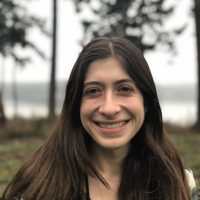
The Ecological Society of America (ESA) is honored to announce the Katherine S. McCarter Graduate Student Policy Award (GSPA) 2021 cohort. This award provides graduate students with the opportunity to receive policy and communication training before they meet lawmakers. ESA selected 23 students to receive the award including Julia L. Indivero from the University of Washington School of Aquatic and Fishery Sciences.
Read more