Filter Results
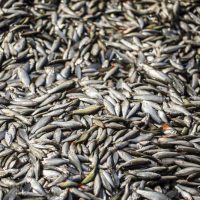
3 billion people rely on fisheries for nutrition and their livelihoods around the world. As the most traded food in the world, fish and the environments they live in are essential.
On World Fisheries Day, we take a look at the different research underway at SAFS involving both oceanic and freshwater fisheries, and explore what sustainability means for the ecosystems that support these fisheries.
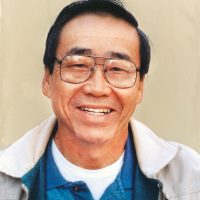
Ken was a visionary, a valued colleague, and a mentor and friend to many. His fierce advocacy for sustainable aquaculture has had considerable impacts on industry and on state, regional, and federal agencies and policies. Many of these impacts are based on the relationships that Ken developed with state and federal legislators and regulators, seemingly effortlessly. His passion for shellfish and the achievements of his research program still resonate, and his legacy is reflected in and respected by the vibrant community of shellfish researchers and shellfish growers on the west coast and elsewhere in the United States.
Read more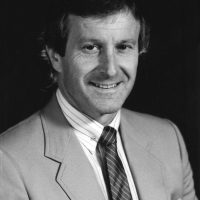
SAFS Professor and alumnus Ernest L. (Ernie) Brannon passed away in Moscow, Idaho, on March 10 after a period of declining health. He received his PhD from the UW in 1972 under the supervision of Dr. Lauren “Doc” Donaldson.
Doc had established the College of Fisheries’ experimental salmon and trout hatchery and developed a selective breeding program for salmonids. After Doc’s retirement, Ernie Brannon was hired on the teaching faculty in 1973 and also assumed leadership of the experimental hatchery.
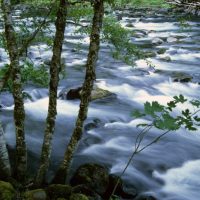
SAFS graduate student Anne Polyakov spent a summer with the UW Alaska Salmon Program studying ecosystems along three salmon streams, hoping to use the data collected to track how nutrients flow into all parts of the system — into the soil, plants and the role that fungi play in this intricate process.
Read more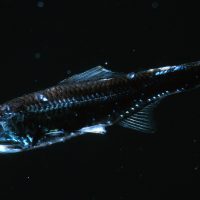
The deep sea contains more than 90% of the water in our oceans, but only about a third of all fish species. Scientists have long thought the explanation for this was intuitive — shallow ocean waters are warm and full of resources, making them a prime location for new species to evolve and thrive. But a new University of Washington study led by Elizabeth Miller reports that throughout Earth’s ancient history, there were several periods of time when many fish actually favored the cold, dark, barren waters of the deep sea.
Read more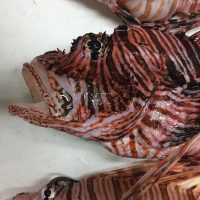
In a new documentary, Ocean Invaders, on NOVA PBS, join researchers from the UW School of Aquatic and Fishery Sciences (SAFS) as they uncover the hidden secrets of one of the world’s most invasive species: the lionfish.
Wreaking havoc on ocean reefs, one of the most popular ways of lionfish population control is spear fishing. However, lionfish have started to venture beyond the depth by which it’s possible to spear fish, presenting a new challenge.
The School of Aquatic and Fishery Sciences (SAFS) at the University of Washington seeks to fill a tenure-track position at the Assistant Professor level with specialization in the ecology of coastal marine ecosystems. The successful applicant is expected to establish a collaborative, externally funded and nationally recognized research program, and demonstrate the potential to engage with regional partners addressing coastal ecosystem conservation, restoration, and management issues.
Read more
The School of Aquatic and Fishery Sciences (SAFS) at the University of Washington-Seattle seeks to fill a tenure-track position at the Assistant Professor level with specialization in sustainable aquaculture. We aim to hire a faculty member whose empirical research studies aquaculture through a lens of food security, social or livelihood effects, environmental impacts, or climate change. Research can focus on the level of organism, species, production system, or ecosystem.
Read more
The 33rd Annual Graduate Student Symposium (GSS) will be held on Friday, November 18th, 2022, from 9am to 5pm in FSH 107, with a poster session and reception beginning at 5pm in the FSH lobby. This event is a wonderful opportunity for SAFS graduate students to share their current, past, or proposed research and get feedback from other students, faculty, and scientists.
Read more
Offered for the first time this Winter, a new course on Freshwater Ecology and Conservation – FISH 200 – will be taught by Professor Julian Olden and Professor Gordon Holtgrieve.
With hands-on experience in wet labs and field trips, get the chance to journey through the underwater world of rivers and lakes and explore the life and death of organisms in a rapidly changing planet.