Filter Results
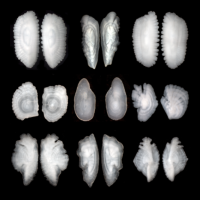
NOAA Fisheries recently featured the University of Washington’s 2.5-million-pair otolith archive, housed in the UW Fish Collection through a longstanding partnership involving the Burke Museum and the School of Aquatic and Fishery Sciences (SAFS). The story highlights the collection’s role in fisheries research and features Katherine Maslenikov, Ichthyology Collections Manager, who discusses the value of the archive for documenting fish populations and changes in ocean conditions over time.
Read more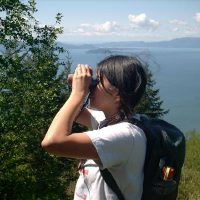
Sarah Tanja (M.S. 2026) ) and Celeste Valdivia (M.S. 2026; pictured above) were named 2026 Washington Sea Grant Hershman Fellows. The Washington Sea Grant Hershman Fellowship offers a unique educational opportunity to individuals engaged in studies pertaining to ocean and coastal policy issues.
Both Tanja and Valdivia will spend their fellowships at the University of Washington – Tacoma’s Puget Sound Institute.
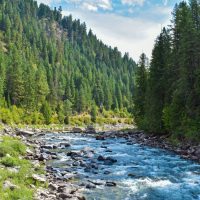
As the Trump administration moves to repeal the Roadless Rule, Dr. Julian Olden, the study’s lead author and Professor of the School of Aquatic and Fishery Sciences at University of Washington, said “it is difficult to overstate the importance of roadless areas for people and nature,” warning that weakening the rule could threaten both clean water and outdoor recreation.
Read moreThe 2026 Bevan Symposium on Sustainable Fisheries celebrated the careers and successes of recently retired NOAA Fisheries professionals. Ten individuals from around the country visited the School to reflect on their careers, their accomplishments, and the future of the fisheries in the U.S.
The symposium, in its 24th year, brings in the world’s experts to discuss their contributions to pressing topics in sustainable fisheries with faculty, students and staff.
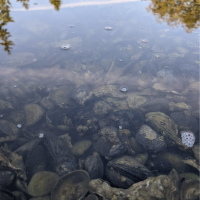
Markus Min and Stephanie Valdez were selected as recipients of the 2026 David H. Smith Conservation Research Fellowship. This is a highly competitive and prestigious award that recognizes future leaders in conservation science. Markus will advance conservation of groupers by developing A.I. image classification tools, and Stephanie will explore how Olympia oyster restoration benefits Dungeness crab.
Read more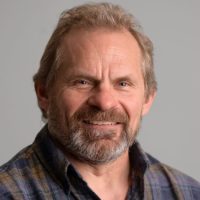
Our very own Professor Daniel Schindler was elected to the 2026 class of the American Academy of Arts and Sciences in recognition of his groundbreaking research on climate change, freshwater ecosystems and fisheries. Professor Schindler’s work has helped advance understanding of salmon habitats, watershed health and ecosystem resilience across Alaska and the Pacific Northwest.
Read more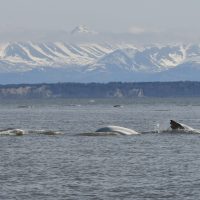
In a new study, University of Washington scientists eavesdropped on Cook Inlet belugas, recording more than 1,700 calls representing 21 different behavioral encounters. This work builds on a 2023 study showing that noise from commercial shipping, the primary industry in the region, masks common beluga calls. Although many marine mammals rely more on sound than sight, our understanding of acoustic communication among these animals is limited.
Read more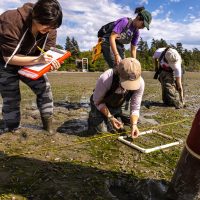
SAFS undergraduate Callie Murakami and others are featured in this month’s Viewpoint Magazine. The cover article, written by Hennelor Sudermann, details how SAFS and other UW undergraduates are learning through community engaged partnerships. Sudermann writes: “the classroom doesn’t end at the edge of campus. For students across disciplines, it extends into communities, ecosystems and partnerships across the state—places where knowledge is applied, tested and shared, and where education becomes a way to contribute to something larger.”
Read more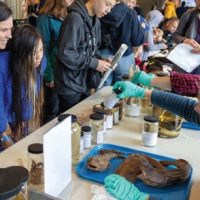
The UW Aquatic Sciences Open House is back on Saturday 16 May, offering a free and family-friendly day of hands-on learning to celebrate science and research that relates to water. Visitors can step on board a research boat used for local science, and experience real working science labs here at the university. We also have hands-on activities led by current UW students, staff, postdocs, and faculty across the College of the Environment and by organizations from the greater Seattle area.
Read more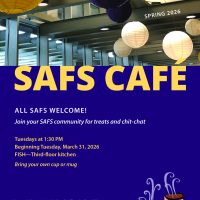
Returning on Tuesday, March 31st at 1.30pm, join your fellow SAFS community for hot drinks, tasty treats, and conversation each week during the Spring Quarter.
Are you a student? Staff member? Faculty? Researcher? Take a break from your day and get to know others working at SAFS. All are welcome!
Tuesdays at 1.30pm in the second floor kitchen area near the patio.