Filter Results
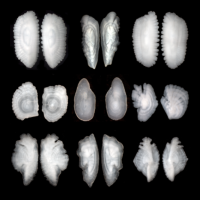
NOAA Fisheries recently featured the University of Washington’s 2.5-million-pair otolith archive, housed in the UW Fish Collection through a longstanding partnership involving the Burke Museum and the School of Aquatic and Fishery Sciences (SAFS). The story highlights the collection’s role in fisheries research and features Katherine Maslenikov, Ichthyology Collections Manager, who discusses the value of the archive for documenting fish populations and changes in ocean conditions over time.
Read more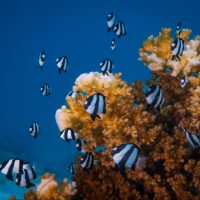
UW researchers are heading to the Maldives to study how fish communicate and respond to threats on coral reefs. The fieldwork includes our own SAFS research scientist Bob Oxborrow and will explore how fish behavior is influenced by the structure and health of their reef environment.
Read more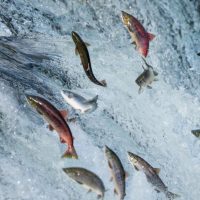
Dr. Thomas Quinn, Emeritus Professor at SAFS, offers insight into the remarkable annual migrations of Pacific Salmon, emphasizing that there is no single “salmon run,” but a series of species-specific migrations spanning the Pacific Northwest and Alaska.
Read more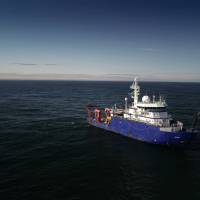
Visitors to the Anchorage Museum can explore Arctic marine science through a new exhibition featuring SAFS Professor and CICOES Director John Horne, whose work demonstrates how acoustic technology helps scientists observe life beneath the ocean surface.
Read more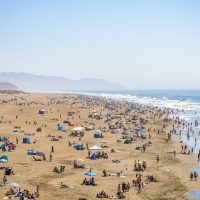
A new study co-authored by SAFS Professor Corey Garza highlights how structural barriers limit access to California’s coast and outlines pathways toward more equitable coastal management.
Read more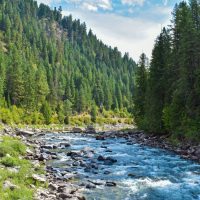
As the Trump administration moves to repeal the Roadless Rule, Dr. Julian Olden, the study’s lead author and Professor of the School of Aquatic and Fishery Sciences at University of Washington, said “it is difficult to overstate the importance of roadless areas for people and nature,” warning that weakening the rule could threaten both clean water and outdoor recreation.
Read more
Our very own Professor Daniel Schindler was elected to the 2026 class of the American Academy of Arts and Sciences in recognition of his groundbreaking research on climate change, freshwater ecosystems and fisheries. Professor Schindler’s work has helped advance understanding of salmon habitats, watershed health and ecosystem resilience across Alaska and the Pacific Northwest.
Read more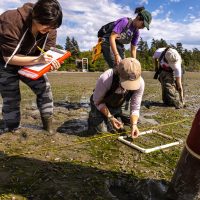
SAFS undergraduate Callie Murakami and others are featured in this month’s Viewpoint Magazine. The cover article, written by Hennelor Sudermann, details how SAFS and other UW undergraduates are learning through community engaged partnerships. Sudermann writes: “the classroom doesn’t end at the edge of campus. For students across disciplines, it extends into communities, ecosystems and partnerships across the state—places where knowledge is applied, tested and shared, and where education becomes a way to contribute to something larger.”
Read more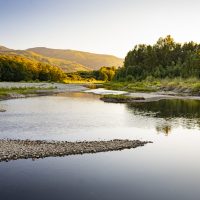
Most rivers in the United States flow with little real protection, even though they supply drinking water, support wildlife, and shape our landscapes. New research co-led by Julian Olden finds that nearly two-thirds of U.S. rivers lack safeguards for water quality, habitat, and biodiversity. The findings show how much of the nation’s river network remains exposed and how much work still lies ahead.
Read more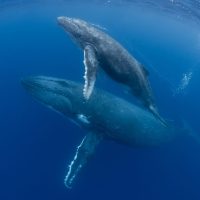
Long baleen whale mothers are more likely to have female calves than males, according to a new study led by the University of Washington. The findings, published by UW QERM student Zoe Rand and Professors Trevor Branch and Sarah Converse, contradict a popular evolutionary theory postulating that strong mammals benefit more from birthing males.
Read more