Filter Results
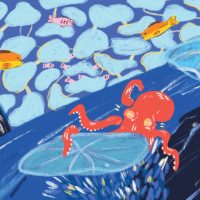
The Daily UW features the degrees offered at SAFS, which is centered on the belief that students must experience the environments and species they’re studying.
Read more
Chris Mantegna writes a Nature World View piece, saying amid the data deluge provided by lab-based techniques, such as environmental-DNA analysis, true connection still comes only in the outdoors.
Read more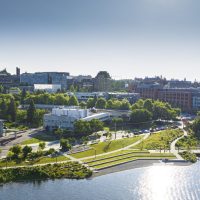
An analysis of 1,500 institutions in nearly 100 locations across the globe, places University of Washington Earth and Marine Sciences program at no. 10, which includes Aquatic and Fishery Sciences.
Read more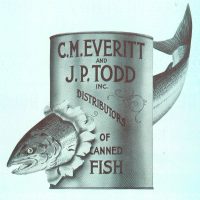
Alaskan waters are a critical fishery for salmon, and scientists want to know the impact of climate change. As a UW SAFS doctoral student, Natalie Mastick investigated Alaskan marine food webs using an unorthodox source: old cans of salmon, from four species all caught over a 42-year period.
Read more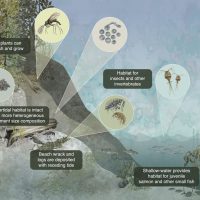
Stretching from Admiralty Inlet to the city of Olympia, Puget Sound has 1330 miles of shoreline, of which 25% is armored. In a new paper, SAFS Research Scientist Simone Des Roches, led a team studying the impact of armor removal and other restoration activities on shorelines through time in Puget Sound locations.
Read more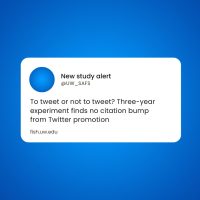
In a controlled experiment spanning three years and involving 11 scientists from a range of life science disciplines, a new study published in PLOS ONE demonstrates that sharing a paper on Twitter did not increase citations.
It has long been asserted that papers shared on social media platforms, such as X (formerly called Twitter), receive a higher number of citations. However, a team of leading science communicators, led by University of Washington School of Aquatic and Fishery Sciences Professor Trevor Branch, with a combined total of 223,000 followers at the end of the experiment, wanted to explore whether increased citations was actually caused by tweeting about them, or was a correlation due to other factors such as the quality of the paper and the importance of the information in the paper.
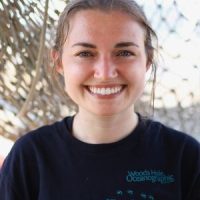
The Ecological Society of America (ESA) has announced the recipients of the 2024 Graduate Student Policy Award, for students engaged in advocacy with an interest in science policy, which includes SAFS grad Helena McMonagle.
Read more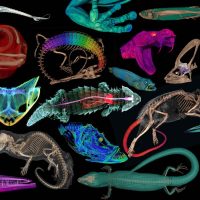
Natural history museums have entered a new stage of discovery and accessibility, where scientists around the globe and curious folks at home can access valuable museum specimens to study, learn or just be amazed, led by a team including UW scientists and the Burke Museum of Natural History & Culture.
Read more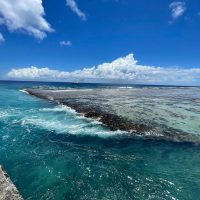
Transitioning from a SAFS research scientist to a graduate student in Fall 2023, Kat Lasdin is familiar with the world of microplastics research. As a member of Jacqueline Padilla-Gamiño’s lab, one of the projects Kat has been involved in focuses on water, sand, and microplastics in Tetiaroa, an atoll in French Polynesia. Tetiaroa is also the site of a breadth of other UW-led work, including seabirds and shark research.
Read more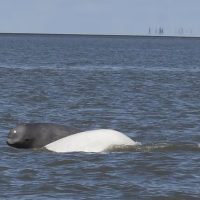
SAFS PhD student, Arial Brewer, joins the Oregon Public Broadcasting ‘Think Out Loud’ series to share her research into the impact of ship noise on Alaska’s Cook Inlet beluga whales.
Read more