Filter Results
Growing up on the shores of Lake Michigan, Ben Makhlouf, now a researcher at SAFS, started off as an Ecology undergrad at UW. Taking a limnology course during his studies, he was inspired to get involved in research in Alaska when seeing someone with an Alaska Salmon Program t-shirt on. It amazed him that people were able to visit and work there.
Read more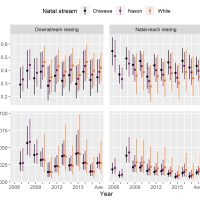
Differences in the life history pathways (LHPs) of juvenile animals are often associated with differences in demographic rates in later life stages. For migratory animals, different LHPs often result in animals from the same population occupying distinct habitats subjected to different environmental drivers.
Read more
SAFS alum Nancy Huizar exemplifies collaboration and collective action within the Seattle community, proving the environmental sciences are interconnected and in relationship to everything — population health, the strength of local democracy and education equity.
Read more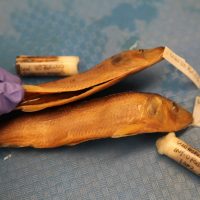
More than a century of preserved fish specimens offer a rare glimpse into long-term trends in parasite populations. New research from the University of Washington with lead author Chelesea Wood from SAFS, shows that fish parasites plummeted from 1880 to 2019, a 140-year stretch when Puget Sound — their habitat and the second largest estuary in the mainland U.S. — warmed significantly.
Read more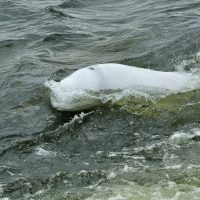
The beluga whale population in Alaska’s Cook Inlet, which connects Anchorage to the North Pacific Ocean, is listed as endangered and has declined by over 75% from about 1,300 whales in the late 1970’s to fewer than 300 today.
Understanding whether the decline is due to low birth or low survival rates, or a combination of the two, can give scientists clues about the external threats that are impacting the population.
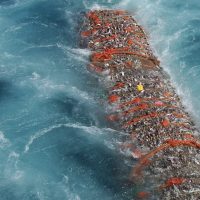
The School of Aquatic and Fishery Sciences and the College of the Environment hosted the annual live preview of the most recent assessment of Eastern Bering Sea (EBS) pollock—the target of one of the world’s largest fisheries.
Providing fishery stakeholders and the public the opportunity to learn about the status of the EBS pollock stock and discuss the science underlying the assessment, you can watch the recording of the event below.
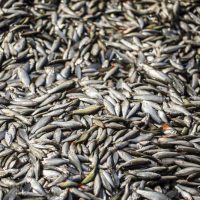
3 billion people rely on fisheries for nutrition and their livelihoods around the world. As the most traded food in the world, fish and the environments they live in are essential.
On World Fisheries Day, we take a look at the different research underway at SAFS involving both oceanic and freshwater fisheries, and explore what sustainability means for the ecosystems that support these fisheries.
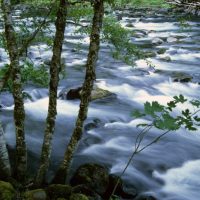
SAFS graduate student Anne Polyakov spent a summer with the UW Alaska Salmon Program studying ecosystems along three salmon streams, hoping to use the data collected to track how nutrients flow into all parts of the system — into the soil, plants and the role that fungi play in this intricate process.
Read more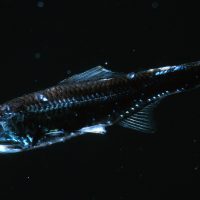
The deep sea contains more than 90% of the water in our oceans, but only about a third of all fish species. Scientists have long thought the explanation for this was intuitive — shallow ocean waters are warm and full of resources, making them a prime location for new species to evolve and thrive. But a new University of Washington study led by Elizabeth Miller reports that throughout Earth’s ancient history, there were several periods of time when many fish actually favored the cold, dark, barren waters of the deep sea.
Read more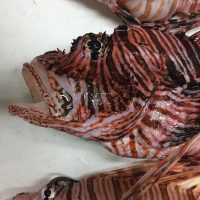
In a new documentary, Ocean Invaders, on NOVA PBS, join researchers from the UW School of Aquatic and Fishery Sciences (SAFS) as they uncover the hidden secrets of one of the world’s most invasive species: the lionfish.
Wreaking havoc on ocean reefs, one of the most popular ways of lionfish population control is spear fishing. However, lionfish have started to venture beyond the depth by which it’s possible to spear fish, presenting a new challenge.