Filter Results
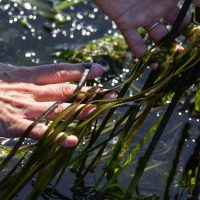
Eelgrass meadows are among the most productive and ecologically important places in Puget Sound. Already highly valued as nurseries for sea life, researchers including SAFS Affiliate Faculty, Drew Harvell, have discovered a new eelgrass superpower, as living urban systems that reduce human pathogens in seafood by as much as 65%.
Read more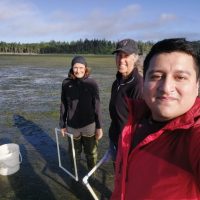
The WSG-funded research informs the future of eelgrass restoration in Washington, and the study is headed by UW Professors Kerry Naish (SAFS) and Jennifer Ruesink (Biology), as well as SAFS doctoral student Bryan Briones Ortiz. Their research first looked at the baseline genetic structure of the eelgrass population in Washington.
Read more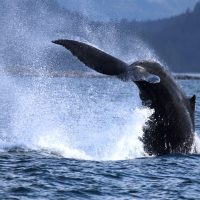
In a new study challenging conventional thinking about how populations of large baleen whales recover from whaling, researchers have revealed that populations continue increasing rapidly for a wide range of recovery levels, only slowing once approaching pre-whaling levels.
Read more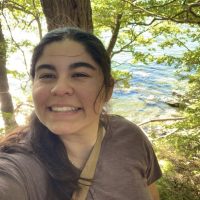
Recent graduate of the SAFS master’s program, Jezella Peraza, has been chosen as the 2024 Washington Sea Grant (WSG) Keystone Fellow. As the 2024 WSG Keystone Fellow, Jezella will work with the Seattle Aquarium on an integrated conservation effort for pinto abalone. In collaboration with Indigenous Peoples and local communities, Jezella will help shape and implement engagement strategies to support pinto abalone recovery and honor cultural connections.
Read more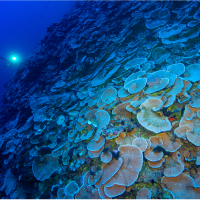
In recent years, there has been a global push to expand marine conservation efforts, but the quality of the implemented conservation network has often been neglected in favor of quantity. In a new paper published in Nature Communications, Juliette Jacquemont tackles one of the limitations of marine spatial planning by conducting the first global assessment of the 3D distribution of fishing activities and conservation coverage.
Read more
In a new episode of UW Environment’s Fieldsound podcast, they’re joined by those behind the GEODUC program, which boosts belonging in geosciences for transfer students.
Read more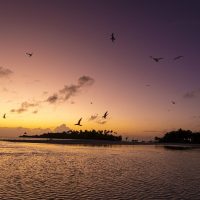
From microplastics to seabirds, and everything in between, Tetiaroa offers new insights on tropical ecosystems for UW Professors and researchers.
Read more
As part of a video series profiling the science and scientists behind some of the environment’s most unexpected research, Grist visited the Wood Lab at SAFS, to find out about Chelsea Wood’s parasite research.
Read more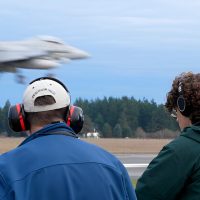
According to new research published by SAFS grad student, Giordano Jacuzzi, military aircraft noise from Naval Air Station Whidbey Island presents a substantial risk to public health.
Read more
SAFS Assistant Professor, Jessica Gephart, speaks to KUOW’s Kim Malcolm about her research and why seafood choices matter.
Read more