Filter Results
The Seattle Times Reports “Puget Sound salmon are on drugs — Prozac, Advil, Benadryl, Lipitor, even cocaine. Those drugs and dozens of others are showing up in the tissues of juvenile chinook, researchers have found, thanks to tainted wastewater discharge.”
A research team of NOAA and UW scientists, including SAFS’ professor Dr. Graham Young, have documented levels of over 80 “chemicals of emerging concern”, pharmaceuticals and personal care products in estuarine waters and in juvenile chinook salmon and Pacific staghorn sculpin at sites in south Puget Sound impacted by discharge from wastewater treatment plants.
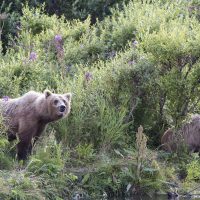
Through the School of Aquatic and Fishery Sciences, Sarah Schooler, ’15, spent six weeks in the Alaskan bush, collecting the same data in the field she’d been studying in the classroom: salmon and the hungry habits of grizzly bears.
Sarah Schooler and UW staff and students placing a fishing net on lake Aleknagik.
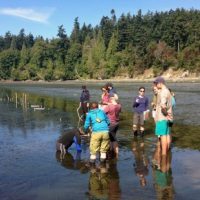
Students from around the country worked together as part of a class on the ecology of infectious marine diseases, taught by SAFS professors S. Roberts and C. Friedman, to examine how genes express themselves in sick and healthy sea stars.
Read more at UW NewsRecent SAFS alumna Susan Harris spent 10 weeks at UW’s Friday Harbor Labs on San Juan island studying zoology and botany. UW Today featured a profile on Susan’s experience.
Read more at UW TodayA warm water mass in the Pacific Ocean is impacting forage species and stirring up more conversations about the need for ecosystem-based fisheries management. SAFS Professor Tim Essington weighs in.
Read more at Nature.com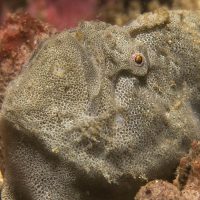
SAFS Professor Ted Pietsch and SAFS graduate student Rachel Arnold recently relocated an elusive tropical frogfish, last seen in Australia in 1980. After collecting specimens and testing the DNA, they discovered they’d found a new genus and species of fish, now named the red-fingered anglerfish.
Read more at UW TodayA new study, lead by SAFS Prof. Tim Essington and published on April 6 in the Proceedings of the National Academy of Sciences, “implicates fishing in the collapse of forage fish stocks and recommends risk-based management tools that would track a fishery’s numbers and suspend fishing when necessary.” Read the full story on UW Today.
Read moreProf. Julian Olden and SAFS research scientist Lauren Kuehne published an opinion article in the Proceedings of the National Academy of Sciences, titled Lay Summaries needed to enhance science communication. This piece promotes the requirement and publication of lay summaries with peer-reviewed research articles.
Read moreSeveral in the SAFS community have been working on a management strategy evaluation for Bristol Bay sockeye salmon. Findings were presented to the Alaska Board of Fish resulting in changes to seasonal management targets, reported by The Bristol Bay Times.
Last week the Department of Fish and Game adopted a wider range with raised upper ends for sockeye escapement goals in most Bristol Bay rivers.