Filter Results
Not all piranhas eat in the feeding frenzies that Hollywood is so fond of depicting. Instead, some species remove and eat just a few scales from their prey. As described in UW News, some of these scale-eaters ram into their unsuspecting prey, while others open their mouths to extraordinary dimensions and use specialized teeth to pry off scales. The wide variety of approaches is captured in a new paper that placed these fish in CT scanners, as part of the Scan All Fish program led by SAFS professor Adam Summers.
Read moreNaturalist Charles Plumier’s work has been resurrected by SAFS Professor Ted Pietsch in a new book Charles Plumier and His Drawings of French Caribbean Fishes. Plumier lived in the era just before Linneaus created his Latin naming system for species names, and as a result, none of Plumier’s detailed painting and descriptions of species were given priority. Prof Pietsch talks in detail about the inspiration for his book with Michelle Ma in an interview posted on UW Today.
Read moreA new study shows that dams can be designed to benefit native fish, instead of only harming them. Eighteen years of data were collected about river flow, native fish species, and nonnative fish species in a large dryland river basin in the southwestern US, and then analysed to find the best patterns of water release for native fish species. Remarkably, releasing water from the dams in a designer pattern could produce benefits for native fish species that are even greater than the benefits of mimicking natural river flow patterns.
Read moreThe University of Washington’s Ichthyology Collection hosted the Girls in Science program in April and May 2017, teaching 16 girls the process involved in formally describing a new fish species. Jalene Weatherholt, Sarah Yerrace and Katherine Maslenikov showed the group how to measure, illustrate and compare features of their fish to those of other related fishes to see if they were different.
Read moreThe U.S. is weighing changes to the main act that governs U.S. federal fisheries in the planned reauthorization of the Magnuson-Stevens Fishery Conservation and Management Act. Fisheries science was the focus of the fourth meeting by the Senate subcommittee on this action, and SAFS Prof. Ray Hilborn was invited to testify, pointing out that U.S. fisheries are largely successful, with most overfished stocks now rebuilding, and overall fish biomass increasing in the U.S.
Read moreTo celebrate International Open Access Week, the University of Washington Libraries posted profiles and interviews with two SAFS faculty, Julia Parrish and Steven Roberts, about how they conduct their research openly. The interview with Julia Parrish focuses on her citizen science work, which involves trained members of the public identifying and pinpointing the locations of more than 10,000 dead birds on the Pacific coast each year, and making the data available openly as well as in scientific publications.
Read moreA front page investigative CNN article outlines how the Environmental Protection Agency reversed a decision to protect the most valuable salmon fishery in the world, giving the go-ahead for the Pebble Mine, one hour after the head met with the CEO of the Pebble Mine partnership. SAFS professor Thomas Quinn comments in the report: “This is the jewel in the crown of America’s fisheries resources – these salmon.
Read moreScience magazine reports that faculty members Luke Tournabene and Adam Summers have a new mission in life: CT scanning all the vertebrates in the world, with fish and frogs well on their way. All the scans will be made freely available for researchers to have access to unprecedented 3-D images of the skeletal structure of 80% of all vertebrates.
A CT scan of a pirañha (Serrasalmus medinai), picture by Adam Summers and Matthew Kolman
Read more
Ray Hilborn, UW professor of aquatic and fishery sciences, will receive the 2016 International Fisheries Science Prize this week at the World Fisheries Congress in Busan, South Korea.
Read more at UW Today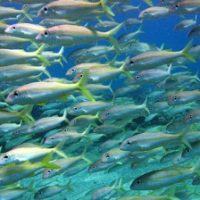
“If reforms were implemented today, three-quarters of exploited fisheries worldwide could reach population goals within 10 years, and 98 percent by mid-century,” according to a report in PNAS co-authored by SAFS Professors Ray Hilborn, Trevor Branch, and Research Scientist Mike Melnychuk.
See full story by Michelle Ma in UW Today.