Filter Results
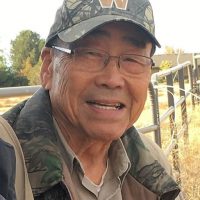
SAFS Professor Emeritus Kenneth Chew passed away peacefully on September 24, 2022 in Seattle, WA at Swedish First Hill with his wife Meagan by his side and surrounded by his loving family. Ken was nationally and internationally recognized as an authority on the biology of shellfish and aquaculture.
Read more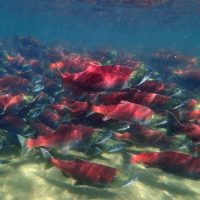
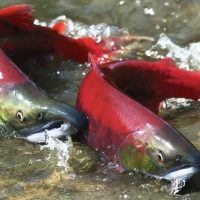
This year, more than 78 million sockeye salmon returned to the estuaries of Western Alaska, a record high and a stark contrast with most salmon populations elsewhere as urban infrastructure and rising water temperatures threaten numerous species. University of Washington professor Daniel Schindler told Soundside that sockeye salmon have been climate change winners in recent years, but the exact reason why remains unclear.
Read more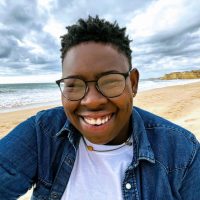
Washington Sea Grant announces that Ashley Townes, who is completing her doctorate in fisheries ecology at SAFS, has been selected as the 2022–2023 WSG Keystone Fellow.
Read moreStarting back up on Thursday 29 September at 4pm, join us in-person for the first of the 2022 Autumn Seminar Series, where we take a deep dive with experts into topics of interest in aquatic and fishery sciences.
The first seminar will be delivered by Professor Thomas Quinn on ‘Changing themes in salmon conservation: A 45-year personal perspective’.
With speakers joining us from academia and governmental and non-governmental agencies and organizations, the weekly seminars will be followed by a catered reception from 5-6pm.
Read more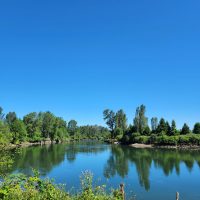
From the Pacific Northwest and Alaska to further afield, rivers are one of the aquatic environments where UW School of Aquatic and Fisheries Science (SAFS) researchers are actively working to ensure a healthy, sustainable ecosystem for the future.
On World Rivers Day – an international celebration and awareness day for the world’s waterways – we are highlighting some of the extensive research underway at SAFS and through partnerships with different institutions.
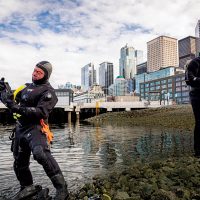
Along the seawall, which was designed with the help of UW scientists and engineers and serves as the foundation for the city’s new waterfront, the researchers count herring, shiner perch, sand lance, a growing host of invertebrates and, most importantly, salmon. All kinds of salmon.
This is just one place where the UW’s expertise touches on Seattle’s new central waterfront project, an $835 million public-private effort to reconnect the city’s downtown with Puget Sound.
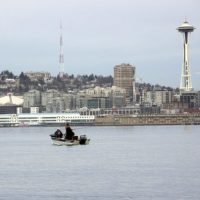
Few people would consider launching a boat into Seattle’s Elliott Bay on a winter morning. It’s cold, dark, and more often than not, wet. But the steadfast members of Seattle’s Tengu Club, a Japanese American fishing club that held its first annual salmon derby in 1946, can reliably be found doing just that.
When he first read about the Tengu Derby in the Seattle Times over a decade ago, UW School of Aquatic and Fishery Sciences (SAFS) Professor Thomas Quinn’s interest was piqued.
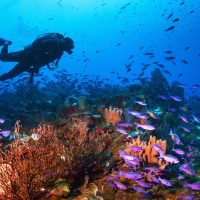
Coral reefs can adapt to climate change if given the chance to evolve, according to a study led by Coral Reef Alliance, Rutgers University, the University of Washington and other institutions.
The recent study, published in the journal Nature Ecology and Evolution, finds that coral reefs can evolve and adapt to the effects of climate change—but only if we protect a sufficient diversity of coral reefs, particularly when it comes to temperatures.
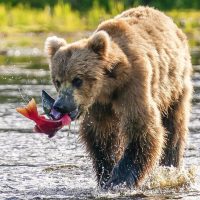
In mid-July, sockeye poured into this stream, skittering through the shallows balanced on their bellies as their backs thrust out of the water.
These fish were part of a record surge of more than 78.3 million salmon that returned this summer to Bristol Bay, providing a mainstay harvest for thousands of fishermen from Alaska, Washington and other states. This spectacular display of abundance in the northern realm of sockeye came during a warming century when some wild salmon runs often have struggled.
Most people wouldn’t be excited by a call offering a basement full of canned salmon dating back to the 1970s. But for researchers trying to establish baselines for what’s normal and what’s not when it comes to aquatic parasite populations, the archive of fishy tins, maintained by the Seattle-area Seafood Products Association, was a valuable resource. Natalie Mastick, a PhD candidate in the University of Washington’s School of Aquatic and Fishery Sciences, joins guest host Roxanne Khamsi to explain the study.
Read more