Filter Results

The University of Washington School of Aquatic & Fishery Sciences is hiring a Diversity Specialist – this temporary position will be 9 months at 50% FTE, including benefits, and will report to the Manager of Student Services & Diversity. The SAFS Diversity Specialist will fill a key role in the School’s ongoing efforts to become an equitable, inclusive, and welcoming academic and professional institution for students, staff, faculty, and colleagues.
Read more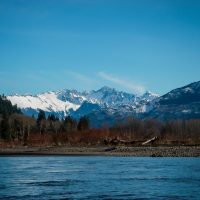
Last quarter we explored SAFS’ vast research network throughout the world’s arctic, subarctic, and tropical regions. We now bring the focus back to Washington State and the fascinating science coming from our own backyard. Delve into some research highlights from our faculty, staff, and students with an interactive map taking you on a virtual tour all around our state.
Read more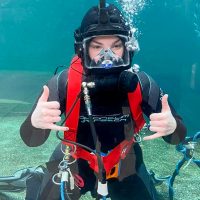
Less than two months after taking my last final exam as a SAFS undergrad, I packed two small duffel bags and left Washington. I flew across the country to Charleston, South Carolina, to start a dive internship with the South Carolina Aquarium.
Read more
John Connelly, the President of NFI since 2003, has helped oversee the organization’s generosity to SAFS. Read a digital conversation between John and Danna Bowers (Advancement, College of the Environment).
Read more
Drs. Usha and S. Rao Varanasi are longtime supporters of SAFS and also benefactors to many other academic units across the UW. Usha chatted with Andrew Storms (Advancement, College of the Environment) about her and Rao’s commitment to the education of students at SAFS and the UW.
Read more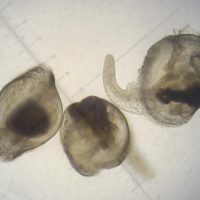
Pacific geoducks, among the largest burrowing clams in the world, are native to the Pacific Northwest. Commercially grown only since 1995, farmed geoducks now generate over $20 million in annual sales in Washington State and are among the most valuable farmed shellfish on a per-acre basis. However, hatcheries can be a critical production bottleneck.
Read more
Each year, our students, faculty, and staff win regional, national, and international awards. Please join us in congratulating this year’s group of award winners!
Read more
As many have adjusted their lives in the midst of a pandemic and during this marked time of social unrest, SAFS is recommitting itself to better connect and support its own community for a true sense of belonging and for welcoming diverse perspectives, skills, and experiences. At SAFS, a Diversity Specialist, a strategic plan, and the Equity & Inclusion Committee are engaged in efforts to help advance diversity, equity, and inclusion (DEI) initiatives.
Read more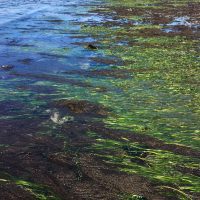
In the Pacific Northwest, eelgrass serves an important function in the ecosystem by binding sediments, storing carbon, and providing essential habitat for Pacific herring, juvenile salmon, and many other species. Concerningly, eelgrass populations are susceptible to human impacts related to water quality changes or direct disturbance. Eelgrass mitigation and restoration strategies often result in plants being transplanted to new locations where eelgrass may already be present. However, these efforts often lack information on the genetic population structure in an ever-changing environment. A team of interdisciplinary researchers at the University of Washington is developing baseline data for native eelgrass to make the first comprehensive geographic map of state eelgrass population structure and describe the relationship between eelgrass population structure, phenotypic diversity, and local adaptation and resistance to environmental stressors.
Read more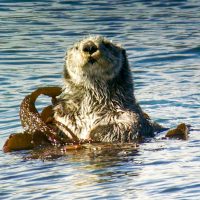
Learn how SAFS PhD student Jessie Hale examines patterns in sea otter feeding over time and space along the Washington coast.
Read more