Filter Results
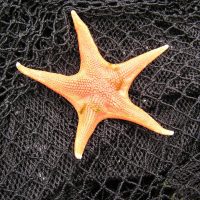
Since 1991, students and faculty at UW’s School of Aquatic and Fishery Sciences have conducted bottom trawl surveys in Port Madison through the School’s Fisheries Ecology course, creating an experiential learning opportunity for students and collecting valuable long-term data on physical and ecological change at a subtidal site in Puget Sound. Fortuitously, this long-term sampling gave students the data needed to investigate an unprecedented mass mortality event.
Read more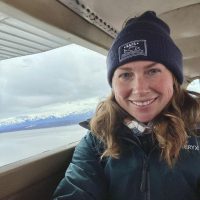
Our latest student feature highlighting the use of the FINS award is with Arial Brewer, PhD student in the Berdahl and Van Cise labs.
With the FINS award, I was able to use it for two different purposes – one involving presenting my research at a conference, and the other conducting fieldwork in Alaska.
In Spring 2023, I traveled to Olympia, WA and presented my research at The Wildlife Society conference in Olympia.
Read more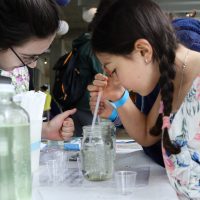
Another year, another fantastic day of bringing science to life at the UW Aquatic Sciences Open House. Featuring 30 booths, each with an interactive activity dedicated to specific research underway in the world of water, this year’s Open House welcomed more than 600 visitors.
Making aquatic science accessible to all is one of the driving forces behind the Open House. The event is hosted by the School of Aquatic and Fishery Sciences, which sits on the south campus of the University of Washington and just across from Portage Bay.
Read more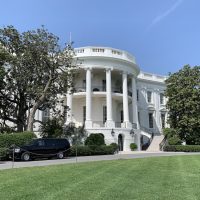
A testament to the essential science and research happening in the UW SAFS Alaska Salmon Program, Professors Tom Quinn and Daniel Schindler were invited to a White House event on May 11, recognizing the EPA’s decision to halt the Pebble Mine project in Alaska’s Bristol Bay.
UW scientists have been working in Bristol Bay’s streams, rivers and lakes for over 75 years through the Fisheries Research Institute, with the current generation of SAFS faculty active for over three decades through the Alaska Salmon Program.
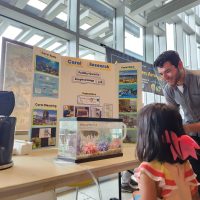
The UW Aquatic Sciences Open House was featured in a 2-minute segment on FOX 13 Seattle, showcasing the breadth of research and highlighting the importance of Open House events for accessibility and inspiring a new generation of scientists.
Read more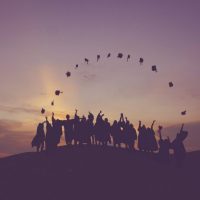
SAFS welcomes graduates, friends, family and other members of the UW community to the annual UW School of Aquatic and Fishery Sciences Graduation Celebration, held on Friday, June 9, as we celebrate the 2022-23 graduates.
Read more
We spoke with PhD student Helena McMonagle about her use of the FINS award to facilitate travel to a conference in Norway, where she presented her research abroad for the first time.
Why was this conference useful for you to attend?
The Effects of Climate Change on the World’s Ocean (ECCWO) is a conference that now takes place every few years in a different country.
Read more
Immersive fieldwork, a bridge program for community college students, a unique research opportunity – these are just some of the ways to describe the GEODUC program, whose team has been awarded the College of the Environment’s Outstanding Commitment to Diversity, Equity, Inclusion, Justice and Accessibility Award.
The GEODUC program – which welcomes transfer students each September into the UW marine geosciences – is led by José Guzmán, (Marine Biology and SAFS), Mikelle Nuwer (Oceanography), Kerry Naish (Marine Biology and SAFS), LuAnne Thompson (Oceanography), and Jane Dolliver (Dean’s Office, College of the Environment).
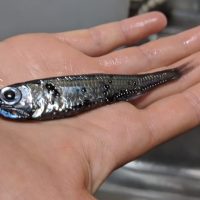
A team of scientists from around the world have joined together to call for a strong precautionary approach in extractive activities in the deep sea, as the science needed to evaluate risks lags far behind.
Joining scientists from Oregon State University, University of California Santa Cruz, National Institute of Water and Atmospheric Research in New Zealand and University of Bergen in Norway, Helena McMonagle from the School of Aquatic and Fishery Sciences (and a guest student at Woods Hole Oceanographic Institution) worked on the study published in Communications Earth & Environment.
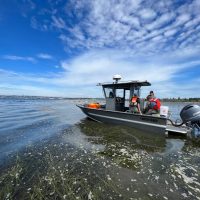
What fieldwork did the Applied Ecology Lab get up to last summer? Mark Scheuerell, Associate Professor at SAFS, shared insights into Washington’s aquaculture and some of the research underway at his lab.
Washington is the nation’s leading producer of farmed clams, oysters, and mussels, contributing nearly $200 million to our economy and supporting over 1900 jobs. Accordingly, there is demand for growth within the shellfish aquaculture industry, but a key impediment to doing so sustainably is that we don’t have a firm grasp on the ecological implications of converting nearshore habitat to shellfish production.