Filter Results
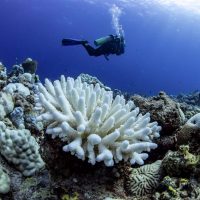
Coral bleaching is a significant problem for the world’s ocean ecosystems: When coral becomes bleached, it loses the algae that live inside it, turning it white. Corals can survive a bleaching event, but while they are bleached they are at higher risk for disease and death. Now an international consortium of scientists, including SAFS’ coral researcher Jacqueline Padilla-Gamiño, has created the first-ever common framework for increasing comparability of research findings on coral bleaching.
Read more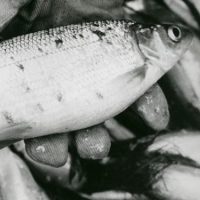
The global pandemic is hurting the seafood industry, and American fishmongers may flounder without more government aid, according to the largest study of COVID-19’s impacts on U.S. fisheries. The new study, published Nov. 23 in the journal Fish and Fisheries, found that monthly fresh seafood exports declined up to 43% compared to last year, while monthly imports fell up to 37%, and catches dropped 40% in some months.
Read more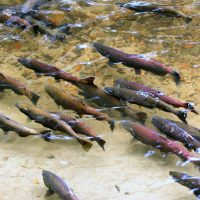
A new University of Washington study has found that Chinook salmon seem to use collective navigation and interact socially to help each other find fish ladders at dams.
Read more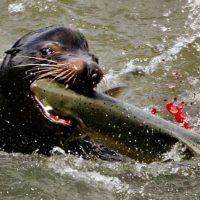
A new University of Washington and NOAA Fisheries study found that sea lions have the largest negative effect on early-arriving endangered Chinook salmon in the lower Columbia River. The results of this study will publish Oct. 18 in the Journal of Applied Ecology.
Read more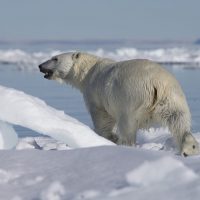
The small subpopulation of polar bears in Kane Basin were doing better, on average, in recent years than in the 1990s. The bears are experiencing short-term benefits from thinning and shrinking multiyear sea ice that allows more sunlight to reach the ocean surface, which makes the system more ecologically productive.
Read more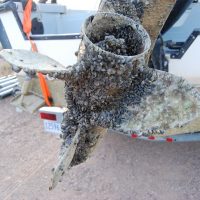
A new University of Washington study uses passive data from a fishing technology company to model the movement of anglers and predict where aquatic invasive species may be spreading.
Read more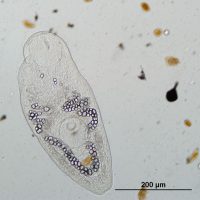
An international group of scientists has laid out an ambitious global conservation plan for parasites. A related paper led by the University of Washington found that responses of parasites to environmental change are likely to be complex, and that a changing world probably will see both outbreaks of some parasites and a total loss of other parasite species.
Read more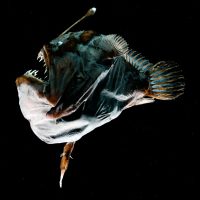
Deep-sea anglerfishes employ an incredible reproductive strategy. Tiny dwarfed males become permanently attached to relatively gigantic females, fuse their tissues and then establish a common blood circulation. Now scientists have figured out why female anglerfishes so readily accept their male mates. Their findings are published July 30 in Science.
Read more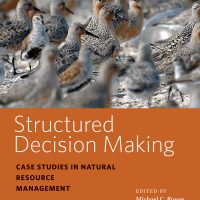
In their most recent book, Sarah Converse (unit leader, USGS Washington Cooperative Fish and Wildlife Research Unit, and UW associate professor in Aquatic and Fishery Sciences and Environmental and Forest Sciences) and her co-editors explore how managers can use a structured decision making approach to aid in solving natural resource problems.
Read more
Warming events are increasing in magnitude and severity, threatening many ecosystems worldwide. As the global temperatures continue to climb, it also raises uncertainties as to the relationship, prevalence, and spread of parasites and disease. A recent study from the University of Washington explores the ways parasitism will respond to climate change, providing researchers new insights into disease transmission.
Read more