Filter Results
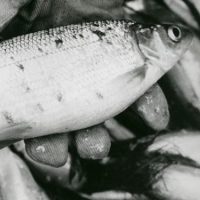
In an increasingly globalized world, aquatic foods have followed the same trend. Seafood is one of the most highly traded foods in the world and is a critical resource for human nutrition, livelihoods, and revenue. But despite this globalization trend, researchers have revealed that the basic characteristics of aquatic food trade remain largely unknown.
Read more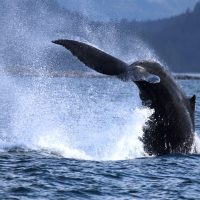
In a new study challenging conventional thinking about how populations of large baleen whales recover from whaling, researchers have revealed that populations continue increasing rapidly for a wide range of recovery levels, only slowing once approaching pre-whaling levels.
Read more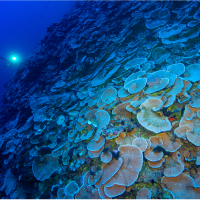
In recent years, there has been a global push to expand marine conservation efforts, but the quality of the implemented conservation network has often been neglected in favor of quantity. In a new paper published in Nature Communications, Juliette Jacquemont tackles one of the limitations of marine spatial planning by conducting the first global assessment of the 3D distribution of fishing activities and conservation coverage.
Read more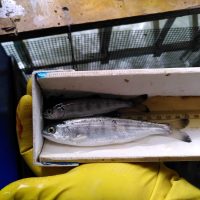
Ever heard of the Pied Piper? What about in the context of fisheries research? Taking the concept embodied by the Pied Piper story of strong but delusive enticement, Maria Kuruvilla applied it to hatchery fish and wild salmon in three Washington State rivers during their migratory journey downriver.
Read more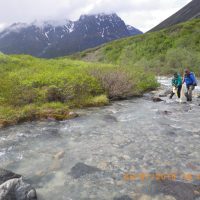
Working for more than 15 years in Alaska’s Bristol Bay region, SAFS PhD student Sarah O’Neal, recently published a new paper in BioScience examining the gap between ecological science and environmental management. Sarah’s article focuses on indirect ecological effects and how these are often defined differently in regulatory decisions.
Read more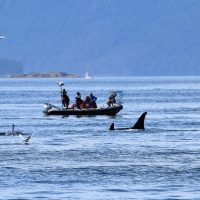
Over the last two decades, there has been huge growth in the availability of different ‘omics methods used to study marine mammals. A new paper published in Marine Mammal Science, involving 19 scientists from around the globe, has laid out best practices for collecting and preserving marine mammal biological samples in the ‘omics era.
Read more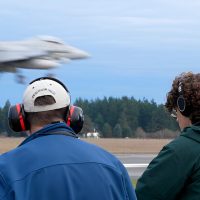
According to new research published by SAFS grad student, Giordano Jacuzzi, military aircraft noise from Naval Air Station Whidbey Island presents a substantial risk to public health.
Read more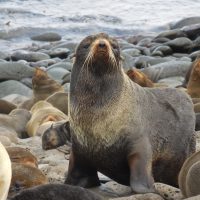
In a new book providing a guided walkthrough and toolbox to conduct population and ecosystem modeling at high-spatial resolution, James Thorson (SAFS alum and affiliate faculty, and Statistical Ecologist at NOAA) has co-authored Spatio-Temporal Models for Ecologists with Kasper Kristensen. Coming up with the idea for the book during a meeting at SAFS almost a decade ago, we sat down with James to find out more about why it’s a useful tool for ecologists.
Read more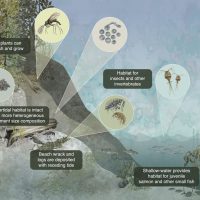
Stretching from Admiralty Inlet to the city of Olympia, Puget Sound has 1330 miles of shoreline, of which 25% is armored. In a new paper, SAFS Research Scientist Simone Des Roches, led a team studying the impact of armor removal and other restoration activities on shorelines through time in Puget Sound locations.
Read more
In a controlled experiment spanning three years and involving 11 scientists from a range of life science disciplines, a new study published in PLOS ONE demonstrates that sharing a paper on Twitter did not increase citations.
It has long been asserted that papers shared on social media platforms, such as X (formerly called Twitter), receive a higher number of citations. However, a team of leading science communicators, led by University of Washington School of Aquatic and Fishery Sciences Professor Trevor Branch, with a combined total of 223,000 followers at the end of the experiment, wanted to explore whether increased citations was actually caused by tweeting about them, or was a correlation due to other factors such as the quality of the paper and the importance of the information in the paper.