Filter Results
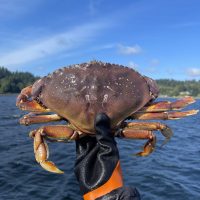
A collaborative network of agency and tribal scientists and resource managers, university faculty and students, and community volunteers are diligently working together to unlock the secrets of the Dungeness crab’s life cycle in the Salish Sea. The Pacific Northwest Crab Research Group (PCRG) is leading this unprecedented effort, generating vital data and fostering robust relationships to ensure the long-term sustainability of this ecologically, economically and culturally-important species.
Read more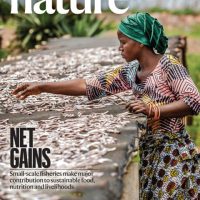
Small-scale fisheries play a significant but overlooked role in global fisheries production and are key to addressing hunger and malnutrition while supporting livelihoods around the world, according to research featured in Nature in Jan. 2025. The study was published by an international team of scientists, including Professor Chris Anderson from the UW SAFS.
Read more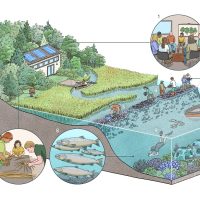
Ecosystem restoration has historically had a very ecological focus. However, while teaching a special interdisciplinary class during her time at Duke University, SAFS Assistant Professor, Carter Smith, took a slightly different view: how can ecosystem restoration be used to directly improve human wellbeing?
Read more
Working with specimens from the Burke Museum and NOAA, Elizabeth Miller, a former postdoc at SAFS, was captivated by the great diversity of shapes of anglers, which was at odds with how the species is often depicted in popular culture (think Finding Nemo). Elizabeth set out to build a family tree of anglerfishes and delve into the evolution of new shapes, such as body elongation.
Read more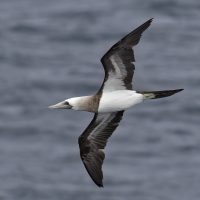
Across the globe, species are shifting their ranges in response to environmental changes driven by climate change. However, seabirds face distinct challenges in adapting to these shifts. Amelia DuVall, PhD candidate at SAFS and member of the Washington Cooperative Fish and Wildlife Research Unit, recently published a paper reporting on the breeding range expansion of two pantropical seabird species—the Brown Booby and the Blue-footed Booby.
Read more
Hunted nearly to extinction during 20th century whaling, the world’s largest animal, the Antarctic blue whale, went from a population size of roughly 200,000 to little more than 300. The most recent abundance estimate in 2004 put Antarctic blue whales at less than 1% of their pre-whaling levels. But is this population recovering? Is there just one population of Antarctic blue whales, or multiple? Why do these questions matter for conservation? PhD student, Zoe Rand, is tackling these questions in a new study.
Read more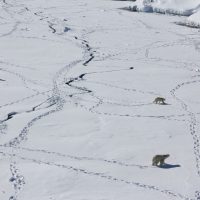
Polar bears in some parts of the high Arctic are developing ice buildup and related injuries to their feet, apparently due to changing sea ice conditions in a warming Arctic. While surveying the health of two polar bear populations, researchers led by Kristin Laidre from UW SAFS, found lacerations, hair loss, ice buildup and skin ulcerations primarily affecting the feet of adult bears as well as other parts of the body.
Read more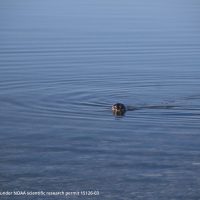
Taking the AERA class as part of the Alaska Salmon Program was a pivotal moment for two undergrads, who went on to contribute to major discoveries in cryptic diversity in two vastly different species: harbor seals and fish parasites.
Read more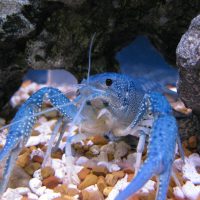
They may be small, but crayfish are mighty in other ways, one of them being invasive risk in areas where they are not natively found. Crayfish are increasingly being traded online for ornamental purposes, such as aquariums, and in a new study led by SAFS Professor Julian Olden, the first ever global assessment of the online trade in and associated invasion risk of freshwater crayfishes was conducted.
Read more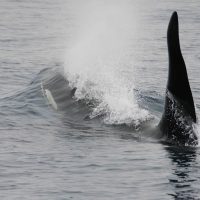
A team led by researchers at the University of Washington and the National Oceanic and Atmospheric Administration has uncovered key information about what resident killer whale populations are eating. Researchers had long known that resident killer whales prefer to hunt fish, particularly salmon. But some populations thrive, while others have struggled.
Read more