Filter Results
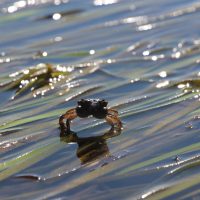
As interest and investment in shellfish aquaculture have expanded both locally and globally, so has interest in how these farms modify intertidal habitat and whether the complex structure created by the shellfish and shellfish growing gear provides ecosystem services that are comparable to those of unfarmed areas, such as mudflats and eelgrass meadows.
Read more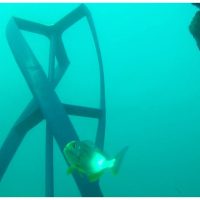
Diving into the world of marine renewable energy, Jezella Peraza, a masters student at SAFS, has recently published a paper looking into the probabilities of fish-turbine encounters and impact.
Whereas the renewable energy sector utilizing solar and wind energy is booming in the United States, the uptake of tidal energy is off to a slower start. Tidal turbines, placed on the sea floor, generate energy when water moves through a constricted area.
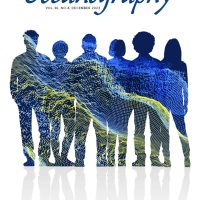
With contributions from SAFS scientists including Jackie Padilla-Gamiño, Corey Garza and Xochitl Clare, Oceanography’s special issue addresses structural and cultural obstacles encountered by underrepresented and marginalized scholars.
Read more
New research led by SAFS doctoral student, Arial Brewer, documents the vocal repertoire of Cook Inlet beluga whales for the first time.
Read more
Understanding how obligate freshwater organisms colonize seemingly isolated ecosystems has long fascinated ecologists, with new research co-authored by Flavien Garcia and Julian Olden demonstrating possible bird-mediated colonization of lakes by European perch.
Read more
Recently featured in Hakai Magazine’s article “All The Fish We Cannot See”, SAFS PhD student Helena McMonagle is conducting a deep dive into a hidden cache of fish that might play an unexpected role in how the ocean sequesters carbon. We caught up with Helena to find out more about it.
Since starting this research in 2019, I’ve been using data collected at sea and in the lab, along with bioenergetic models, to estimate how much carbon these mesopelagic fish, such as lanternfish, transport from surface waters into the twilight zone.
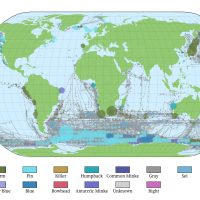
A team at UW, including Trevor Branch from SAFS and Zoe Rand from QERM, have created an online interactive map called WhaleVis, which lets whale researchers visualize the IWC’s data on global whale catches and whaling routes. From this, researchers can estimate the animals’ spatial distribution and the effort whalers put into hunts.
Read more
Historical ecology and data-limited fisheries stock assessment methods shed light on threatened Puget Sound Yelloweye Rockfish
By applying elements of historical ecology, fisheries science, and conservation biology in a highly collaborative research effort, researchers from the University of Washington School of Aquatic and Fishery Sciences (SAFS), NOAA Fisheries, and the Washington Department of Fish and Wildlife (WDFW) are delivering new insights into the status of Yelloweye Rockfish.
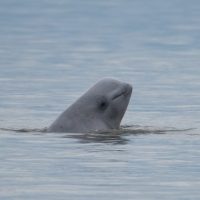
New study uses integrated population models to predict extinction risk for Cook Inlet beluga whales and lend insight into factors limiting the recovery of protected populations.
Sparse monitoring data and persistent knowledge gaps can hamper conservation efforts aimed at recovering depleted wildlife populations. In a new study, researchers from the UW School of Aquatic and Fishery Sciences (SAFS) set out to tackle this issue for federally endangered Cook Inlet beluga whales by developing an integrated population model that capitalizes on all available information to understand factors that may be affecting survival, reproduction, and population viability.
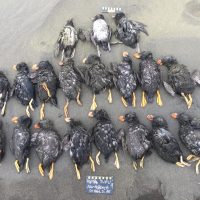
New research led by the University of Washington uses data collected by coastal residents along beaches from central California to Alaska to understand how seabirds have fared in recent decades. The paper, published July 6 in the journal Marine Ecology Progress Series, shows that persistent marine heat waves lead to massive seabird die-offs months later.
Read more