Filter Results
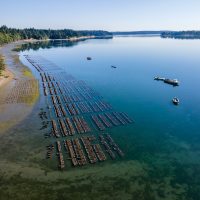
Seeking to understand the impacts of environmental stressors on Pacific oysters is the driving force behind a years-long research project involving scientists from the University of Washington and NOAA, and in collaboration with the oyster industry. Critical in aquaculture, Pacific oysters are the dominant oyster species grown on the US West Coast, with the industry in the Pacific Northwest alone valued at over $270 million a year.
Read more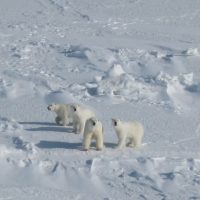
Each year, polar bears cycle through periods of intense feasting and prolonged fasting. For reproductive females, seasonal bulking is crucial – it fuels the winter denning and fasting period when they give birth. And when they emerge in spring, it gives biologists a chance to assess populations. A new study led by Sarah Teman explores whether A1c could reveal if a polar bear had recently denned, which – combined with the absence of cubs – may signal reproductive failure.
Read more
Shellfish aquaculture is a vital industry in the US, but one which faces mounting challenges threatening both productivity and business viability. Research often fails to align with growers’ immediate needs, so to close this gap, a team led by Connor Lewis-Smith set out to document how industry participants perceive ocean acidification threats and evaluate emerging adaptation strategies that are actively being researched.
Read more
New research led by UW Medicine, and involving Jacqueline Padilla-Gamiño from SAFS, has revealed that certain protein particles distinguish resilient corals from those that succumb to bleaching, offering new molecular tools for reef conservation and climate resilience.
Read more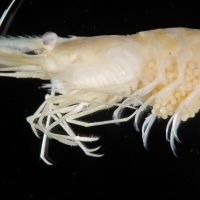
While conducting early detection monitoring for invasive European green crab (Carcinus maenas), Washington Sea Grant Crab Team discovered a non-native shrimp Palaemon macrodactylus, hitherto unreported along Washington’s portion of the Salish Sea. By examining prior data, and tracking this species closely over subsequent years, the team which included researchers from SAFS, were able to consistently monitor the spread and increase of this species across the region.
Read more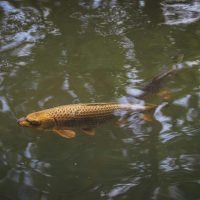
In a new paper co-authored with researchers from the Federal University of Paraná, Julian Olden explored changes in biogeographic patterns in global fish diversity caused by the spread of non-native species, teasing apart the geographic and taxonomic drivers of change.
Read more
Whether it is food or clothing, people care about where their products come from. Seafood is no different. Governments, retailers, and customers care about the source of the seafood on their plate as it is an important factor for evaluating the product’s sustainability and whether it aligns with their values. In a new perspective piece published in npj Ocean Sustainability, Jessica Gephart worked with a team of researchers to look into a specific case of seafood traceability in relation to US imports after sanctions on Russia.
Read more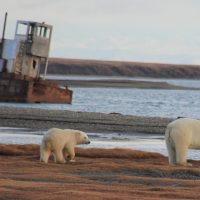
Climate change threatens the health of polar bears across the Arctic. A study published in Conservation Physiology on March 5, introduces a new approach to measuring the health of polar bear populations, drawing inspiration from a well-known concept in human medicine: allostatic load. The lead author of the study is SAFS PhD student, Sarah Teman, working with UW Professor, Kristin Laidre, and scientists from USGS and Fish and Wildlife Health Consulting.
Read more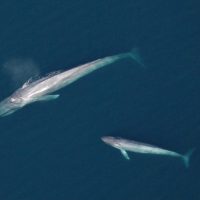
Only two blue whale births have ever been recorded in human history, an extraordinary mystery given they give birth every two to three years. Calves are also only rarely sighted—far less than would be expected from their pregnancy rates. Calves closely follow their moms and are sighted as mother-calf pairs, but why are so few detected? A new UW study by Trevor Branch proposes why. Its explanation hints at when and where the unseen births are happening and where blue whale calves spend their earliest months.
Read more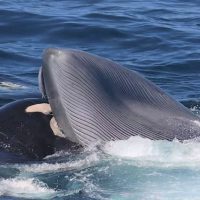
Killer whales are the only natural predator of baleen whales. More solitary than toothed whales, baleen whales face predatory attacks from killer whales, especially mother and calf pairs. When attacked, some species fight back, while others choose flight. But whale species also produce loud underwater songs…what stops killer whales from homing in on their calls and attacking them? New acoustic research by Trevor Branch sheds light on why.
Read more