Filter Results
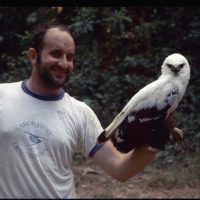
SAFS Emeritus Professor Jim Karr began a long-term bird study in Panama 55 years ago while he was a Ph.D. student and later as a professor of ecology at the University of Illinois. He explains that the core of the current study design and its methodology were initiated in 1977. The study continues to this day under its third generation of leadership.
Read more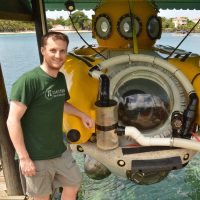
A new paper co-authored by researchers at the Smithsonian’s Tropical Research Institute (STRI) and National Museum of Natural History (NMNH), the University of Washington and the Universidad Nacional Autónoma de Honduras describes the important contribution of submersibles to increasing our knowledge about the diversity of deep-reef fishes in the Greater Caribbean.
Read more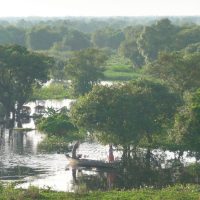
Tropical rivers like the Mekong uniquely overflow their banks and flood for much of the year. These regular flood events create the chemical preconditions needed for methanogenesis to occur in waterlogged soils. A new study led by the University of Washington found that anaerobic processes occurring on floodplains of the Tonle Sap, the largest lake in Southeast Asia, are important contributors of the carbon dioxide that is dissolved in surface waters.
Read more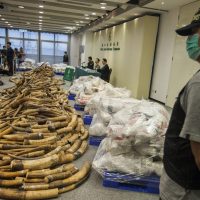
Across the globe, endangered species are at risk for illegal poaching. African elephants are sought out for their ivory, rhinoceros for their singular horns, and armadillo-like pangolins for their protective, brittle scales. Add to that list valuable and environmentally sensitive trees illegally harvested throughout the world where entire ecosystems are being deforested and illegal, unreported and unregulated fishing that is devastating oceans. These illicit markets, estimated at $1 trillion annually, cause enormous environmental impacts and have the potential to unleash new, deadly pathogens.
Read more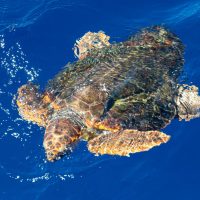
Many nations are calling for protection of 30% of the world’s oceans by 2030 from some or all types of exploitation, including fishing. Building off this proposal, a new analysis led by the University of Washington looks at how effective fishing closures are at reducing accidental catch. Researchers found that permanent marine protected areas are a relatively inefficient way to protect marine biodiversity that is accidentally caught in fisheries. Dynamic ocean management — changing the pattern of closures as accidental catch hotspots shift — is much more effective.
Read more
Professor Chris Anderson’s new research published in Frontiers in Marine Science explores the different social and economic impacts and pathways through which the MSC Certification Program can lead to sustainable outcomes for our oceans.
Read more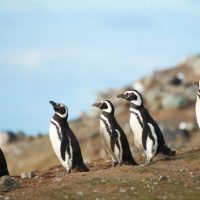
Forage fish, like anchovies and sardines, are a dietary staple for seabirds. Around the globe, seabirds have adapted in order to cope with natural changes in the availability of these prey fish. However, increased fishing pressure on these forage species is thought to be altering this predator-prey relationship in an adverse way for seabird populations. The natural ability of seabirds to cope with changes in prey abundance makes it difficult for researchers to determine if they are responding to natural processes or to human fishing practices.
Read more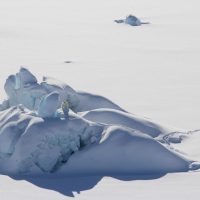
The region north of Greenland and the Canadian Arctic has been termed the Last Ice Area, where sea ice will remain the longest in summertime, providing a refuge for ice-dependent Arctic species. But conditions last summer show that parts of this region are already experiencing less summer ice due to climate change.
Read more
A new paper by Katherine Pearson Maslenikov published in Ichthyology and Herpetology outlines the history of the UW Fish Collection and its long partnership with NOAA and other state and federal agencies.
Read more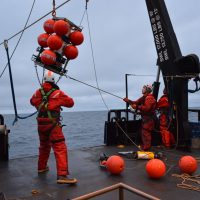
Silvana González, a PhD student at the University of Washington School of Aquatic and Fishery Sciences, uses acoustic techniques to collect data in otherwise inaccessible locations. In high-latitude marine ecosystems, like the Chukchi Sea, traditional vessel-based sampling for fish and zooplankton is only possible in seasons without sea ice. This limiting factor results in an incomplete picture of the life history of these species and the ecosystem as a whole. By utilizing remote acoustic measurements recorded throughout the year and under the sea ice, González is able to piece together a more complete picture of arctic marine life.
Read more