Filter Results
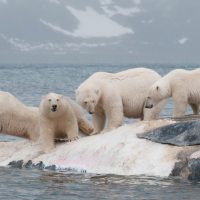
With 2019 on pace as one of the warmest years on record, a new international study reveals how rapidly the Arctic is warming and examines global consequences of continued polar warming.
Read more
A team led by the University of Washington and Stanford University has discovered clues in the environment that help identify transmission hotspots for schistosomiasis, a parasitic disease that is second only to malaria in its global health impact. The research, publishing the week of Oct. 28 in the Proceedings of the National Academy of Sciences, uses rigorous field sampling and aerial images to precisely map communities that are at greatest risk for schistosomiasis.
Read more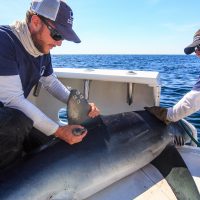
Last year, researchers at Woods Hole Oceanographic Institution (WHOI) and the Applied Physics Lab at the University of Washington (UW) discovered that when white sharks are ready to feast, they ride large, swirling ocean currents known as eddies to fast-track their way to the ocean twilight zone—a layer of the ocean between 200 and 1000 meters deep (656 to 3280 feet) containing the largest fish biomass on Earth. Now, according to a new study in Proceedings of the National Academy of Sciences (PNAS), scientists are seeing a similar activity with blue sharks, which dive through these natural, spinning tunnels at mealtime. The eddies draw warm water deep into the twilight zone where temperatures are normally considerably colder, allowing blue sharks to forage across areas of the open ocean that are often characterized by low prey abundance in surface waters.
Read more
One of the most established hands-on, outdoor citizen science projects is the University of Washington-based Coastal Observation and Seabird Survey Team, COASST, which trains beachgoers along the West Coast, from California to Alaska, to monitor their local beach for dead birds. With about 4,500 participants in its 21-year history and roughly 800 active participants today, COASST’s long-term success is now the subject of scientific study in its own right. What makes people join citizen science projects, and what motivates people to stick with them over years?
Read more
Coral reefs are retreating from equatorial waters and establishing new reefs in more temperate regions, according to new research published July 4 in the journal Marine Ecology Progress Series. The researchers found that the number of young corals on tropical reefs has declined by 85% — and doubled on subtropical reefs — during the last four decades.
Read more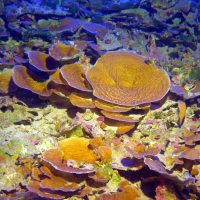
Just beyond where conventional scuba divers can go is an area of the ocean that still is largely unexplored. In waters this deep — about 100 to at least 500 feet below the surface — little to no light breaks through.
Read more
“Art and science collide magnificently in this monumental three-volume celebration of the 260 species of fishes that infuse the inland marine waters of Washington State and British Columbia, with hidden beauty, remarkable diversity and intriguing ways of living. This long-awaited work is a must-have not just for serious scientists and devotees of exquisite natural history artistry, but for any and all who find joy in exploring the wonders of nature.”―Sylvia Earle, National Geographic Explorer in Residence, Founder, Mission Blue
Read more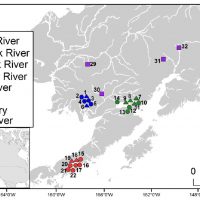
Sockeye salmon are found in many lakes and rivers in the northern Pacific Ocean, and have radiated outwards into regions formerly under glaciers during the most recent ice age. There are three main ecotypes: river-spawners (that migrate directly from the ocean to spawn in rivers); beach-spawners (that spawn on beaches in lakes) and tributary-spawners (that spawn in river tributaries that feed into lakes).
Read more
Global trade is much more prominent in recent years, and related statistics have been used to justify many policy positions. For seafood trade, though, it is quite difficult to piece together how much of the seafood eaten in the US was originally caught in the US. A new study now examines these complexities, finding that about 62-65% of seafood comes from foreign sources, much less than the widely reported 90% that is often cited.
Read more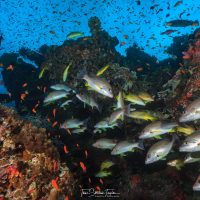
Coral reefs typically evoke clear, turquoise waters and a staggering number of colorful fishes. But what supports such an abundance of life?
Read more