Filter Results
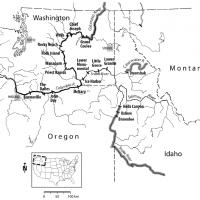
The Columbia River used to host returns of nearly 9 million salmon every year, led by the largest returns in the world of Chinook salmon (4.4 million fish). But construction of multiple large dams on various tributaries and the Columbia River itself, eliminated salmon from vast tracts of rivers above impassable dams, and also had a serious effect on salmon survival in the remaining areas.
Read more
This winter, Greg Jensen is releasing his follow-up book, Beneath Pacific Tides: Subtidal Invertebrates of the West Coast. Like the charismatic crustaceans featured in his debut publication, the colorful and bizarre invertebrates found along the Pacific Coast are explored in this new user-friendly guide, featuring Jensen’s underwater photography.
Read more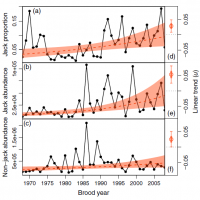
Male Pacific salmon usually compete aggressively with each other to gain access to spawning females, and are most successful when they are old and large. But a few males come back from the ocean early and small, and with less noticeable male traits. These small males are called “jacks” and cannot win battles of aggression but instead compete by sneaking into the spawning arena and fertilizing eggs on the sly.
Read moreGenetic engineering is widely used in plants and animals to promote rapid growth and create resistance to common diseases. One genetic modification that has achieved prominence in fish is the insertion of growth hormone transgenes, which produce dramatically larger sizes and rapid growth rates. However, there is concern that escaped genetically modified fish might breed with their wild counterparts, passing on the genetic modification and changing the wild population.
Read moreLong-term life-support in space requires renewable sources of oxygen and food that can survive and thrive in a closed system without any external inputs. In a closed-system experiment, three species of green algae were added to a nutrient mixture together with a grazer species, the common water flea (Daphnia magna). Despite calculations of the appropriate level of carbon and nitrogen needed in the mixture, the pH in the closed system rapidly increased to become highly alkaline (pH 10-11), so much so that most forms of life would not be able to survive.
Read more
Managing fisheries usually follows one of three pathways: limiting catches, limiting fishing effort, or limiting where fishing can take place. In a new review, each of these pathways is explored to examine their biological, social and economic implications. Limiting catches includes guideline harvests, strict limits on the total catch, allocations to groups, division of the total catch among individual participants, and fully transferable individual rights to catch a portion of the total allowable catch.
Read moreWater temperatures affect the length of salmon incubation, including the periods between spawning and hatching, and between hatching and the emergence of free-swimming fry. In Bristol Bay, Alaska, lake temperatures are predicted to increase by 0.7-1.4°C from 2015 to 2099 at the time of the year when incubation occurs, due to the effect of human emissions of greenhouse gases. As a result, sockeye salmon in Alaska will start hatching 16 to 30 days earlier than at present, according to a new model that examined the effects of climate change on 25 populations of sockeye salmon in four Alaskan lakes.
Read moreAustralian lungfish are living fossils that have survived virtually unchanged since their appearance in the fossil record 340 million years ago. They are well known to have the nifty ability to survive for several days out of water. Now, a new study uses their scales to infer what they ate over periods of more than 50 years. The new technique first ages the lungfish by measuring radioactive signatures in the scales that track radioactivity from nuclear weapons testing in the 1950s and 1960s, and then having dated micro-slices of the fish scales, each slice is examined for carbon and nitrogen isotopes that unveil their food sources throughout their life.
Read more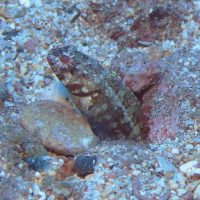
Two new species of jawfishes (family Opistognathidae) have been described for the first time this month. These small fish have fascinating life histories, digging burrows in sandy bottoms near reefs, and relying on males to brood eggs in their mouths. Each burrow houses one fish, and they strongly defend their burrows. The first new species, Thionyi’s jawfish (Opistognathus thionyi), is found in Vitória-Trindade Chain and Fernando de Noronha Archipelago off Brazil; while the second new species, the Brazilian dusky jawfish (Opistognathus vicinus), is found off mainland Brazil.
Read more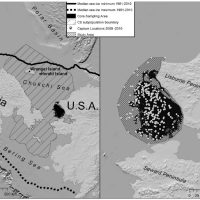
Polar bears, like other large predators, are hard to track and count, and available data is often fragmentary and difficult to piece together. Now, a new model provides estimates for key parameters for polar bears in the Chukchi Sea off north-western Alaska, by combining available data from telemetry, marking and recapturing, and counts. The model estimates that 83% of females give birth every year, that litter sizes are 2.11 per year, and that survival is about 90% for both males and females.
Read more