Filter Results
Smaller species of swimming marine mammals are often hard to count because they might be present in ones or twos or in groups of hundreds of individuals. Typical survey methods face multiple types of bias when trying to count total numbers because some individuals are missed. For aerial surveys, this is particularly problematic: individuals in a school can be missed because they are diving, too close to other individuals to be seen, or too far away to be detected in photographs or videos.
Read more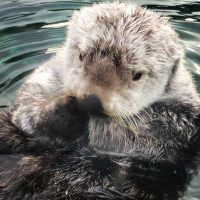
Due to hunting, sea otters were extirpated from most of their former range, including all of Washington state. In 1969 and 1970 a small group of 59 sea otters from Amchitka Island, Alaska, were reintroduced to the outer coast of Washington state, where they have since flourished to more than 2000 individuals. As their numbers have increased, they have expanded along the coast, resulting in a patchwork of locations containing sea otters that have been present in each location for differing lengths of time and at a range of densities.
Read more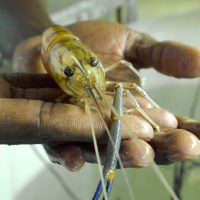
In rural communities across the tropics, a parasitic disease called schistosomiasis that is carried by freshwater snails currently infects more than 220 million people, rivaling malaria in its prevalence. Capable of residing in an infected human for more than 30 years, the Schistosoma parasite can cause debilitating and often-fatal health complications, including liver failure, bladder cancer, and an increased risk of AIDS. An estimated 280,000 people in Africa alone die each year from the disease. Despite 50 years of medical intervention and the availability of a relatively inexpensive and effective drug, the disease has stubbornly resisted eradication efforts, largely due to the ease with which the parasite reinfects its human hosts.
Read more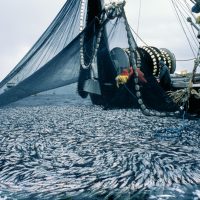
The Ocean Modeling Forum (OMF) is a University of Washington program run through the School of Aquatic and Fishery Sciences that aims to bring together interdisciplinary scientists, modeling experts, decision makers, and other people invested in ocean resources. The OMF helps managers frame questions, understand the strengths and limitations of different models, and learn how to incorporate models in their work.
Read moreSnake River salmonids are federally protected, but face a succession of dams to navigate from the ocean to the spawning grounds. The final dam in the sequence is the Lower Granite Dam. Ascending salmonids (sockeye salmon, steelhead, and Chinook salmon) all enter the fish ladders on the side of the dam, but some pass straight through and exit above the dam, while others are shunted off to one side and either released after a longer pathway, or held in tanks and sampled before being released to continue up the fish ladders.
Read more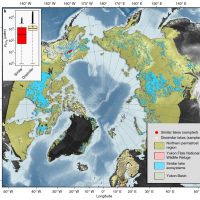
The dry northern reaches of Earth contain nearly half of all of the carbon originating in living matter, mostly stored in the frozen soils of the permafrost. It has been long thought that warming in the Arctic will result in this carbon being released from the soil and activated again, through the many lakes that are prominent features of the Arctic.
Read more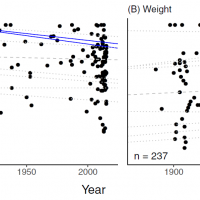
Shifting baselines is the concept that each human generation thinks “normal” conditions are those when they were growing up, and therefore only takes into account declines during their lifetime, instead of over multiple generations. A new paper now examines newspaper headlines over time to see whether declining fish size is detectable in fish described as superlatively enormous (e.g. “giant”, “huge”, or “monster”), finding declines in reports of lengths.
Read moreIt has long been established, indeed it is almost axiomatic, that annual variability in births of new fish (“recruitment”) is the most important reason why the total mass of fish populations varies from year to year. The rate of which individual fish grow (“body growth”) is also known to vary from year to year, but is generally considered to be fairly unimportant in explaining population variability.
Read moreScientists trained in ecology and physiology are increasingly able to complement their work with the burgeoning field of “functional genomics”, i.e. the study of which parts of DNA (the “genome”) are actually expressed and used to make proteins under different conditions. A new guide is now provided for those from non-genetic fields to harness the power of fast computers and rapid technology in sequencing the letters in DNA, so that they can infer how animals respond to the environment.
Read moreReef fish species from waters deeper than 130 m are difficult to collect manually, because they are too deep for SCUBA divers. But now manned submersibles equipped with underwater vacuums are able to suck up new specimens with surprising alacrity. Among the specimens slurped up by one such submersible is brand new blue and gold species of basslet: the blue-backed basslet (Lipogramma adabeli), with distinct blue coloration, genetics, and habitat use distinguishing it from other similar species.
Read more