Filter Results
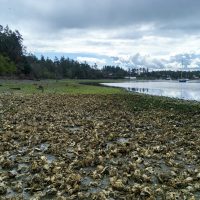
In a recent interdisciplinary study, University of Washington researchers at the School of Aquatic and Fishery Sciences, Department of Chemistry and Department of Materials Science and Engineering used advanced methodologies to accurately identify and catalog microplastics in Pacific oysters from the Salish Sea. They have discovered that the abundance of tiny microplastic contaminants in these oysters is much lower than previously thought. The findings were published in January in the journal Science of the Total Environment.
Read more
In a world where valuable natural resources can be scarce, nature often loses when humans set their sights on something they want. But a new study published in the journal Ecological Applications shows that doesn’t always have to be true. Researchers found that with proper management of salmon fisheries, both humans and bears — who depend on a healthy supply of the fatty, oily fish — can thrive.
Read more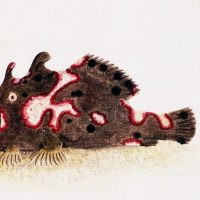
The latest book by Ted Pietsch, UW professor emeritus of aquatic and fishery sciences, explores the lives and habits of these unusual marine shorefishes. “Frogfishes: Biodiversity, Zoogeography, and Behavioral Ecology” was published in March by Johns Hopkins University Press.
Read more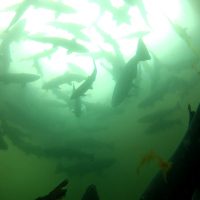
Pacific salmon hatcheries aim to supplement declining wild populations and support commercial and recreational fisheries. However, there are also risks associated with hatcheries because the captive and wild environments are inherently different. It is important to understand these risks in order to maximize the success of hatcheries. Inbreeding, which occurs when related individuals interbreed, is one risk that may inadvertently be higher in hatcheries due to space limitations and other factors.
Read more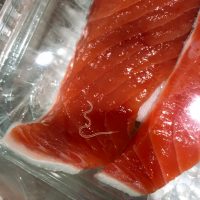
A new study led by the University of Washington finds dramatic increases in the abundance of a worm that can be transmitted to humans who eat raw or undercooked seafood. Its 283-fold increase in abundance since the 1970s could have implications for the health of humans and marine mammals, which both can inadvertently eat the worm.
Read more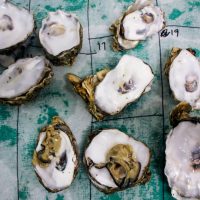
Researchers from the University of Washington School of Aquatic and Fishery Sciences have discovered that ocean acidification impacts the ability of some oysters to pass down “memories” of environmental trauma to their offspring.
Read more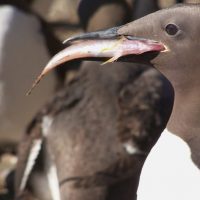
When nearly 1 million common murres died at sea and washed ashore from California to Alaska in 2015 and 2016, it was unprecedented — both for murres, and across all bird species worldwide. Scientists from the UW School of Aquatic and Fishery Sciences, the U.S. Geological Survey and others blame an unexpected squeeze on the ecosystem’s food supply, brought on by a severe and long-lasting marine heat wave known as “the blob.”
Read more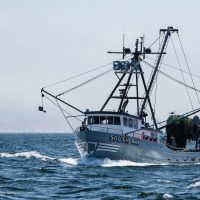
Nearly half of the fish caught worldwide are from stocks that are scientifically monitored and, on average, are increasing in abundance. Effective management appears to be the main reason these stocks are at sustainable levels or successfully rebuilding, according to a new study led by the University of Washington.
Read more
Each year orcas consume more than 2.5 million adult Chinook salmon along the West Coast. Except for the endangered southern resident population in Washington, all other fish-eating orca populations that live along the coast, called “residents,” are growing in number. The rise of resident killer whales, and their appetite for large Chinook salmon, is driving a decline of the big fish.
Read more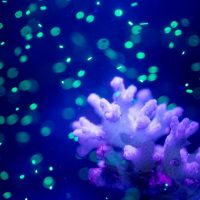
A new experiment by the University of Washington has found that some corals are more likely to eat microplastics when they are consuming other food, yet microplastics alone are undesirable. Two coral species tested responded differently to the synthetic material, suggesting variations in how corals are adapting to life with microplastics.
Read more