Filter Results
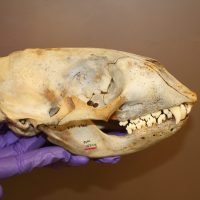
The adage “you are what you eat” generally turns out to be true. Foods we ingest are broken down into amino acids and absorbed into our bodies, leaving trace elements in our bones. In turn, these amino acids can be traced back to their source like a biological receipt, revealing information about the environment. Using this knowledge, researchers are conducting isotope analysis of amino acids in harbor seal skulls to determine the composition of historical marine food webs.
Read more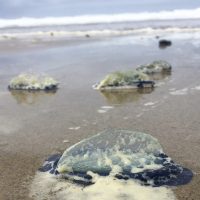
Thanks to 20 years of observations from thousands of citizen scientists, University of Washington researchers have discovered distinct patterns in the mass strandings of by-the-wind sailor jellies. Specifically, large strandings happened simultaneously from the northwest tip of Washington south to the Mendocino coast in California, and in years when winters were warmer than usual.
Read more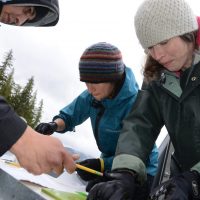
Herring that spawn at different times of the year are genetically distinct from one another, according to a new paper published Feb 24th in the Proceedings of the Royal Society B. The study, led by Eleni Petrou and Lorenz Hauser from the University of Washington School of Aquatic and Fishery Sciences, shows that populations of Pacific herring along the US west coast are genetically structured based on when they spawn and secondarily, where they spawn.
Read more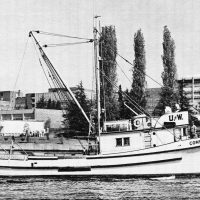
To understand how Puget Sound has changed, we first must understand how it used to be. But unlike most major estuaries in the U.S., long-term monitoring of Puget Sound fish populations did not exist until 1990. Now researchers have discovered an unconventional method to help fill in gaps in the data: old vessel logbooks.
Read more
Affiliate faculty Usha Varanasi recently published an article as part of the ICES Journal of Marine Science (ICES JMS) Food for Thought: Luminaries Collection, a curated collection of articles written by distinguished luminaries in the field of Marine Science.
Read more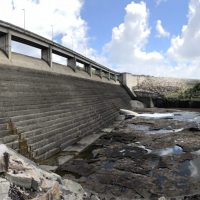
A new University of Washington paper quantifies the tradeoffs between hydroelectric generation capacity and the impacts on river connectivity for thousands of current and projected future dams across Brazil. The findings confirm that small hydropower plants are far more responsible for river fragmentation than their larger counterparts due to their prevalence and distribution.
Read more
Fish populations tend to do better in places where rigorous fisheries management practices are used, and the more measures employed, the better for fish populations and food production, according to a new paper published Jan. 11 in Nature Sustainability.
Read more
Researchers from the University of Washington recently assessed the contribution of salmon to the diet of brown bears in Southwest Alaska. Their findings confirmed that while the bears are reliant on large seasonal salmon runs, they also eat a variety of other foods, including both vegetation and fauna. The research results were published November 5 in the online issue of the Journal of Fish and Wildlife Management.
Read more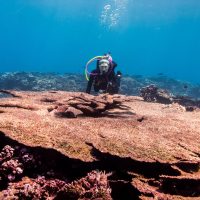
The pressing concerns of climate change have placed the long-term health of the world’s coral reefs in jeopardy. However, new research inspires hope as some corals managed to survive a recent and globally unprecedented heatwave.
Read more
A new University of Washington study provides the first look at how much noise pollution is impacting the Olympic Peninsula. The paper found that aircraft were audible across a large swath of the peninsula at least 20% of weekday hours, or for about one hour during a six-hour period. About 88% of all audible aircraft in the pre-pandemic study were military planes.
Read more