Filter Results
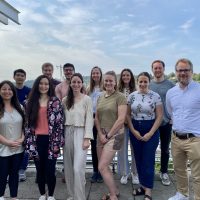
During a multi-day workshop organized by SAFS Assistant Professor Jessica Gephart, nine researchers working on projects related to the seafood trade got together for a hackathon-style research event. The overarching goal was to facilitate use of the ARTIS (Aquatic Resource Trade in Species) database by providing support and answering questions about the data.
Read more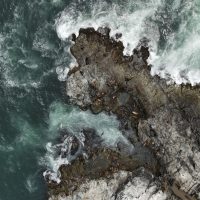
During the summer, UW Marine Biology senior, Ashley Rendon, is working with the Marine Landscape and Ecology Lab, led by Professor Corey Garza at SAFS. Using drones, Ashley has been surveying pinniped distribution along the California coastline and mapping the intertidal zone in British Columbia.
Read more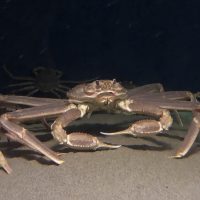
How do people make the decision on where they fish? What factors influence human behavior in fisheries? Terrance Wang is exploring the answers to these questions during his PhD research at SAFS. Fisheries management is an important process across the world, informing international and regional decisions on fishing locations, type of catch, methods used, and more.
Read more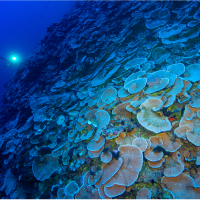
In recent years, there has been a global push to expand marine conservation efforts, but the quality of the implemented conservation network has often been neglected in favor of quantity. In a new paper published in Nature Communications, Juliette Jacquemont tackles one of the limitations of marine spatial planning by conducting the first global assessment of the 3D distribution of fishing activities and conservation coverage.
Read more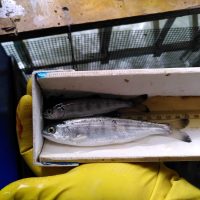
Ever heard of the Pied Piper? What about in the context of fisheries research? Taking the concept embodied by the Pied Piper story of strong but delusive enticement, Maria Kuruvilla applied it to hatchery fish and wild salmon in three Washington State rivers during their migratory journey downriver.
Read more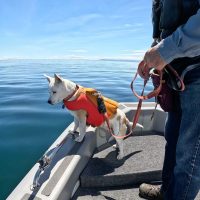
Alongside two student researchers from her lab, SAFS Assistant Professor Amy Van Cise has been out on the Puget Sound for a few days conducting killer whale research. Working with a team comprised of UW students, Wild Orca, and San Diego Zoo Wildlife Alliance, they’re assisted in locating fecal samples from the whales by Wild Orca’s poop-sniffing dog, Eba.
Amy Van Cise, with student researchers Sofia Kaiaua and Mollie Ball, were aboard the Wild Orca boat with Research Director Dr.
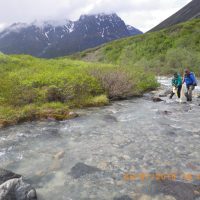
Working for more than 15 years in Alaska’s Bristol Bay region, SAFS PhD student Sarah O’Neal, recently published a new paper in BioScience examining the gap between ecological science and environmental management. Sarah’s article focuses on indirect ecological effects and how these are often defined differently in regulatory decisions.
Read more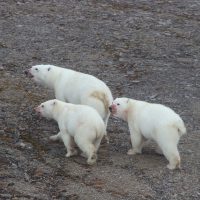
A meeting of the IUCN/SSC Polar Bear Specialist Group (PBSG) was held at SAFS on 10-14 June 2024, co-chaired by Professor Kristin Laidre.
Read more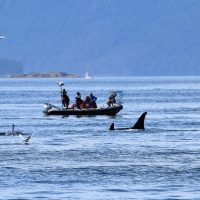
Over the last two decades, there has been huge growth in the availability of different ‘omics methods used to study marine mammals. A new paper published in Marine Mammal Science, involving 19 scientists from around the globe, has laid out best practices for collecting and preserving marine mammal biological samples in the ‘omics era.
Read more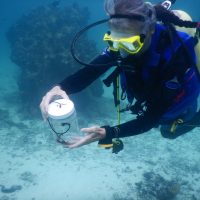
Swimming around tropical coral reefs in a colorful array are an ever-changing multitude of fishes, some in schools of hundreds, others in pairs, and ones that prefer their own company. These are the fishes divers see on a heathy coral reef, but they are often only half of the diversity found in the reef’s fishes. The “hidden half” are the cryptobenthic fishes.
Read more