Filter Results
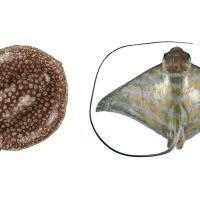
A UW mechanical engineering student’s research is revealing how generative design can be used to analyze the complex shapes found in biological rigid structures like skeletons. John Michael Racy, along with co-authors including Adam Summers, turned to generative design to understand the complex forces that shape the elements of the stingray fin skeleton.
Read more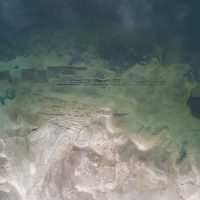
Shellfish aquaculture is a vital industry in the US, but one which faces mounting challenges threatening both productivity and business viability. Research often fails to align with growers’ immediate needs, so to close this gap, a team led by Connor Lewis-Smith set out to document how industry participants perceive ocean acidification threats and evaluate emerging adaptation strategies that are actively being researched.
Read moreCoursework, capstone, and connections: The multi-dimensional nature of the SAFS undergraduate degree
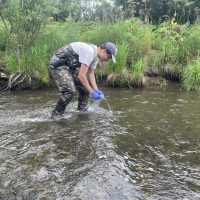
For many students about to embark on their undergraduate journey at university, they plan to study one thing but end up studying something completely different. This was the case for SAFS undergraduate, Ryan Luvera. Ryan is currently undertaking his capstone research project, focusing on improving salmon abundance estimation models using eDNA.
Read more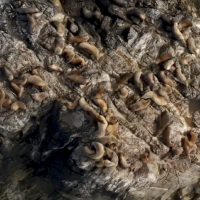
Funded by the California Ocean Protection Council, SAFS Professor, Corey Garza, and colleagues at Stanford, UC Santa Cruz and the Middlebury Institute have embarked on a project to better understand shark and pinniped behavior off the California coast. They do this by tagging and tracking the animals, collecting background environmental data through buoys and mapping where pinnipeds gather. The goal is to understand how these variables interact and better predict when and where white sharks might be on the prowl — and, importantly, how to keep people out of the water when they are.
Read more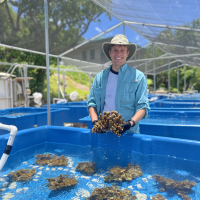
Bleaching. This complicated and foreboding term now lurks around every conversation about coral reefs. Impacted heavily by climate change and associated warming oceans, coral reefs experience bleaching when the algae that live in their tissues and contribute vitally to their growth are expelled, causing the corals to lose their color, and possibly their lives. Callum Backstrom, SAFS PhD student and one of UW’s 2025 Husky 100, is studying the resilience of certain corals to bleaching.
Read more
The 2024 Northwest Emmy Nominees Environment/Science includes a video featuring SAFS Professor, Chelsea Wood, and her work on parasites. The video, produced by Grist, explores why nature can’t run without parasites, and what happens when they start to disappear.
Read more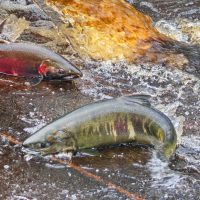
In a StoryMap bringing to life the challenges faced by Pacific salmon, SAFS graduate student, Amirah Casey, dives into the role of urban stormwater runoff and climate change in hindering salmon recovery.
Read more
New research led by UW Medicine, and involving Jacqueline Padilla-Gamiño from SAFS, has revealed that certain protein particles distinguish resilient corals from those that succumb to bleaching, offering new molecular tools for reef conservation and climate resilience.
Read more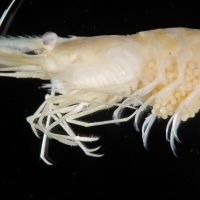
While conducting early detection monitoring for invasive European green crab (Carcinus maenas), Washington Sea Grant Crab Team discovered a non-native shrimp Palaemon macrodactylus, hitherto unreported along Washington’s portion of the Salish Sea. By examining prior data, and tracking this species closely over subsequent years, the team which included researchers from SAFS, were able to consistently monitor the spread and increase of this species across the region.
Read more
A new video by ICES explores a solar-powered acoustic monitoring system that tracks fish migrations and provides near-real-time data to support sustainable fishing, featuring John Horne.
Read more