Filter Results
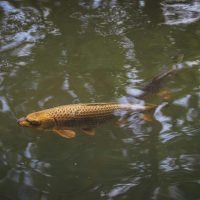
In a new paper co-authored with researchers from the Federal University of Paraná, Julian Olden explored changes in biogeographic patterns in global fish diversity caused by the spread of non-native species, teasing apart the geographic and taxonomic drivers of change.
Read more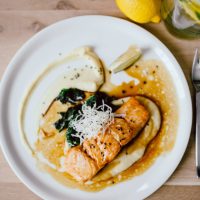
Whether it is food or clothing, people care about where their products come from. Seafood is no different. Governments, retailers, and customers care about the source of the seafood on their plate as it is an important factor for evaluating the product’s sustainability and whether it aligns with their values. In a new perspective piece published in npj Ocean Sustainability, Jessica Gephart worked with a team of researchers to look into a specific case of seafood traceability in relation to US imports after sanctions on Russia.
Read more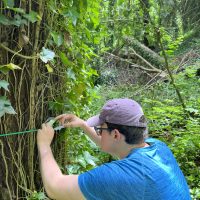
It’s not just fish being studied at SAFS. Undergraduates get to learn about a huge range of species, from teeny tiny parasites and insects, to seabirds and the largest mammals on Earth. And it’s not just animals either. It’s all the habitats in which these animals live and depend on. For Stevan Pekich, his capstone project is exploring how urbanization and insect health are affecting riparian-obligate bird species in our local King County.
Read more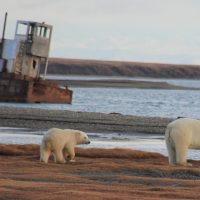
Climate change threatens the health of polar bears across the Arctic. A study published in Conservation Physiology on March 5, introduces a new approach to measuring the health of polar bear populations, drawing inspiration from a well-known concept in human medicine: allostatic load. The lead author of the study is SAFS PhD student, Sarah Teman, working with UW Professor, Kristin Laidre, and scientists from USGS and Fish and Wildlife Health Consulting.
Read more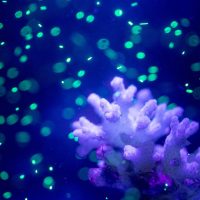
Microplastics are everywhere. From the clothes you wear to the food you eat, to even your toothbrush, microplastics are difficult to avoid. And these tiny pieces of plastic have big consequences for both humans and the wider environment. UW Daily speaks to Jacqueline Padilla-Gamiño about her research into microplastics and marine organisms such as corals and anemones.
Read more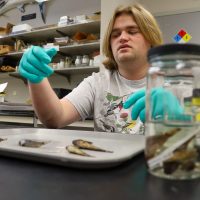
Scanning through the rows and rows of preserved fish housed in the UW Fish Collection, it’s easy to get lost trying to figure out what each fish is, especially to the untrained eye. Fish identification is a necessary step when preserving specimens from the wild, which deliver key insights for researchers delving into the untold secrets of fish. For SAFS undergraduate Liam Aston, his capstone research involves looking at Cottus specimens in the Fish Collection, a group of freshwater sculpin found throughout the Northern Hemisphere.
Read more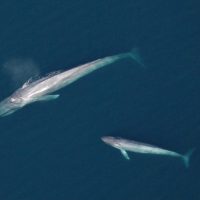
Only two blue whale births have ever been recorded in human history, an extraordinary mystery given they give birth every two to three years. Calves are also only rarely sighted—far less than would be expected from their pregnancy rates. Calves closely follow their moms and are sighted as mother-calf pairs, but why are so few detected? A new UW study by Trevor Branch proposes why. Its explanation hints at when and where the unseen births are happening and where blue whale calves spend their earliest months.
Read more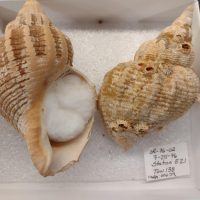
Walk along any beach, and you’re likely to find snail shells dotting the sand. In the Bering Sea, more than 200 species of sea snails exist. They’re an important source of prey for fish and walruses, playing a vital part in the Bering Sea food web. Working with a 50-year-old shell collection sourced from NOAA trawls from the mid-late 1970s, Jasper Nevis is looking at community structure in Bering Sea snails in collaboration with the Burke Museum Malacology Collection.
Read more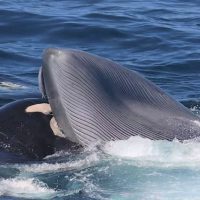
Killer whales are the only natural predator of baleen whales. More solitary than toothed whales, baleen whales face predatory attacks from killer whales, especially mother and calf pairs. When attacked, some species fight back, while others choose flight. But whale species also produce loud underwater songs…what stops killer whales from homing in on their calls and attacking them? New acoustic research by Trevor Branch sheds light on why.
Read more