Filter Results

Historical ecology and data-limited fisheries stock assessment methods shed light on threatened Puget Sound Yelloweye Rockfish
By applying elements of historical ecology, fisheries science, and conservation biology in a highly collaborative research effort, researchers from the University of Washington School of Aquatic and Fishery Sciences (SAFS), NOAA Fisheries, and the Washington Department of Fish and Wildlife (WDFW) are delivering new insights into the status of Yelloweye Rockfish.
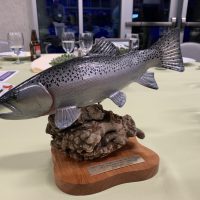
As part of the Trout Unlimited annual awards, SAFS Professor Tom Quinn has received the Jack Williams Award for Applied Conservation Science. Read about why Tom was selected for this award in the write-up below, reposted from Trout Unlimited.
Recently retired from full-time teaching and research at the University of Washington, Professor Tom Quinn deserves massive thanks for the huge body of research and writing on Pacific Rim fisheries and especially on salmon and trout of the Pacific Northwest and Alaska.
Read more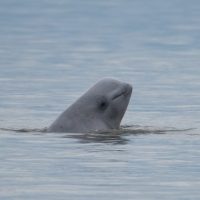
New study uses integrated population models to predict extinction risk for Cook Inlet beluga whales and lend insight into factors limiting the recovery of protected populations.
Sparse monitoring data and persistent knowledge gaps can hamper conservation efforts aimed at recovering depleted wildlife populations. In a new study, researchers from the UW School of Aquatic and Fishery Sciences (SAFS) set out to tackle this issue for federally endangered Cook Inlet beluga whales by developing an integrated population model that capitalizes on all available information to understand factors that may be affecting survival, reproduction, and population viability.
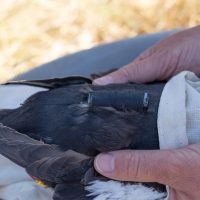
In an effort to establish a better understanding of the foraging habits of rhinoceros auklets and pigeon guillemots on Protection Island, Liam Pendleton’s seabird research has involved GPS tagging and monitoring of these seabird species to delineate key foraging locations in the waters surrounding the island. Rhinoceros auklets migrate all along the West Coast of the US and Canada, and nest on the same island as pigeon guillemots, featured in a previous article by SAFS.
Read more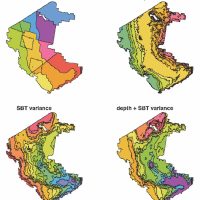
Fishery-independent survey data represents essential information for stock assessment, ecosystem-based fishery management initiatives, and applied ecological research. These data refers to information collected over space and time about populations of marine organisms, such as population abundance and biomass. The data can be used to fit statistical models to obtain multiple products for the assessment and management of marine populations. and can provide a comprehensive and standardized picture of marine populations when collected consistently over time, particularly with respect to gear selectivity and sampling design.
Read more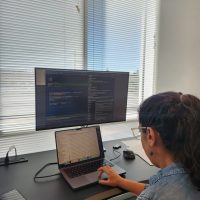
The use of eDNA methods is a new and exciting area of research. Tania Valdivia, a post-doctoral student in the Whale and Dolphin Ecology Lab, is working on a large marine project under the guidance of Amy Van Cise from SAFS, and Ryan Kelly from the School of Marine and Environmental Affairs (SMEA).
The project focuses on the application of eDNA methods to detect and identify the spatial distribution of marine mammals and their prey in the California Current.
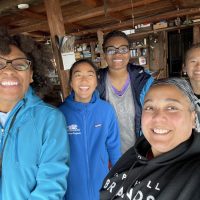
Spending the summer at Friday Harbor Labs (FHL), SAFS grad student Chris Mantegna mentored four students – two as part of the NSF-funded Research Experience for Undergrads-Blinks (REU) program and two as part of the Doris Duke Conservation Scholars Program (DDCSP). During the program, students get to collaborate on a research project with their scientist-mentor to build marine research skills.
Specifically geared towards enhancing diversity within the marine sciences, the program welcomes students from underrepresented groups.
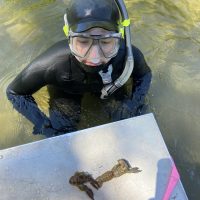
Claire Vaage, a masters student in the Freshwater Ecology and Conservation Lab advised by Julian Olden, spoke with us about her summer field season in Central Oregon.
Spending 5 weeks during this summer in Oregon, I led a research team of two to four people at a time. Each day we conducted snorkel surveys and collected samples of freshwater macroinvertebrates and vegetation.
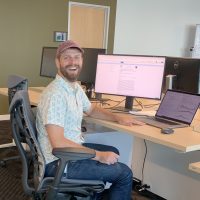
In the world of fisheries management systems, many do not account for predator-prey interactions that scientists know can have big impacts on the dynamics and available biomass of commercially targeted species.
For his dissertation work as part of the Gulf Of Alaska Climate Integrated Modeling Project (GOA-CLIM), Grant Adams from the Punt Lab at SAFS, has been developing multi-species population dynamics models for the Gulf of Alaska.
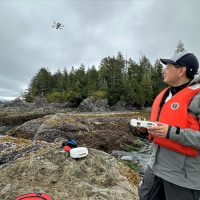
Welcoming the newest SAFS Professor and Associate Dean for Diversity, Equity and Inclusion for the College of the Environment, we spoke with Corey Garza. He shares his plans to enhance College diversity, what he’s most excited about by joining SAFS, and insight into his world of research using drones.
What plans do you have for Diversity, Equity and Inclusion (DEI) as Associate Dean?