Filter Results
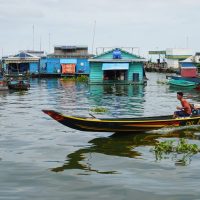
In the largest freshwater lake in southeast Asia, Shorna Sabikunnahar is looking into the ecological and environmental drivers of toxic metals in resident fish.
Conducting her research on Tonle Sap Lake in Cambodia, which is part of the Mekong River system, Shorna is a SAFS PhD student in the Holtgrieve Ecosystem Ecology Lab (HEEL). Designated as a Biosphere Reserve by UNESCO, Tonle Sap Lake is one of the most diverse and productive ecosystems on the globe.

Understanding how obligate freshwater organisms colonize seemingly isolated ecosystems has long fascinated ecologists, with new research co-authored by Flavien Garcia and Julian Olden demonstrating possible bird-mediated colonization of lakes by European perch.
Read more
Recently featured in Hakai Magazine’s article “All The Fish We Cannot See”, SAFS PhD student Helena McMonagle is conducting a deep dive into a hidden cache of fish that might play an unexpected role in how the ocean sequesters carbon. We caught up with Helena to find out more about it.
Since starting this research in 2019, I’ve been using data collected at sea and in the lab, along with bioenergetic models, to estimate how much carbon these mesopelagic fish, such as lanternfish, transport from surface waters into the twilight zone.
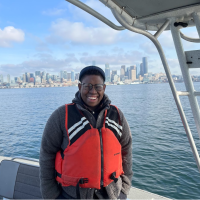
Selected as the 2022–2023 Washington Sea Grant Keystone Fellow, Ashley Townes spent a year working with the Port of Seattle’s maritime habitat team on advancing the development and implementation of innovative habitat restoration projects including kelp research, fish sampling with underwater remote operated vehicles (ROVs) and 360-degree cameras, and bankline monitoring to survey the condition and character of shorelines at port facilities in the Lake Washington Ship Canal, Shilshole Bay, Elliott Bay, the East and West waterways and the Duwamish Waterway.
Read more
UW researchers are developing a drone-based salmon survey method that the Sauk-Suiattle can use to manage resources.
Read more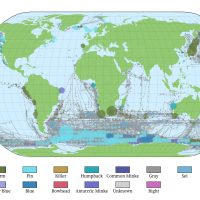
A team at UW, including Trevor Branch from SAFS and Zoe Rand from QERM, have created an online interactive map called WhaleVis, which lets whale researchers visualize the IWC’s data on global whale catches and whaling routes. From this, researchers can estimate the animals’ spatial distribution and the effort whalers put into hunts.
Read more
From corals, birds and salmon to microplastics, otolith microchemistry and fisheries management, join us for a day full of grad research from around the world.
Read more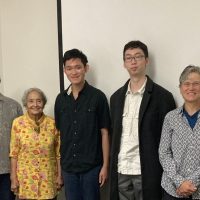
Now running for over a decade, the Varanasi Quantitative Undergraduate Summer Internship Program brings together math and fisheries sciences in a unique experience for students, who spend a summer working on research projects at NOAA Northwest Fisheries Science Center (NWFSC).
A collaborative program jointly funded by NOAA Fisheries, SAFS and the UW Department of Mathematics, and endowed by Usha and S.
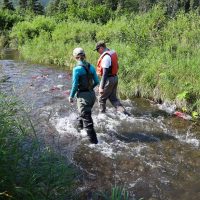
Nestled among a set of glacial lakes in the Wood River system is where scientists with the Alaska Salmon Program spend their summers. From students just beginning their research journeys in aquatic sciences, to seasoned field technicians and faculty, the camps based on Lake Aleknagik and Lake Nerka are the temporary home for both scientists and the fish that they are studying: Pacific salmon.
Read more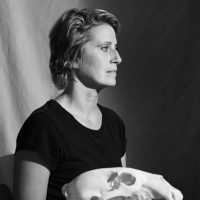
The Arctic is warming much faster than the rest of the planet. I study animals that are inextricably tied to the sea ice, which is disappearing. Narwhals spend most of their time in deep water, in and under dense ice. They need cold water. The other species I study is polar bears. Everything about being a polar bear is tied to the ice.
Read more