Filter Results
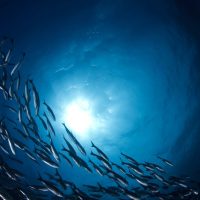
From Alaska to California, researchers are looking into the impact of climate change on the distribution of fish that live near the seafloor. Focusing on species such as halibut, pollock, sablefish and rockfishes, which have commercial and environmental importance for the Pacific Coast of the US, these fish are impacted in different ways by shifting ocean temperature and oxygen, resulting in a myriad of knock-on effects.
Read more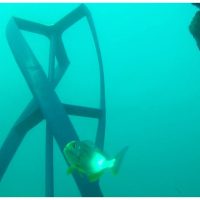
Diving into the world of marine renewable energy, Jezella Peraza, a masters student at SAFS, has recently published a paper looking into the probabilities of fish-turbine encounters and impact.
Whereas the renewable energy sector utilizing solar and wind energy is booming in the United States, the uptake of tidal energy is off to a slower start. Tidal turbines, placed on the sea floor, generate energy when water moves through a constricted area.

Newly based at the University of Washington is the Marine Landscape Ecology Lab (MLEL), led by SAFS Professor, Corey Garza. Conducting research along the Californian coast using drones, Corey’s lab is currently working on two projects funded by the California Ocean Protection Council.
In a collaborative effort with UC Santa Cruz, Stanford University, and the Middlebury Institute for International Studies, the team is trying to understand how the interaction between oceanographic conditions and the presence of marine mammals, impacts the presence of great white sharks.
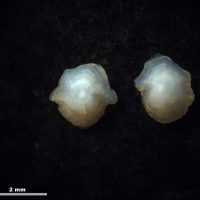
Fighting for the little guy. That’s one of the things Jess Diallo, PhD candidate at SAFS, likes about her work. Her research encapsulates this idea as she explores the impact of invasive fish on native fish food webs, based in a tributary to the lower Colorado River.
Part of Julian Olden’s Freshwater Ecology and Conservation Lab, Jess’ fieldwork in 2021 involved collecting samples for stable isotope analysis, including fish eye lenses, to provide a deeper look into how fish move throughout the food web.
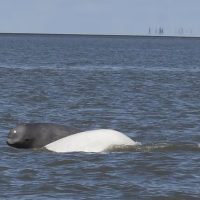
SAFS PhD student, Arial Brewer, joins the Oregon Public Broadcasting ‘Think Out Loud’ series to share her research into the impact of ship noise on Alaska’s Cook Inlet beluga whales.
Read more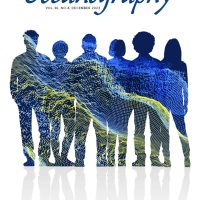
With contributions from SAFS scientists including Jackie Padilla-Gamiño, Corey Garza and Xochitl Clare, Oceanography’s special issue addresses structural and cultural obstacles encountered by underrepresented and marginalized scholars.
Read more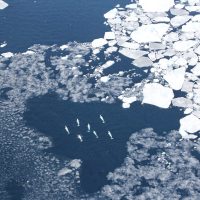
Recently completing her PhD focused on marine mammals in Greenland, Marie Zahn’s work in the Arctic provides a deeper look into two species: narwhals and belugas.
Conducting her research at the School of Aquatic and Fishery Sciences (SAFS) as a member of the Laidre Lab, Marie explored the marine habitat and sounds produced by narwhals and belugas using oceanographic and acoustic data collected from West Greenland.

New research led by SAFS doctoral student, Arial Brewer, documents the vocal repertoire of Cook Inlet beluga whales for the first time.
Read more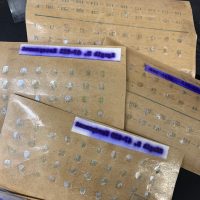
For over 60 years, the Alaska Department of Fish and Game have collected scales from sockeye salmon in Bristol Bay. Now, these scales are receiving special treatment in a new project led by SAFS graduate student Grace Henry, who is conducting stable isotope analysis to examine how food webs in the North Pacific Ocean have changed since the 1960s.
Chemistry has always been Grace’s biggest interest: “I love chemistry, and for me, it’s the cornerstone of ecological science.” Working with stable isotopes in her pre-graduate studies, Grace wanted to use this method during her thesis work on food webs using historical archived samples.
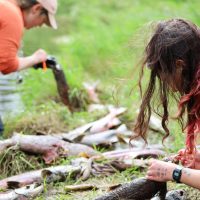
Watch Part 2 of a summer with the Alaska Salmon Program, now live, featuring the students who are essential to the program.
Read more