Filter Results
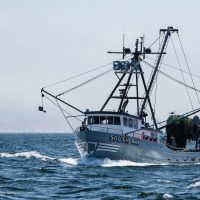
Nearly half of the fish caught worldwide are from stocks that are scientifically monitored and, on average, are increasing in abundance. Effective management appears to be the main reason these stocks are at sustainable levels or successfully rebuilding, according to a new study led by the University of Washington.
Read more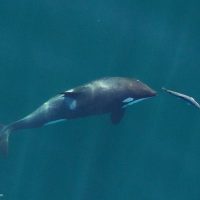
Each year orcas consume more than 2.5 million adult Chinook salmon along the West Coast. Except for the endangered southern resident population in Washington, all other fish-eating orca populations that live along the coast, called “residents,” are growing in number. The rise of resident killer whales, and their appetite for large Chinook salmon, is driving a decline of the big fish.
Read more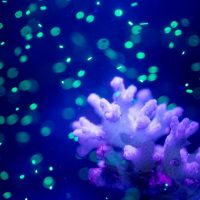
A new experiment by the University of Washington has found that some corals are more likely to eat microplastics when they are consuming other food, yet microplastics alone are undesirable. Two coral species tested responded differently to the synthetic material, suggesting variations in how corals are adapting to life with microplastics.
Read more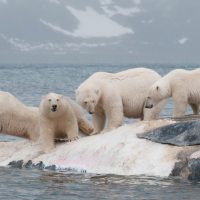
With 2019 on pace as one of the warmest years on record, a new international study reveals how rapidly the Arctic is warming and examines global consequences of continued polar warming.
Read more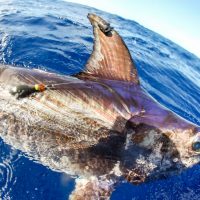
Researchers from the University of Washington are using high-tech tags to record the movements of swordfish — big, deep-water, migratory, open-ocean fish that are poorly studied — and get a window into the ocean depths they inhabit.
Read more
A team led by the University of Washington and Stanford University has discovered clues in the environment that help identify transmission hotspots for schistosomiasis, a parasitic disease that is second only to malaria in its global health impact. The research, publishing the week of Oct. 28 in the Proceedings of the National Academy of Sciences, uses rigorous field sampling and aerial images to precisely map communities that are at greatest risk for schistosomiasis.
Read more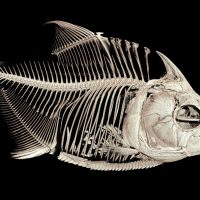
With the help of new technologies, a team led by the University of Washington has confirmed that piranhas — and their plant-eating cousins, pacus — do in fact lose and regrow all the teeth on one side of their face multiple times throughout their lives. How they do it may help explain why the fish go to such efforts to replace their teeth.
Read more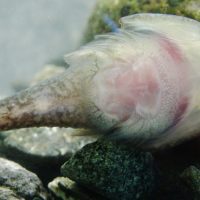
A University of Washington team inspired by the clingfish’s suction power set out to develop an artificial suction cup that borrows from nature’s design. Their prototype, described in a paper published Sept. 9 in the journal Philosophical Transactions of the Royal Society B, actually performed better than the clingfish.
Read more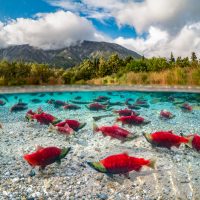
It’s hard to think small in Alaska. The largest of the United States is home to North America’s highest mountain range. It’s a place where undammed rivers run more than 1000 kilometers, glaciers collapse into the ocean, and polar bears roam. Daniel Schindler, however, is here hunting for something the size of a grain of rice.
Read more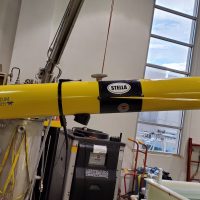
A multi-institution team consisting of the University of Washington School of Aquatic and Fishery Sciences (UW SAFS) Professor John Horne will deploy experimental technology next week to explore the deep scattering layers of the ocean. In addition to Horne, the UW team includes Ross Hytnen Jr. and summer intern Raymond Surya (a JISAO intern from the University of Michigan). Horne’s lab at SAFS uses active acoustic technologies to count and characterize aquatic organism distributions and dynamics throughout the world.
Read more