Filter Results

Mapping the distribution of mobile species is a long-standing problem in ecology. For many species, there are multiple types of data available, roughly categorized into surveys of many individuals at a snapshot period in time (e.g. a systematic spatial survey recording all individuals at a point in time) compared to tracking devices that follow individuals over time as they move through space (e.g.
Read more
Complex fisheries models are like weather forecasts for fish populations: they gather together all the available data about fish trends in numbers over time, numbers at each age, and other information, and then predict the level of sustainable catch that can be taken from the population. Over time, as computing power has grown, these models have also become more complex, and run time has remained consistently high.
Read more
Tuna fisheries supply nutrients, food, employment, and other economic benefits to coastal states and global industrial fleets. A new analysis now examines the causes for variability in economic performance among regions and management types through Fishery Performance Indicators, which score performance on 68 questions answered on a scale from 1 (worst) to 5 (best). Benefits were greatest for tuna caught for canning and for sashimi (raw fish) markets, since these were the highest quality fish, and had access to the most valuable markets; and success was largely determined by the post-harvest sector.
Read more
Recent advances allow for the editing of any part of the DNA of individuals (their genome), offering a chance for ecologists and conservationists to radically transform individuals and ecosystems, as outlined in a new review. The new genome-editing tools are being driven by technology called CRISPR that allows for the precise editing of DNA letters coding for key genes within an organism.
Read moreTracking changes in diseases over time is an increasingly important topic given changes in global temperature. Put simply, is a warmer world a sicker world? Reported rates of disease may increase over time but it is difficult to distinguish between better reporting of disease, and true increases in disease prevalence. A new study in Frontiers in Ecology and the Environment now highlights the critical role of natural history collections, which contain many millions of specimens, in piecing together true rates of disease over deep time (many centuries).
Read moreSmaller species of swimming marine mammals are often hard to count because they might be present in ones or twos or in groups of hundreds of individuals. Typical survey methods face multiple types of bias when trying to count total numbers because some individuals are missed. For aerial surveys, this is particularly problematic: individuals in a school can be missed because they are diving, too close to other individuals to be seen, or too far away to be detected in photographs or videos.
Read more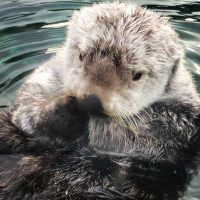
Due to hunting, sea otters were extirpated from most of their former range, including all of Washington state. In 1969 and 1970 a small group of 59 sea otters from Amchitka Island, Alaska, were reintroduced to the outer coast of Washington state, where they have since flourished to more than 2000 individuals. As their numbers have increased, they have expanded along the coast, resulting in a patchwork of locations containing sea otters that have been present in each location for differing lengths of time and at a range of densities.
Read more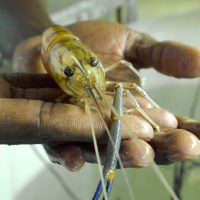
In rural communities across the tropics, a parasitic disease called schistosomiasis that is carried by freshwater snails currently infects more than 220 million people, rivaling malaria in its prevalence. Capable of residing in an infected human for more than 30 years, the Schistosoma parasite can cause debilitating and often-fatal health complications, including liver failure, bladder cancer, and an increased risk of AIDS. An estimated 280,000 people in Africa alone die each year from the disease. Despite 50 years of medical intervention and the availability of a relatively inexpensive and effective drug, the disease has stubbornly resisted eradication efforts, largely due to the ease with which the parasite reinfects its human hosts.
Read more
The Ocean Modeling Forum (OMF) is a University of Washington program run through the School of Aquatic and Fishery Sciences that aims to bring together interdisciplinary scientists, modeling experts, decision makers, and other people invested in ocean resources. The OMF helps managers frame questions, understand the strengths and limitations of different models, and learn how to incorporate models in their work.
Read moreSnake River salmonids are federally protected, but face a succession of dams to navigate from the ocean to the spawning grounds. The final dam in the sequence is the Lower Granite Dam. Ascending salmonids (sockeye salmon, steelhead, and Chinook salmon) all enter the fish ladders on the side of the dam, but some pass straight through and exit above the dam, while others are shunted off to one side and either released after a longer pathway, or held in tanks and sampled before being released to continue up the fish ladders.
Read more