Filter Results
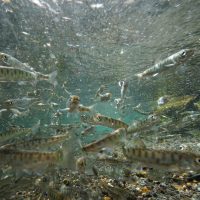
“We’re basically asking if wild fish feel ‘peer pressure’ from hatchery fish to migrate,” said Dr. Berdahl. “Hatchery production is common throughout the Pacific Northwest, so the findings could improve salmon conservation broadly.”
Read more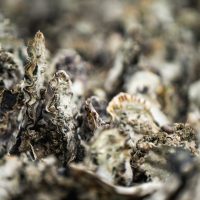
Jacqueline Padilla-Gamiño, along with researchers from NOAA’s Northwest Fisheries Science Center and Baywater Shellfish Farms, will examine the impacts of stressors on shellfish as part of a new project funded by the NOAA Sea Grant and the Ocean Acidification Program.
Read more about the other projects funded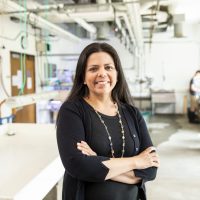
SAFS Assistant Professor Jacqueline Padilla-Gamiño was recently named the recipient of a National Science Foundation (NSF) CAREER award. This prestigious award will support Padilla-Gamiño’s research to explore how changing oceans and plastic pollution will impact coral reef ecosystems; it will also support continued education and outreach initiatives with citizens, teachers and grade school students in Hawaii.
Read more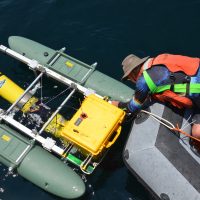
In July, Professor John Horne eagerly returned to the field after more than a year of pandemic related delays. As part of a multi-institutional science team, John set sail aboard the R/V Point Sur from Gulfport, Mississippi, testing new technologies to study deeper waters of the Gulf of Mexico in more detail. This voyage was also the first opportunity for John and his team to deploy the new glider technology they have been developing.
Read more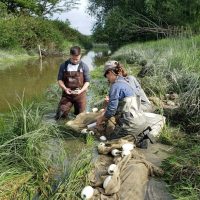
Capstone research projects provide an exciting opportunity for students to put classroom learning into practice. These senior projects are the culmination of the undergraduate experience here at SAFS. Josef Mayor’s (BS 2021) capstone project focused on Chinook salmon in the Stillaguamish River and how stream flow impacts salmon eggs as well as the timing of juvenile migrations. He plans to continue to work with his advisor Tom Quinn and publish the study before returning for graduate school.
Read more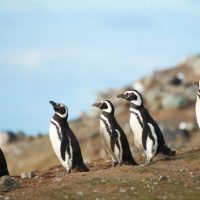
Forage fish, like anchovies and sardines, are a dietary staple for seabirds. Around the globe, seabirds have adapted in order to cope with natural changes in the availability of these prey fish. However, increased fishing pressure on these forage species is thought to be altering this predator-prey relationship in an adverse way for seabird populations. The natural ability of seabirds to cope with changes in prey abundance makes it difficult for researchers to determine if they are responding to natural processes or to human fishing practices.
Read more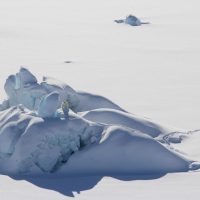
The region north of Greenland and the Canadian Arctic has been termed the Last Ice Area, where sea ice will remain the longest in summertime, providing a refuge for ice-dependent Arctic species. But conditions last summer show that parts of this region are already experiencing less summer ice due to climate change.
Read more
A new paper by Katherine Pearson Maslenikov published in Ichthyology and Herpetology outlines the history of the UW Fish Collection and its long partnership with NOAA and other state and federal agencies.
Read more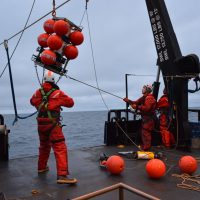
Silvana González, a PhD student at the University of Washington School of Aquatic and Fishery Sciences, uses acoustic techniques to collect data in otherwise inaccessible locations. In high-latitude marine ecosystems, like the Chukchi Sea, traditional vessel-based sampling for fish and zooplankton is only possible in seasons without sea ice. This limiting factor results in an incomplete picture of the life history of these species and the ecosystem as a whole. By utilizing remote acoustic measurements recorded throughout the year and under the sea ice, González is able to piece together a more complete picture of arctic marine life.
Read more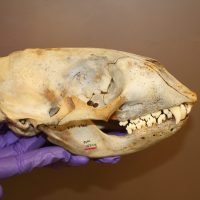
The adage “you are what you eat” generally turns out to be true. Foods we ingest are broken down into amino acids and absorbed into our bodies, leaving trace elements in our bones. In turn, these amino acids can be traced back to their source like a biological receipt, revealing information about the environment. Using this knowledge, researchers are conducting isotope analysis of amino acids in harbor seal skulls to determine the composition of historical marine food webs.
Read more