Filter Results

The School of Aquatic and Fishery Science together with the University of Barcelona (Spain) are leading CoralChange, a project that will assess for the first time the role of larval reproduction and ecology on the long term dynamics and viability of the threatened coral populations worldwide.
Read more
In times of extreme duress, a shining beacon of hope can come from communities working together to support one another. The University of Washington Medical Center, in preparation for an influx of patients in the coming weeks, recently put out a call for medical supplies. Researchers from around the College of the Environment answered that call, realizing that much of what the Medical Center needed were common items found in research labs, and quickly mobilized to collect donations and drop them off at UW Surplus.
Read more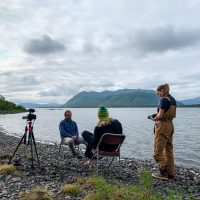
Last year, the UW Alaska Salmon Program partnered with Waterlust, an apparel and media company, to develop a line of salmon-inspired clothing. Waterlust’s clothing line, dubbed “advocated apparel,” aims to bring awareness to aquatic science and conservation-based causes by turning designs found in nature into fashion. The company has previously worked with other institutions and nonprofits to develop prints inspired by sea turtles, whale sharks, and spotted dolphins.
Read more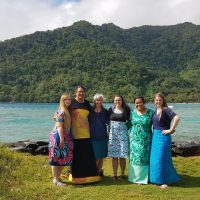
SAFS’ global network is one of its greatest strengths, providing nearly limitless opportunities for scientific and personal discovery. Explore some of our research highlights, spread across tropical and northern latitudes, through an interactive map. Deep dive into our new and exciting projects that provide students interdisciplinary study abroad experiences.
Read more
Each year, our students, faculty, and staff win regional, national, and international awards. Please join us in congratulating this year’s group of award winners!
Read more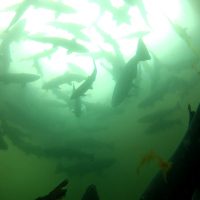
Pacific salmon hatcheries aim to supplement declining wild populations and support commercial and recreational fisheries. However, there are also risks associated with hatcheries because the captive and wild environments are inherently different. It is important to understand these risks in order to maximize the success of hatcheries. Inbreeding, which occurs when related individuals interbreed, is one risk that may inadvertently be higher in hatcheries due to space limitations and other factors.
Read more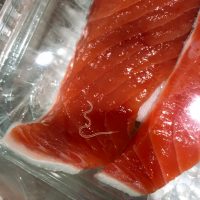
A new study led by the University of Washington finds dramatic increases in the abundance of a worm that can be transmitted to humans who eat raw or undercooked seafood. Its 283-fold increase in abundance since the 1970s could have implications for the health of humans and marine mammals, which both can inadvertently eat the worm.
Read more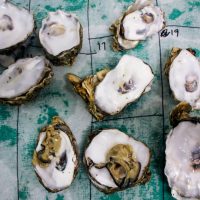
Researchers from the University of Washington School of Aquatic and Fishery Sciences have discovered that ocean acidification impacts the ability of some oysters to pass down “memories” of environmental trauma to their offspring.
Read more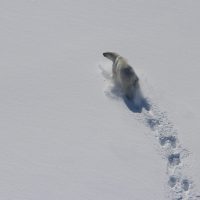
Polar bears are spending more time on land than they did in the 1990s due to reduced sea ice, new research led by UW associate professor Kristin Laidre shows. Bears in Baffin Bay are getting thinner and adult females are having fewer cubs than when sea ice was more available.
Read more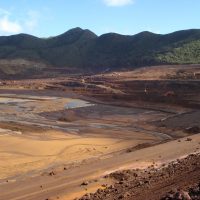
Mine waste, known as tailings, may still pose a threat to the surrounding environment even if they are contained by dams.
Read more