Filter Results
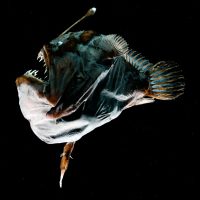
Deep-sea anglerfishes employ an incredible reproductive strategy. Tiny dwarfed males become permanently attached to relatively gigantic females, fuse their tissues and then establish a common blood circulation. Now scientists have figured out why female anglerfishes so readily accept their male mates. Their findings are published July 30 in Science.
Read more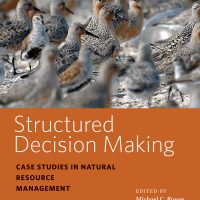
In their most recent book, Sarah Converse (unit leader, USGS Washington Cooperative Fish and Wildlife Research Unit, and UW associate professor in Aquatic and Fishery Sciences and Environmental and Forest Sciences) and her co-editors explore how managers can use a structured decision making approach to aid in solving natural resource problems.
Read more
The UW Center for Latino Health has recognized 32 UW Latinx faculty for scholarly achievements, including Jacqueline Padilla-Gamiño, assistant professor at the UW School of Aquatic and Fishery Sciences, who has been honored for the second year in a row. This annual event honors the scholarly achievements of Latina and Latino faculty across the three campuses of the University of Washington.
Read more
Congratulations to all of our graduates! View our graduation page to learn more about them and their accomplishments.
Read more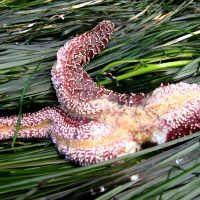
Warming events are increasing in magnitude and severity, threatening many ecosystems worldwide. As the global temperatures continue to climb, it also raises uncertainties as to the relationship, prevalence, and spread of parasites and disease. A recent study from the University of Washington explores the ways parasitism will respond to climate change, providing researchers new insights into disease transmission.
Read more
A number of UW researchers have joined an international group of science and policy experts to publish a joint commentary in the journal Science, calling on U.S. and Canadian leaders to address damages and risks caused by Canadian mine pollution flowing downstream into U.S. states. Led by researchers at the University of Montana, the cohort included five graduates and one PhD candidate from the UW School of Aquatic and Fishery Sciences
Read more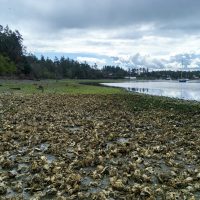
In a recent interdisciplinary study, University of Washington researchers at the School of Aquatic and Fishery Sciences, Department of Chemistry and Department of Materials Science and Engineering used advanced methodologies to accurately identify and catalog microplastics in Pacific oysters from the Salish Sea. They have discovered that the abundance of tiny microplastic contaminants in these oysters is much lower than previously thought. The findings were published in January in the journal Science of the Total Environment.
Read more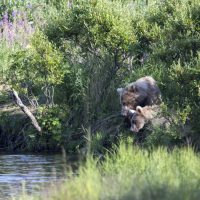
In a world where valuable natural resources can be scarce, nature often loses when humans set their sights on something they want. But a new study published in the journal Ecological Applications shows that doesn’t always have to be true. Researchers found that with proper management of salmon fisheries, both humans and bears — who depend on a healthy supply of the fatty, oily fish — can thrive.
Read more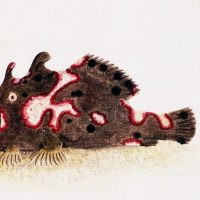
The latest book by Ted Pietsch, UW professor emeritus of aquatic and fishery sciences, explores the lives and habits of these unusual marine shorefishes. “Frogfishes: Biodiversity, Zoogeography, and Behavioral Ecology” was published in March by Johns Hopkins University Press.
Read more
Three graduate students from the College of the Environment have been awarded the National Science Foundation (NSF) Graduate Research Fellowship, which recognizes and supports outstanding graduate students in science, technology, engineering and mathematics. This year’s awardees include Irita Aylward and Zoe Krauss from the School of Oceanography, and Helena McMonagle from the School of Aquatic and Fishery Sciences.
Read more