Filter Results
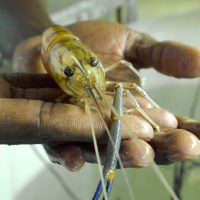
In rural communities across the tropics, a parasitic disease called schistosomiasis that is carried by freshwater snails currently infects more than 220 million people, rivaling malaria in its prevalence. Capable of residing in an infected human for more than 30 years, the Schistosoma parasite can cause debilitating and often-fatal health complications, including liver failure, bladder cancer, and an increased risk of AIDS. An estimated 280,000 people in Africa alone die each year from the disease. Despite 50 years of medical intervention and the availability of a relatively inexpensive and effective drug, the disease has stubbornly resisted eradication efforts, largely due to the ease with which the parasite reinfects its human hosts.
Read more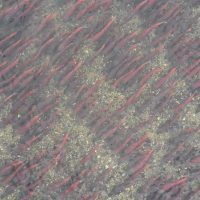
In 1906 while attending a livestock fair in Plymouth England, Sir Francis Galton witnessed an interesting contest where locals were trying to guess the correct weight of a slaughtered and dressed ox (think jellybeans in a jar, but for butchers). He examined all 800 guesses and calculated the median calling it the vox populi, or “voice of the people,” reasoning that this would cancel out outliers on either side of the true answer. Astonishingly, the median guess was extremely close–within .8%–of the weight measured by the judges and closer than any individual guess. “This started the idea of the wisdom of crowds, where if you have a whole bunch of independent guesses you can average them, cast off the errant guess on either side and hone in on the right answer,” said Dr. Andrew Berdahl one of the University of Washington School of Aquatic and Fishery Sciences’ newest faculty members.
Read more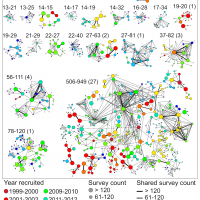
Citizen science, where the nonexpert public joins in freely to produce useful science, has grown to more than 2100 projects on the SciStarter website alone. These projects range from online identification of astronomical objects, to gaming-like projects predicting how proteins will fold (Foldit), to seasonal bird counts. One long-running project is COASST (Coastal Observation and Seabird Survey Team) where members of the public conduct monthly surveys of beach areas from California to Alaska looking for bird carcasses.
Read moreIt has long been established, indeed it is almost axiomatic, that annual variability in births of new fish (“recruitment”) is the most important reason why the total mass of fish populations varies from year to year. The rate of which individual fish grow (“body growth”) is also known to vary from year to year, but is generally considered to be fairly unimportant in explaining population variability.
Read moreScientists trained in ecology and physiology are increasingly able to complement their work with the burgeoning field of “functional genomics”, i.e. the study of which parts of DNA (the “genome”) are actually expressed and used to make proteins under different conditions. A new guide is now provided for those from non-genetic fields to harness the power of fast computers and rapid technology in sequencing the letters in DNA, so that they can infer how animals respond to the environment.
Read moreReef fish species from waters deeper than 130 m are difficult to collect manually, because they are too deep for SCUBA divers. But now manned submersibles equipped with underwater vacuums are able to suck up new specimens with surprising alacrity. Among the specimens slurped up by one such submersible is brand new blue and gold species of basslet: the blue-backed basslet (Lipogramma adabeli), with distinct blue coloration, genetics, and habitat use distinguishing it from other similar species.
Read more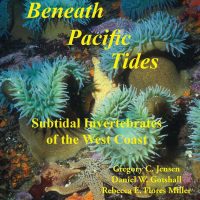
This winter, Greg Jensen is releasing his follow-up book, Beneath Pacific Tides: Subtidal Invertebrates of the West Coast. Like the charismatic crustaceans featured in his debut publication, the colorful and bizarre invertebrates found along the Pacific Coast are explored in this new user-friendly guide, featuring Jensen’s underwater photography.
Read moreAustralian lungfish are living fossils that have survived virtually unchanged since their appearance in the fossil record 340 million years ago. They are well known to have the nifty ability to survive for several days out of water. Now, a new study uses their scales to infer what they ate over periods of more than 50 years. The new technique first ages the lungfish by measuring radioactive signatures in the scales that track radioactivity from nuclear weapons testing in the 1950s and 1960s, and then having dated micro-slices of the fish scales, each slice is examined for carbon and nitrogen isotopes that unveil their food sources throughout their life.
Read more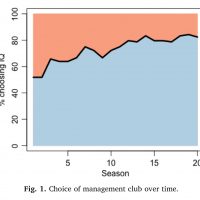
Many natural resources, such as grazing lands, forests, and fisheries, can be managed either by lots of people communally (common property), by top-down regulation, or by individual rights. A new analysis shows experimentally that individual rights emerge as the preferred choice when people are given freedom to choose among different clubs that each decide how to manage part of the resource.
Read moreNew and weird species are being discovered all the time, and the latest is the Narungga Frogfish (Histiophryne narungga), which has just been described. The name honors the Narungga tribe of indigenous Australians who traditionally inhabited the lands in which it was found. The new species comes in a variety of dotted forms, occurs in southern and western Australia, and is a member of the order Lophiiformes.
Read more