Filter Results
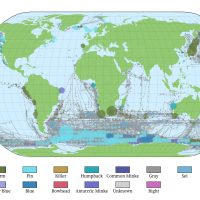
A team at UW, including Trevor Branch from SAFS and Zoe Rand from QERM, have created an online interactive map called WhaleVis, which lets whale researchers visualize the IWC’s data on global whale catches and whaling routes. From this, researchers can estimate the animals’ spatial distribution and the effort whalers put into hunts.
Read more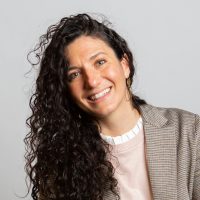
In September 2022, SAFS welcomed Amy Van Cise, a new assistant professor. Amy’s expertise focuses on the evolutionary ecology of marine mammals, which she studies using integrative approaches, including genomics, acoustics, and environmental DNA.
With a diverse career starting off with bachelor’s degrees in Marine Biology and Journalism, Amy’s previous studies, jobs, and research have taken her from New Hampshire and Peru to the Antarctic and Hawai‘i, and now to Washington.
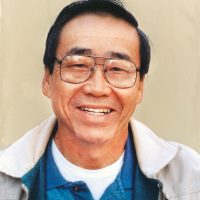
Ken was a visionary, a valued colleague, and a mentor and friend to many. His fierce advocacy for sustainable aquaculture has had considerable impacts on industry and on state, regional, and federal agencies and policies. Many of these impacts are based on the relationships that Ken developed with state and federal legislators and regulators, seemingly effortlessly. His passion for shellfish and the achievements of his research program still resonate, and his legacy is reflected in and respected by the vibrant community of shellfish researchers and shellfish growers on the west coast and elsewhere in the United States.
Read more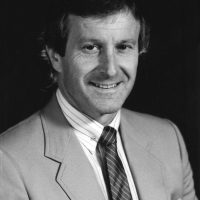
SAFS Professor and alumnus Ernest L. (Ernie) Brannon passed away in Moscow, Idaho, on March 10 after a period of declining health. He received his PhD from the UW in 1972 under the supervision of Dr. Lauren “Doc” Donaldson.
Doc had established the College of Fisheries’ experimental salmon and trout hatchery and developed a selective breeding program for salmonids. After Doc’s retirement, Ernie Brannon was hired on the teaching faculty in 1973 and also assumed leadership of the experimental hatchery.

SAFS Associate Professor Chelsea Wood is the recipient of a 2022 CAREER Award from the National Science Foundation (NSF). This prestigious award will support Wood’s novel research on the historical ecology of parasitism and will allow her to create an active-learning, open-access version of her undergraduate parasite ecology course.
Read more
Professor Chris Anderson was featured on NPR’s Planet Money podcast – a show that aims to take complex economic issues and make them approachable for all audiences. On the show, Chris answers a listener’s question on the environmental footprint of shipping tuna across the ocean.
Listen to the podcast
When it comes to things that give us the heebie-jeebies, parasites reign supreme. However, they are a necessary part of our ecosystems. SAFS assistant professor Chelsea Wood joins Bill Nye on his “Science Rules!” podcast to explain what makes parasites so creepy, how to prevent them from killing us, and why she keeps digging around in decades-old cans of salmon.
Read more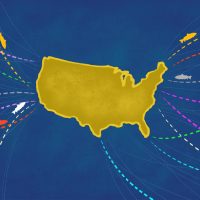
Global trade is much more prominent in recent years, and related statistics have been used to justify many policy positions. For seafood trade, though, it is quite difficult to piece together how much of the seafood eaten in the US was originally caught in the US. A new study now examines these complexities, finding that about 62-65% of seafood comes from foreign sources, much less than the widely reported 90% that is often cited.
Read more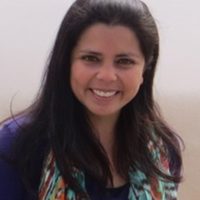
We are proud and thrilled to share the news that School of Aquatic and Fishery Science faculty member Dr. Jacqueline Padilla-Gamiño has been selected by the Latino Center for Health at UW to be recognized at the Latinx Faculty Recognition Event. This annual event honors the scholarly achievements of Latina and Latino faculty across the tri-campuses of the University of Washington for the academic year 2018-2019.
Read more
SAFS is excited to announce that Mark Scheuerell will be joining us as the USGS Washington Cooperative Fish and Wildlife Research Unit’s new Assistant Unit Leader and as an Associate professor.
Read more