Filter Results
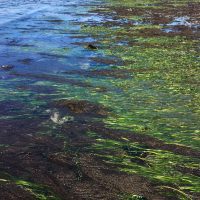
In the Pacific Northwest, eelgrass serves an important function in the ecosystem by binding sediments, storing carbon, and providing essential habitat for Pacific herring, juvenile salmon, and many other species. Concerningly, eelgrass populations are susceptible to human impacts related to water quality changes or direct disturbance. Eelgrass mitigation and restoration strategies often result in plants being transplanted to new locations where eelgrass may already be present. However, these efforts often lack information on the genetic population structure in an ever-changing environment. A team of interdisciplinary researchers at the University of Washington is developing baseline data for native eelgrass to make the first comprehensive geographic map of state eelgrass population structure and describe the relationship between eelgrass population structure, phenotypic diversity, and local adaptation and resistance to environmental stressors.
Read more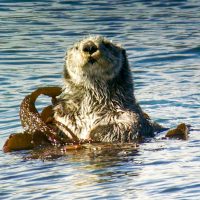
Learn how SAFS PhD student Jessie Hale examines patterns in sea otter feeding over time and space along the Washington coast.
Read more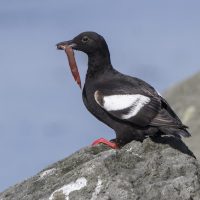
For nearly two decades, volunteers on Whidbey Island have been monitoring a curious little seabird—the pigeon guillemot, small in size, black with white patches on the wings and a fire-engine-red mouth and feet. Using binoculars, they observe and record the comings and goings of the island’s resident seabirds along the seaside cliffs.
Pigeon guillemots have been identified as a Puget Sound indicator species due to their abundance throughout the region, but what they might indicate is not yet clear.
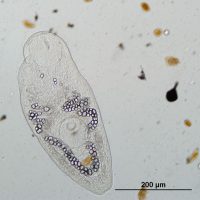
An international group of scientists has laid out an ambitious global conservation plan for parasites. A related paper led by the University of Washington found that responses of parasites to environmental change are likely to be complex, and that a changing world probably will see both outbreaks of some parasites and a total loss of other parasite species.
Read more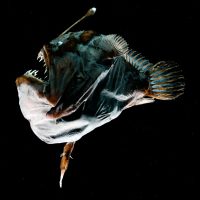
Deep-sea anglerfishes employ an incredible reproductive strategy. Tiny dwarfed males become permanently attached to relatively gigantic females, fuse their tissues and then establish a common blood circulation. Now scientists have figured out why female anglerfishes so readily accept their male mates. Their findings are published July 30 in Science.
Read more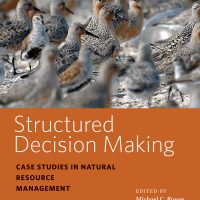
In their most recent book, Sarah Converse (unit leader, USGS Washington Cooperative Fish and Wildlife Research Unit, and UW associate professor in Aquatic and Fishery Sciences and Environmental and Forest Sciences) and her co-editors explore how managers can use a structured decision making approach to aid in solving natural resource problems.
Read more
The UW Center for Latino Health has recognized 32 UW Latinx faculty for scholarly achievements, including Jacqueline Padilla-Gamiño, assistant professor at the UW School of Aquatic and Fishery Sciences, who has been honored for the second year in a row. This annual event honors the scholarly achievements of Latina and Latino faculty across the three campuses of the University of Washington.
Read more
The recent events make us feel heartbroken, angry, and even more acutely aware that our pursuit of achieving our commitments and goals for an equitable and safe School is paramount. We will recommit ourselves to achieving these commitments and goals, and will continue down the path we have decided upon, no matter what.
Read more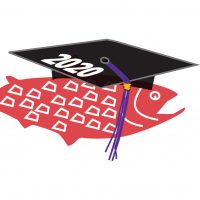
Congratulations to all of our graduates! View our graduation page to learn more about them and their accomplishments.
Read more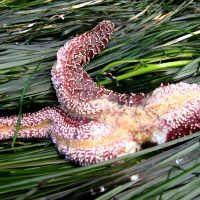
Warming events are increasing in magnitude and severity, threatening many ecosystems worldwide. As the global temperatures continue to climb, it also raises uncertainties as to the relationship, prevalence, and spread of parasites and disease. A recent study from the University of Washington explores the ways parasitism will respond to climate change, providing researchers new insights into disease transmission.
Read more