Filter Results

Herring are the foundation of all things we love in Southeast Alaska. These fish connect us culturally, spiritually, and historically. From salmon to seals, eagles to whales, or blanched eggs on our stove tops, herring provide critical energy and nutrition to our communities and ocean ecosystems. This documentary shows the importance of herring for thousands of years, the risks they currently face, and envisions a way forward that centers Indigenous sovereignty and traditional ecological knowledge. May 5, 2021 4:00 PM-5:00 PM PT.
Read more
The UW News office, together with editors at The Conversation, is hosting workshops for UW-affiliated faculty, postdocs, graduate students and other researchers interested in writing analysis pieces for mainstream audiences. This is the fourth year the University of Washington has offered these sessions, and the first in an all-virtual format.
Read more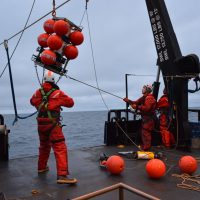
Silvana González, a PhD student at the University of Washington School of Aquatic and Fishery Sciences, uses acoustic techniques to collect data in otherwise inaccessible locations. In high-latitude marine ecosystems, like the Chukchi Sea, traditional vessel-based sampling for fish and zooplankton is only possible in seasons without sea ice. This limiting factor results in an incomplete picture of the life history of these species and the ecosystem as a whole. By utilizing remote acoustic measurements recorded throughout the year and under the sea ice, González is able to piece together a more complete picture of arctic marine life.
Read more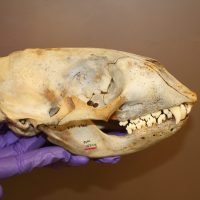
The adage “you are what you eat” generally turns out to be true. Foods we ingest are broken down into amino acids and absorbed into our bodies, leaving trace elements in our bones. In turn, these amino acids can be traced back to their source like a biological receipt, revealing information about the environment. Using this knowledge, researchers are conducting isotope analysis of amino acids in harbor seal skulls to determine the composition of historical marine food webs.
Read more
Professor Chris Anderson was featured on NPR’s Planet Money podcast – a show that aims to take complex economic issues and make them approachable for all audiences. On the show, Chris answers a listener’s question on the environmental footprint of shipping tuna across the ocean.
Listen to the podcast
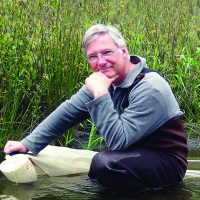
When Jeff Cordell was around nine years old, he decided that he wanted to be a marine biologist. Growing up near Puget Sound, he spent many summer and weekend days at the beach and in the water, collecting and identifying all kinds of invertebrates. Later, as an undergraduate at Huxley College of Environmental Studies, Jeff worked in a lab, sorting and identifying biota from Puget Sound beaches; he also spent three summers working in the Arctic, collecting invertebrates before oil drilling commenced there.
Read more
Up until last March, the classrooms, labs, offices, and even the hallways and lobbies of the Fishery Sciences and Fisheries Teaching and Research buildings were bustling with the regular activities of a vibrant academic unit. During this past year, however, our daily routines have changed dramatically; our days now consist of Zoom calls and juggling an increasingly stressful workp-life balance at home. Amidst all of these changes, building coordinator Jon Wittouck’s role has become even more vital. Jon, along with co-worker Jason Ching, is still coming to campus nearly every day, working behind the scenes to ensure that the SAFS facilities are safely maintained and operations are running smoothly for critical employees.
Read more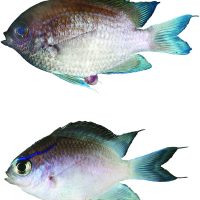
Capstone research projects provide an exciting opportunity for students to put classroom learning into practice—and sometimes even publish their work. These senior projects are the culmination of the undergraduate experience here at SAFS.
Emily McFarland (BS 2020) published her capstone, “A new species of Chromis damselfish from the tropical western Atlantic (Teleostei, Pomacentridae),” this past December. The new species—Chromis vanbebberae —was revealed through phylogenetic analyses to be distinct from Chromis enchrysurus, commonly known as the Yellowtail Reeffish.
Each year, our students, faculty, and staff win regional, national, and international awards. Please join us in congratulating this year’s group of award winners!
Read more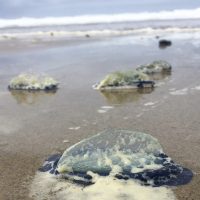
Thanks to 20 years of observations from thousands of citizen scientists, University of Washington researchers have discovered distinct patterns in the mass strandings of by-the-wind sailor jellies. Specifically, large strandings happened simultaneously from the northwest tip of Washington south to the Mendocino coast in California, and in years when winters were warmer than usual.
Read more