Filter Results
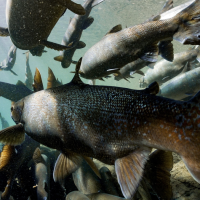
Join SAFS for the screening of a new documentary, Scale of Change, on 8 May at 6pm. The documentary explores how individual actions, no matter how small, can lead to monumental transformations for the Atlantic salmon.
Read more
The 2024 Northwest Emmy Nominees Environment/Science includes a video featuring SAFS Professor, Chelsea Wood, and her work on parasites. The video, produced by Grist, explores why nature can’t run without parasites, and what happens when they start to disappear.
Read moreNOAA (National Oceanic and Atmospheric Administration) is looking for undergraduate volunteers to assist with ongoing field and lab work related to 6PPD-q and its effects on salmon this summer and fall. This is a great opportunity to work alongside NOAA scientists, gain hands-on experience in both lab and field settings, and strengthen your resume with federal research involvement. Responsibilities and schedules will vary depending on the project needs and your availability.
Read more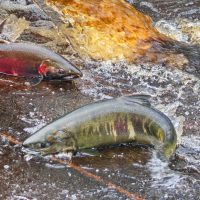
In a StoryMap bringing to life the challenges faced by Pacific salmon, SAFS graduate student, Amirah Casey, dives into the role of urban stormwater runoff and climate change in hindering salmon recovery.
Read more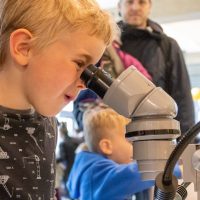
The UW Aquatic Sciences Open House is back on Saturday 17 May, offering a free and family-friendly day of hands-on learning to celebrate science and research that relates to water. Visitors can step on board a research boat used for local science, and experience real working science labs here at the university. We also have hands-on activities led by current UW students, staff, postdocs, and faculty across the College of the Environment and by organizations from the greater Seattle area.
Read more
New research led by UW Medicine, and involving Jacqueline Padilla-Gamiño from SAFS, has revealed that certain protein particles distinguish resilient corals from those that succumb to bleaching, offering new molecular tools for reef conservation and climate resilience.
Read more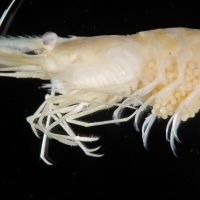
While conducting early detection monitoring for invasive European green crab (Carcinus maenas), Washington Sea Grant Crab Team discovered a non-native shrimp Palaemon macrodactylus, hitherto unreported along Washington’s portion of the Salish Sea. By examining prior data, and tracking this species closely over subsequent years, the team which included researchers from SAFS, were able to consistently monitor the spread and increase of this species across the region.
Read moreThe International Pacific Halibut Commission (IPHC) is seeking to hire an undergraduate or recently graduated intern for Summer 2025 to work at the IPHC Headquarters (HQ) located in Salmon Bay, Seattle, Washington, U.S.A.
Overview
The Internship Program is designed to provide interns exposure to a variety of tasks associated with the management of an international fisheries resource. Each intern is assigned a research project that involves work in the IPHC Biological Laboratory but that can also include work in other areas relevant to IPHC activities.
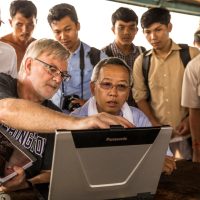
A new video by ICES explores a solar-powered acoustic monitoring system that tracks fish migrations and provides near-real-time data to support sustainable fishing, featuring John Horne.
Read more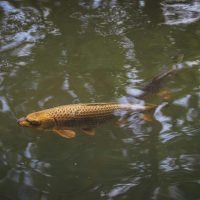
In a new paper co-authored with researchers from the Federal University of Paraná, Julian Olden explored changes in biogeographic patterns in global fish diversity caused by the spread of non-native species, teasing apart the geographic and taxonomic drivers of change.
Read more