Filter Results
The International Pacific Halibut Commission (IPHC) is seeking 2–3 undergraduate students for a volunteer position in their otolith lab. Volunteers will take images of whole and cross-sectioned otoliths using a mounted camera. These photos will train an image classification model to determine Pacific halibut ages based on photos of their otoliths. Coupled with traditional aging methods, this model will help produce more high-quality ages, making the stock assessment process more efficient.
Read more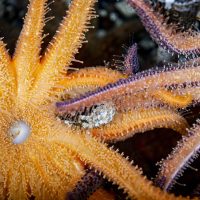
Until now, no one knew what caused the sea star wasting disease which wiped out populations along the West Coast starting in 2013. But an international research effort including scientists from the University of Washington has finally revealed the cause: a strain of the bacterium Vibrio pectenicida.
Read more
A new story in the Seattle Times shows just how alive the Seattle waterfront is, if you know where to look. From baby salmon to bull kelp, the renovations at the waterfront include a seawall where the public can look down at the fish-friendly seawall. The UW Wetland Ecosystem Team has been instrumental in this work, with continued monitoring of the site.
Read more
We’re living in a digital age, where the ability to find information (or even at times misinformation) is instant wherever you are in the world. This comes at the same time we’re at a critical juncture for climate research, where studying our changing world is more important now than ever. For SAFS graduate student, Amirah Casey, she knows that communication is vital to make impactful changes, and so applying for the PNW Climate Ambassadors program was a no-brainer.
Read more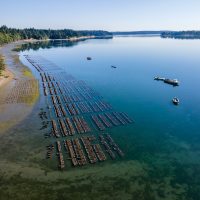
Seeking to understand the impacts of environmental stressors on Pacific oysters is the driving force behind a years-long research project involving scientists from the University of Washington and NOAA, and in collaboration with the oyster industry. Critical in aquaculture, Pacific oysters are the dominant oyster species grown on the US West Coast, with the industry in the Pacific Northwest alone valued at over $270 million a year.
Read more
A new video features how genetic metabarcoding is being used by the UW Whale And Dolphin Ecology Lab, led by Amy Van Cise, to understand and conserve southern resident killer whales in the Salish Sea.
Read more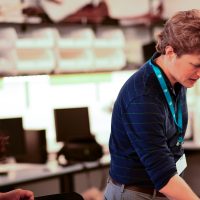
Jose Guzmán wanted to help bridge the gaps that undergraduates faced in participating in research, and that graduate students faced in mentoring. And so, the IBIS program was born.
Read more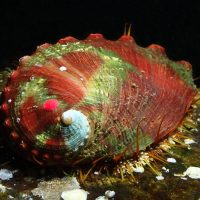
A new study, led by recently-graduated doctoral student Eileen Bates and principal investigator Jacqueline Padilla-Gamiño, and funded by Washington Sea Grant, found climate change stressors negatively impact pinto abalone during their larval stage.
Read more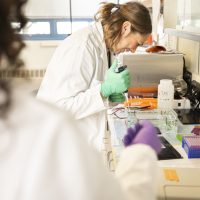
Working with Assistant Professor Amy Van Cise in the Whale and Dolphin Ecology Lab, Arial Brewer (PhD, SAFS) and Mollie Ball (BS, Marine Biology) were preparing metabarcoding libraries to study marine mammals. This means barcoding DNA (or eDNA) in a manner that allows for the simultaneous identification of many taxa within the same sample.
Read more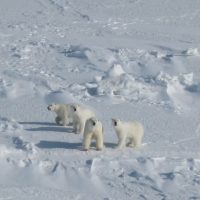
Each year, polar bears cycle through periods of intense feasting and prolonged fasting. For reproductive females, seasonal bulking is crucial – it fuels the winter denning and fasting period when they give birth. And when they emerge in spring, it gives biologists a chance to assess populations. A new study led by Sarah Teman explores whether A1c could reveal if a polar bear had recently denned, which – combined with the absence of cubs – may signal reproductive failure.
Read more