Filter Results
The King County Department of Natural Resources, Water and Land Resources Division seeks a seasonal Environmental Aide to assist with environmental monitoring and applied studies that support salmon recovery efforts. This position is in the Watershed and Ecological Assessment Team within the Science Section. The position will primarily support a study of juvenile salmon use of small streams along the Puget Sound shoreline and a study tagging and tracking juvenile salmon in the Green River.
Read moreThe Whale Museum’s Soundwatch Boater Education Program is recruiting for two positions this summer: a Vessel Operator/Educator and a summer intern. There are also unpaid volunteer opportunities.
Soundwatch is a research, education and monitoring program operated by The Whale Museum (TWM), a not-for-profit organization located in Friday Harbor on San Juan Island in Washington State. The Soundwatch program mission is to reduce vessel disturbance to marine wildlife, particularly the endangered Southern Resident killer whales, in the Salish Sea region of Washington State (USA) and British Columbia (Canada).
YMCA Camp Dudley in Naches, WA, is hiring naturalists for their spring season. The program serves fifth and sixth graders from Yakima Valley and surrounding areas, who come to Camp Dudley for one to four days to participate in hands-on science classes (with other disciplines woven in), outdoor recreation activities, and community building experiences. This is a great job for people who love natural and environmental sciences, being outdoors, and working with kids.
Read more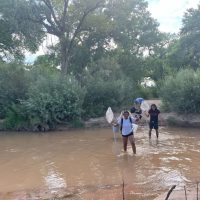
During the summer of 2025, members of the Wood Lab travelled to Albuquerque, New Mexico to work with Drs.Tom Turner and Sara Brant from University of New Mexico Museum of Southwestern Biology to quantify the change in parasite abundance and diversity in the Rio Grande over the past 72 years, a period stretching from 1938 to 2010.
Read more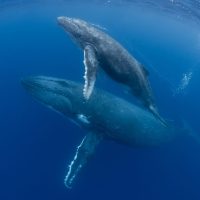
Long baleen whale mothers are more likely to have female calves than males, according to a new study led by the University of Washington. The findings, published by UW QERM student Zoe Rand and Professors Trevor Branch and Sarah Converse, contradict a popular evolutionary theory postulating that strong mammals benefit more from birthing males.
Read more
Normally I spend much of this “From the Director” celebrating the various successes, innovations, and discoveries by our School’s talented faculty, students and staff. This time, I also want to acknowledge the difficult circumstances we face. Like many of our peer institutions, SAFS and the UW are facing serious challenges: a state budget deficit, shifts in federal spending priorities, and rising personnel costs. These realities have created a budgetary “perfect storm.”
Read more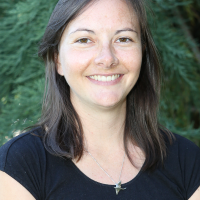
We welcome Andrea Burton to Marine Biology and the School of Aquatic and Fishery Sciences (SAFS), our newest faculty member. Andrea starts this month as an Assistant Teaching Professor. As a specialist in climate change biology, using molecular and ecological approaches to examine adaptive response to changing conditions, Andrea joins us from UCLA where she was a lecturer.
Read more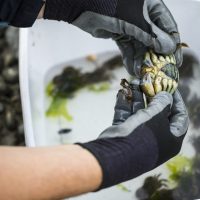
For almost a decade, the Washington Sea Grant Crab Team has been surveilling the advance of the invasive European green crab. In 2015, the team was formed to engage citizen scientists in a search for the first signs of an invasion into Puget Sound, with the first documented trap of a green crab taking place a year later in August 2016. They have now been found in more than 30 trapping sites. A new story in Salish Sea Currents features tracking efforts tracking efforts and research into the invasive crab.
Read more
Fullbright Scholar, Science contributor, freshwater biologist. These are some of the ways to describe Aashna Sharma, who is currently working with Dr. Julian Olden at SAFS as part of her two-year postdoctoral fellowship. From the foothills of the Himalayas in India, Aashna was recently inspired by the Past as Prologue feature in Science that highlights how different scientists from around the world are shaped by their family and background, and submitted a piece herself.
Read more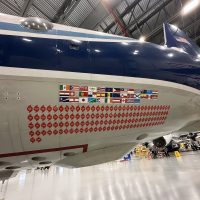
Last year, we spoke with SAFS undergrad, Michael Han, about receiving the NOAA Hollings Scholarship and where this would take him over the next year. This summer, Michael has split his time between NOAA’s HQ in Silver Spring, Maryland and NOAA’s Aircraft Operations Center (AOC) in Lakeland, Florida. His internship has been focused on NOAA’s Hurricane Hunters, aircraft which fly into the world’s worst weather to collect data which assists forecasters in making accurate predictions during hurricanes, and helps hurricane researchers achieve a better understanding of storm processes.
Read more