Filter Results

10 years ago, the UN declared 11 February as the International Day of Women and Girls in Science. On this 10th anniversary at the University of Washington, we’re celebrating our women in aquatic and marine science: women who are leaders in their fields, women who are aspiring to be the next generation of fisheries scientists and marine biologists, women who are uplifting and supporting other women in science.
Read more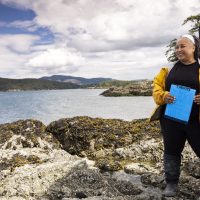
Interdisciplinary. Providing mentorship. Community-focused. These are just some of the terms that come to mind for Chris when she describes what it means to be a Black scientist. “When we think about being a non-majority community in STEM – and in this instance Black in STEM – we are tasked with a three-pronged responsibility because this is a lived experience for so many of us: being inherently interdisciplinary, mentor others, focus on your community”. Chris Mantegna is currently a graduate student at SAFS, after earning her bachelor’s degree in UW Marine Biology in 2021.
Read moreThe Xerxes Society for Invertebrate Conservation is hiring an Endangered Species Conservation Biologist. Reporting to the Xerces Society’s Endangered Species Program Freshwater Mussel Lead (Portland, OR office) and working in collaboration with partner agencies and organizations, the Endangered Species Conservation Biologist will focus on a variety of projects related to aquatic invertebrates, especially freshwater mussel, research, conservation, and advocacy. The Endangered Species Conservation Biologist will conduct substantial fieldwork involving snorkeling and wading in rivers and streams, requiring frequent but seasonal overnight and remote travel, with the majority of fieldwork from May-September each year.
Read more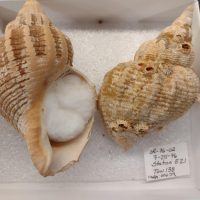
Walk along any beach, and you’re likely to find snail shells dotting the sand. In the Bering Sea, more than 200 species of sea snails exist. They’re an important source of prey for fish and walruses, playing a vital part in the Bering Sea food web. Working with a 50-year-old shell collection sourced from NOAA trawls from the mid-late 1970s, Jasper Nevis is looking at community structure in Bering Sea snails in collaboration with the Burke Museum Malacology Collection.
Read more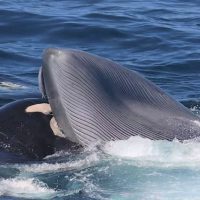
Killer whales are the only natural predator of baleen whales. More solitary than toothed whales, baleen whales face predatory attacks from killer whales, especially mother and calf pairs. When attacked, some species fight back, while others choose flight. But whale species also produce loud underwater songs…what stops killer whales from homing in on their calls and attacking them? New acoustic research by Trevor Branch sheds light on why.
Read more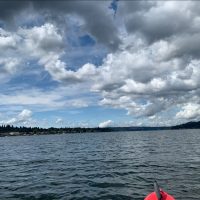
You may think aquatic and fishery science is all about fish, whales and oceans, but Iris Haley’s research is demonstrating that essentially anything to do with water is related to this field of study. What is Iris, a SAFS undergrad, investigating? The link between lake visitation and its relationship with heatwaves using cellphone data!
Read more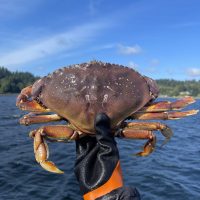
A collaborative network of agency and tribal scientists and resource managers, university faculty and students, and community volunteers are diligently working together to unlock the secrets of the Dungeness crab’s life cycle in the Salish Sea. The Pacific Northwest Crab Research Group (PCRG) is leading this unprecedented effort, generating vital data and fostering robust relationships to ensure the long-term sustainability of this ecologically, economically and culturally-important species.
Read more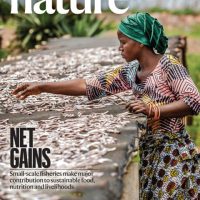
Small-scale fisheries play a significant but overlooked role in global fisheries production and are key to addressing hunger and malnutrition while supporting livelihoods around the world, according to research featured in Nature in Jan. 2025. The study was published by an international team of scientists, including Professor Chris Anderson from the UW SAFS.
Read moreNOAA Ocean Exploration is excited to announce that the application for the 2025 Explorer-in-Training program is now open!
This year, the Explorer-in-Training program will feature two paid internship options: (a) 10-week, summertime opportunities and (b) 2-4 week expedition-based opportunities. The 10-week internships provide students an opportunity to develop their skills and knowledge through long-term projects supported by mentors in NOAA Ocean Exploration and partner organizations.
Applications are invited for a full-time Postdoctoral Research Scholar appointment to be held at the Department of Fisheries, Wildlife, and Conservation Sciences, Oregon State University
Read more