Filter Results
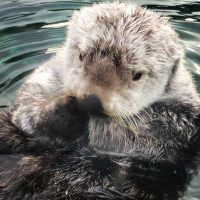
Due to hunting, sea otters were extirpated from most of their former range, including all of Washington state. In 1969 and 1970 a small group of 59 sea otters from Amchitka Island, Alaska, were reintroduced to the outer coast of Washington state, where they have since flourished to more than 2000 individuals. As their numbers have increased, they have expanded along the coast, resulting in a patchwork of locations containing sea otters that have been present in each location for differing lengths of time and at a range of densities.
Read more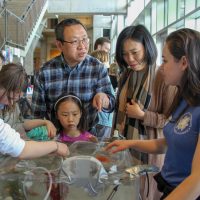
When: May 4th, 2019 from 1-4 pm
Locations: Fishery Sciences Building (FSH), 1122 Boat Street, Seattle, WA 98105;
Ocean Sciences Building (OSB), 1492 NE Boat St, Seattle, WA 98105
Cost: FREE!
Come join us for a free and family-friendly afternoon of hands-on learning at Our Watery World, the second annual aquatic science open house at the UW to celebrate science and research that relates to water.
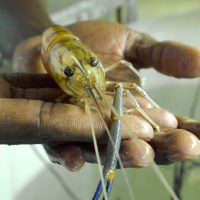
In rural communities across the tropics, a parasitic disease called schistosomiasis that is carried by freshwater snails currently infects more than 220 million people, rivaling malaria in its prevalence. Capable of residing in an infected human for more than 30 years, the Schistosoma parasite can cause debilitating and often-fatal health complications, including liver failure, bladder cancer, and an increased risk of AIDS. An estimated 280,000 people in Africa alone die each year from the disease. Despite 50 years of medical intervention and the availability of a relatively inexpensive and effective drug, the disease has stubbornly resisted eradication efforts, largely due to the ease with which the parasite reinfects its human hosts.
Read more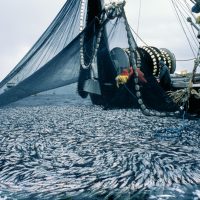
The Ocean Modeling Forum (OMF) is a University of Washington program run through the School of Aquatic and Fishery Sciences that aims to bring together interdisciplinary scientists, modeling experts, decision makers, and other people invested in ocean resources. The OMF helps managers frame questions, understand the strengths and limitations of different models, and learn how to incorporate models in their work.
Read more
I grew up in southern California, but spent summer vacations in the Pacific Northwest. These trips convinced me that there were more desirable places to live than the urban–suburban sprawl of Los Angeles and Orange counties. I always loved fishing and science and was intrigued by what influenced the behaviour and productivity of trout—melding my interests into a career in fish biology seemed natural.
Read more
The ink was drying on my PhD as Jan and I loaded three small kids into a VW van for the trip north to Seattle and our new life. Dean Doug Chapman had called me 7 months earlier to express regrets that I didn’t get the invert fishery faculty job, but said my interview went well. Two weeks later, he called again to ask if I still wanted it, choice #1 had backed out.
Read more
My career in fisheries started after I finished my degree in Ecology in Brazil (State University of Sao Paulo, UNESP) and decided to change my research field from myrmecology to fisheries. Although working on ant ecology under the great Harold G. Fowler sparked my scientific curiosity and brought me joy, I soon realized that very few people in the world ate ants… Also, as an undergraduate, the quantitative ecology classes of Miguel Petrere captivated my interest.
Read more
I first visited SAFS in February 2000. With a Fulbright scholarship in my pocket, I was “shopping” PhD programs in fisheries stock assessment. I felt instant chemistry with SAFS. The new building had just been inaugurated, and the atmosphere was so friendly. A stroll around the beautiful UW campus was the first of many that I would come to enjoy. There was also the U-district, where brilliant minds from the four corners of the world come to share their experiences.
Read more
Even as a kid growing up in the eastern Washington desert, I had a fascination with water. I tell my friends that I was the first kid to fall in the mud puddle in the spring and the last to crawl out in the fall. Maybe it traces back to grade school in Annapolis where my Dad taught at the Naval Academy and I spent a lot of time along the Chesapeake Bay.
Read more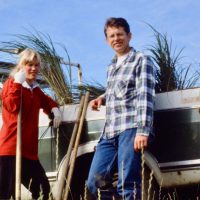
I joined SAFS (then called the College of Fisheries) in summer 1974 as a fisheries biologist after completing my MA degree research at California State University, Long Beach. I was accepted into the PhD program in 1976, under Ken Chew. Ken had a project that involved understanding the effects of the five sewage discharges on the shallow water biota in central Puget Sound, and he needed someone to work on the seaweeds.
Read more