Filter Results
June 29, 1927–March 17, 2021
Thanks to Dick’s family and many students, colleagues, and friends for their contributions to this memoriam. Some content was adapted from an obituary published by Dignity Memorial https://www.dignitymemorial.com/obituaries/snohomish-wa/richard-whitney-10114346.
On 17 March 2021, Richard (Dick) Whitney, SAFS professor emeritus, passed away at the age of 93.
Read more
It is now late summer, and the dog days seem to be behind us—even the blackberries seem to be fading away. We are starting to get ready for another academic year, with a new cohort of undergraduate and graduate students and, of course, new and ongoing challenges associated with the COVID-19 pandemic.
Read more
16 April 1949– December 24, 2020
Thanks to Glenn’s many students, colleagues, and friends for their contributions to this memoriam. Some content was adapted from an article published in the February 2021 issue of Marine Mammal Science
On 24 December 2020, Glenn VanBlaricom, SAFS professor emeritus, passed away at the age of 71 following a long battle with thyroid cancer.
Read more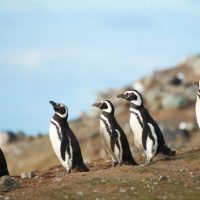
Forage fish, like anchovies and sardines, are a dietary staple for seabirds. Around the globe, seabirds have adapted in order to cope with natural changes in the availability of these prey fish. However, increased fishing pressure on these forage species is thought to be altering this predator-prey relationship in an adverse way for seabird populations. The natural ability of seabirds to cope with changes in prey abundance makes it difficult for researchers to determine if they are responding to natural processes or to human fishing practices.
Read more
The region north of Greenland and the Canadian Arctic has been termed the Last Ice Area, where sea ice will remain the longest in summertime, providing a refuge for ice-dependent Arctic species. But conditions last summer show that parts of this region are already experiencing less summer ice due to climate change.
Read more
PhD candidate Natalie Mastick Jensen will be featured in an upcoming documentary premiering on June 25th on Apple TV+. As a research assistant, Natalie worked with Dr. Michelle Fournet for two weeks in southeast Alaska on a humpback whale playback study. The team worked to determine the social function of a certain non-song vocalization called the whup call.
Read more
A new paper by Katherine Pearson Maslenikov published in Ichthyology and Herpetology outlines the history of the UW Fish Collection and its long partnership with NOAA and other state and federal agencies.
Read more
The Link to Lake project, of which SAFS Ph.D. student Ashley Townes serves on the steering committee, recently secured $1 million in improvements to Rainier Beach’s Be’er Sheva Park to address waterfront inequities.
Read more
Mark your calendars for the SAFS Spring Graduation celebration: Friday, June 11th, 2021 from 3:30-5:30 pm PT
Read more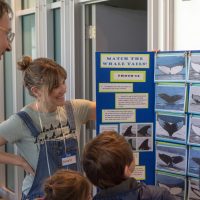
Join the SAFS community for the SEAS 2021 Open House, May 19–22! This year’s free virtual Open House offers four days of family-friendly activities to safely celebrate science and research that relates to water.
Read more