Filter Results
The Snohomish County Public Utility District (PUD) is recruiting for two paid internship positions this summer. Applications are due on Friday, February 13. For more information and to apply, visit the individual job postings, linked below.
Summer Student Intern – Natural Resources Field
This summer position with Snohomish PUD’s Natural Resources team will support terrestrial and aquatic resource management at Snohomish PUD’s hydroelectric projects by monitoring forest canopy gaps, snags, and other habitat features, as well as conducting noxious weed surveys.
The U.S. Geological Survey’s Western Fisheries Research Center (WFRC) is working on a collaborative project with the Yakama Indian Nation that seeks to control the effects of non-native fish species (especially small mouth bass) on juvenile salmon, while collecting information about how predation might impact outmigration success. As part of a small mouth bass removal program, the SCA member will work on the Yakima River near Prosser, Washington as part of a team operating electrofishing gear for the capture and removal of non-native fish species.
Read moreThe National Marine Sanctuary Foundation, a 501(c)3 non-profit organization that is a leading voice for U.S. protected waters, is seeking a Junior Survey Technician, a position responsible for supporting at-sea oceanographic research operations in Olympic Coast National Marine Sanctuary as well as manage equipment and data related to oceanographic monitoring.
The Junior Survey Technician will support work that is part of the scope of a cooperative agreement between the National Marine Sanctuary Foundation and NOAA Office of National Marine Sanctuaries.
The WET lab is looking to hire 2 part-time undergrad research assistants for the spring field season (March-June), mainly to help out with a project monitoring juvenile salmon on the Duwamish River. No previous field experience needed!
Title: Undergraduate Research Assistant (2 positions available)
Compensation: $22.65/hr (hourly, part time)
Expected work hours: 8–24 hrs/month (3 days/month, 4–8 hrs/day). Note: early morning availability is a must – work hours could be 5am–1pm
Our Team:
The Wetland Ecosystem Team (WET lab) in SAFS conducts collaborative research on coastal wetlands and nearshore ecosystems in the Puget Sound area.
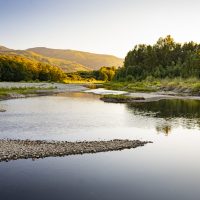
Most rivers in the United States flow with little real protection, even though they supply drinking water, support wildlife, and shape our landscapes. New research co-led by Julian Olden finds that nearly two-thirds of U.S. rivers lack safeguards for water quality, habitat, and biodiversity. The findings show how much of the nation’s river network remains exposed and how much work still lies ahead.
Read moreThe Johnson Laboratory (Ecology & Evolutionary Biology) is seeking highly motivated aquatic field technicians to join an intensive, hands-on research program in the Bay Area of California. This position is designed for individuals who thrive in demanding field environments that love both field and laboratory work. Technicians will work together in a teams of 5–6 field staff while conducting rigorous aquatic sampling in freshwater pond ecosystems.
Read morePoint Defiance Zoo & Aquarium has an open application for a paid dive internship directed at newer divers/early career folks. To learn more and apply by the February 1 deadline, visit the official internship posting.
Point Defiance Zoo & Aquarium is the only combined zoo and aquarium in the Pacific Northwest. The 29-acre zoological park was established in 1905, and attracts over 800,000 visitors a year.
Through funding provided by the Oceankind Foundation, the Marine Landscape Ecology Lab supports the paid participation of one undergraduate intern each summer. The intern will support projects focused on the mapping of sea lion communities in California, and rocky intertidal communities in British Columbia, California, and Washington. A $6,000 stipend is provided as part of the student’s participation.
Requirements:
Be a University of Washington undergraduate student enrolled in a STEM (Science, Technology, Engineering and Mathematics) degree program.
Read moreThe Department of Ecology is hiring a Water Quality Permit Administrator (Environmental Specialist 1) within the Water Quality Program. To learn more and apply, please visit the official job posting.
Location:
Headquarters Office in Lacey, WA.
Upon hire, you must live within a commutable distance from the duty station.
Schedule:
This position is eligible for telework and flexible schedule options.
A minimum of three days per week is required in the office.
The Shannon Point Marine Center’s (SPMC) Research Experiences for Undergraduates program will support guided, independent research on the part of eight undergraduate students in 2026. Participants will spend nine weeks at SPMC conducting original research with a faculty adviser, participating in professional development activities, and engaging in outreach events. Students work with faculty mentors to complete supervised research and develop written and oral reports a the conclusion of the program.
Read more