Filter Results
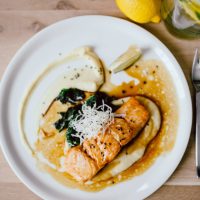
Whether it is food or clothing, people care about where their products come from. Seafood is no different. Governments, retailers, and customers care about the source of the seafood on their plate as it is an important factor for evaluating the product’s sustainability and whether it aligns with their values. In a new perspective piece published in npj Ocean Sustainability, Jessica Gephart worked with a team of researchers to look into a specific case of seafood traceability in relation to US imports after sanctions on Russia.
Read moreThe Roberts Lab in the School of Aquatic and Fishery Sciences is seeking a motivated undergraduate student to assist with general lab maintenance, logistical support, and shellfish husbandry. Responsibilities will include maintaining a clean and organized lab environment, preparing and restocking supplies, assisting with routine equipment maintenance, and supporting ongoing research projects by caring for live shellfish, monitoring water quality, and ensuring proper system functioning.
Read more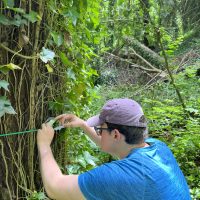
It’s not just fish being studied at SAFS. Undergraduates get to learn about a huge range of species, from teeny tiny parasites and insects, to seabirds and the largest mammals on Earth. And it’s not just animals either. It’s all the habitats in which these animals live and depend on. For Stevan Pekich, his capstone project is exploring how urbanization and insect health are affecting riparian-obligate bird species in our local King County.
Read moreSeattle City Light is recruiting for an internship based at the Native Salmonid Conservation Facility (NSCF) in Usk, WA, in Pend Oreille County. It provides a hands-on learning experience focused on conservation-based native fishery restoration, supporting Boundary Dam FERC licensing obligations. The 2025 Hatchery Internship offers students an opportunity to develop entry-level biological data collection and animal husbandry skills within an environmental restoration context.
Read more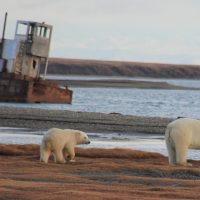
Climate change threatens the health of polar bears across the Arctic. A study published in Conservation Physiology on March 5, introduces a new approach to measuring the health of polar bear populations, drawing inspiration from a well-known concept in human medicine: allostatic load. The lead author of the study is SAFS PhD student, Sarah Teman, working with UW Professor, Kristin Laidre, and scientists from USGS and Fish and Wildlife Health Consulting.
Read more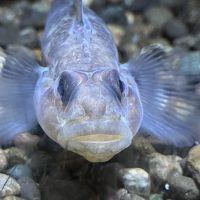
What inspires our undergraduates to pursue a degree all about aquatic and fishery science? We caught up with Eli Nettlebeck—a junior at SAFS, a transfer student from Seattle Central College, and someone who loves fish—to find out why.
Read more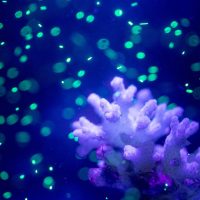
Microplastics are everywhere. From the clothes you wear to the food you eat, to even your toothbrush, microplastics are difficult to avoid. And these tiny pieces of plastic have big consequences for both humans and the wider environment. UW Daily speaks to Jacqueline Padilla-Gamiño about her research into microplastics and marine organisms such as corals and anemones.
Read moreThe Center for Limnology at the University of Wisconsin—Madison is seeking four motivated and independent undergraduate students to join the fishing technology research team based out of Trout Lake Station.
Improvements in angler technology over time have the potential to increase angler success and fish catchability. Recent research testing the influences of angler technology on fish catch rates has been mixed, with some studies showing a positive influence of technology use and others with no effect.
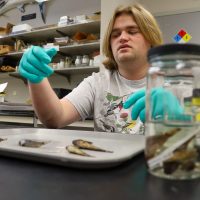
Scanning through the rows and rows of preserved fish housed in the UW Fish Collection, it’s easy to get lost trying to figure out what each fish is, especially to the untrained eye. Fish identification is a necessary step when preserving specimens from the wild, which deliver key insights for researchers delving into the untold secrets of fish. For SAFS undergraduate Liam Aston, his capstone research involves looking at Cottus specimens in the Fish Collection, a group of freshwater sculpin found throughout the Northern Hemisphere.
Read moreThe Brosi Lab in the UW Biology Department is seeking an intern for Spring Quarter to assist with outreach efforts and the development of future outreach positions for the MeadoWatch program. We are looking for a student with a strong interest in community outreach to assist with developing materials supporting the expansion of our program, with the goal of getting more people involved in research and the outdoors, specifically those from populations who have historically had less opportunities to be in these spaces.
Read more