Filter Results
Fishing can substantially alter when fish migrate and when they breed, says a new review in Fish and Fisheries by SAFS student Michael Tillotson and faculty member Thomas Quinn. For example, fishing closures may increase fishing on late breeders, resulting in a greater proportion of early breeders in the population. Such changes can exacerbate the effects of climate-driven changes in the timing of migration and breeding.
Read moreScience magazine reports that faculty members Luke Tournabene and Adam Summers have a new mission in life: CT scanning all the vertebrates in the world, with fish and frogs well on their way. All the scans will be made freely available for researchers to have access to unprecedented 3-D images of the skeletal structure of 80% of all vertebrates.
A CT scan of a pirañha (Serrasalmus medinai), picture by Adam Summers and Matthew Kolman
Read moreFaculty member Julian Olden and others in ChronicleVitae urge scientists to see their careers as “an adventure on a long and winding path” that involves interacting with nature and making their science relevant. Instead of focusing on publishing small units of science, we should be embracing the spirit of discovery and striving for societal impact.
Read moreCitizen scientists in a program run by Julia Parrish provided data about two mass die-offs of seabirds on the outer coast of Washington state, which is the largest mass death ever to be definitively ascribed to harmful algal blooms. The new report was authored by SAFS postdoc Timothy Jones, with other SAFS contributions from Julia Parrish, André Punt, and Jennifer Lang, as part of the Coastal Observation and Seabird Survey Team (COASST; a citizen science program at the University of Washington).
Read morePreview of the 2016 Eastern Bering Sea Pollock Stock Assessment
Please see flier for information about the upcoming Preview of the 2016 Eastern Bering Sea Pollock Stock Assessment at SAFS.
Nov. 9, 2016, 4:00 – 5:30 PM; Reception to follow.
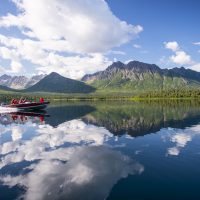
Each summer, aquatic and fishery sciences professor Daniel Schindler and his students travel to Bristol Bay, Alaska to observe one of the most valuable fisheries in the world.
Read the story here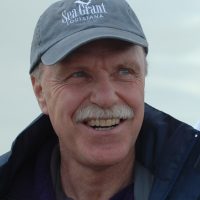
Ray Hilborn, UW professor of aquatic and fishery sciences, will receive the 2016 International Fisheries Science Prize this week at the World Fisheries Congress in Busan, South Korea.
Read more at UW Today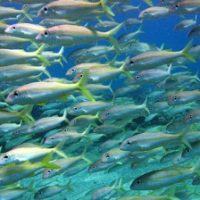
“If reforms were implemented today, three-quarters of exploited fisheries worldwide could reach population goals within 10 years, and 98 percent by mid-century,” according to a report in PNAS co-authored by SAFS Professors Ray Hilborn, Trevor Branch, and Research Scientist Mike Melnychuk.
See full story by Michelle Ma in UW Today.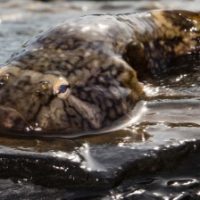
SAFS professor Adam Summers, based at Friday Harbor Labs, collaborated with two English majors, Ian Stevens and Zack Bivins, to create an award-winning video about the clingfish – as chosen by 6th through 8th graders around the world, through the Ocean 180 Video Challenge.
.