Filter Results
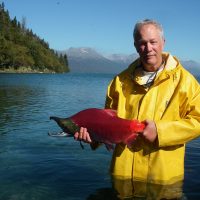
In 2005, University of Washington School of Aquatics and Fishery Science professor Thomas Quinn released his book, The Behavior and Ecology of Pacific Salmon and Trout, to fill what he saw to be a void between the highly technical and detailed scientific literature and engaging coffee table books with beautiful photos — but little scientific content. Discussing the basic behavior and ecology of these incredible fishes, his writing conveyed the importance of salmon and trout to both the people and the natural world along the Pacific Rim.
Read more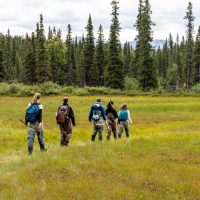
Students fly 1,777 miles northwest of Seattle and spend a month with the Alaska Salmon Program at their field stations on the banks of Lake Aleknagik and Lake Nerka. Part of the larger Wood River system, these lakes, their creeks, and the surrounding wilderness serve as a “living laboratory” where students are immersed in one of the most valuable salmon fisheries on the planet.
Read moreMany fisheries around the world are not formally assessed, and for these fisheries it is hard to know whether they are overfished or not, and how much to fish to ensure that fishing remains sustainable. A suite of models has been developed that can be applied to fisheries where the only data available are time series of catches, but there is no information on trends in actual fish numbers.
Read more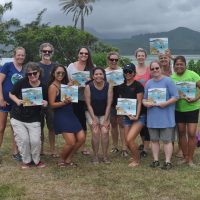
“I wanted to leave something behind to share with these kids. That’s why for me, it was important to have it be translated into Tahitian.”
— UW School of Aquatic and Fishery Sciences’ Jackie Padilla-Gamiño
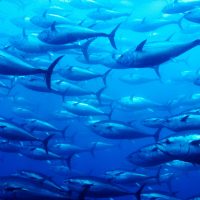
Marine fisheries management aims to keep fish populations at sustainable levels while producing seafood. Fisheries that are assessed to be overfished must have their populations rebuilt to sustainable levels by reducing catches to lower levels. Usually the assessment of status relies on a complicated fisheries stock assessment model, sort of like a weather forecast for fisheries, that estimates the level of sustainable catch that can be taken from a fisheries population.
Read more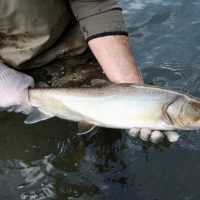
Bull trout use a bewildering array of strategies to aid in their survival, from remaining in streams their whole lives, like rainbow trout, to spending part of their lives in the ocean before returning to streams to spawn, just as salmon do. Bull trout are present in only one of two neighboring rivers in the Olympic peninsula, Washington state, and in this one (the Elwha River), two large dams were removed during the period 2011-2014.
Read moreFor decades, fish researchers believed in Gerking’s “restricted movement paradigm”, thinking that river-dwelling fish largely stay in the same place and rarely venture forth. But in recent decades, ecologists have harnessed the power of both advanced tags and improved genetic methods to directly estimate movement distances and average home ranges of different fish species. Now, a new paper has gathered in one place data from more than 200 direct movement studies and more than 200 genetic studies to estimate how far river fish more on average.
Read more
When I went to college, my plan was to become a veterinarian. But then I went to the Shoals Marine Laboratory off the coast of Maine between my junior and senior years and my life turned in another direction. I loved the power of the ocean and was curious about the interrelationships of the animals and plants (or should I say fish and phytoplankton).
Read more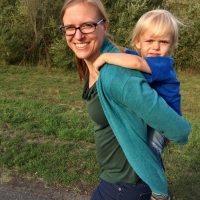
“Why fish?” asked my Grandma, perplexed, as I told her I was starting a PhD program at UW. Apparently studying trees was completely normal (my brother was in forestry), but fish were too… slimy. Admittedly, I’d never been a fish lover, but I thought that the field of fisheries would let me apply my interests in oceanography and ecology to problems that matter very directly for humans – and that this would keep me motivated through grad school and beyond.
Read more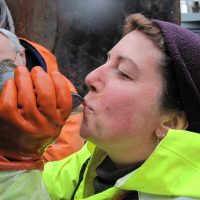
The story about how I arrived at SAFS takes some twists and turns, but all of them were interesting and eventually led me to the University of Washington and SAFS before I started working at the Alaska Fisheries Science Center (AFSC).
I grew up in landlocked southern Germany in a very small town. I spent much of my childhood at a local farmers’ stable and in the neighboring woods, and I knew from an early age that I wanted to be a biologist.