Filter Results

Pam and Greg came to SAFS via two very different routes that converged on crabs. Pam grew up in Nevada and was a biology major at the University of Nevada Reno, with little idea of what she wanted to study in graduate school. Then, in an upper-level invertebrate biology class, the instructor had live marine invertebrates flown in. She was hooked and started looking for schools with marine programs.
Read more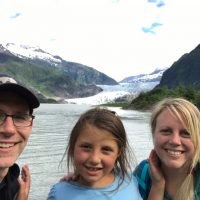
I must go down to the seas again, for the call of the running tide
Is a wild call and a clear call that may not be denied;
And all I ask is a windy day with the white clouds flying,
And the flung spray and the blown spume, and the sea-gulls crying.
An excerpt from Sea Fever, a poem by John Masefield.
Evi, the first child of Swiss emigrants, was born and raised in Alaska, where fish and fishing were a way of life. She spent her summers commercial fishing for salmon with her family on the Susitna Flats (between the Susitna and Little Susitna Rivers), just west of Anchorage, using set gillnets, living in a cabin precariously perched atop stilts above the intertidal flats, which served as her family’s “field station.” Evi also worked in a salmon roe cannery, where she was particularly adept at layering the top “show row” of eggs.
Read more
Dawn and Brandon met at a Hilborn lab meeting when Brandon was reporting on a recent trip to the Serengeti. With a shared excitement for travel and unplanned adventure, they have spent the last ten years working and traveling together. After Dawn earned her MS degree with QERM, they moved from Seattle to Santa Barbara, where they worked with Chris Costello and Steve Gaines at the Sustainable Fisheries Group at UCSB.
Read more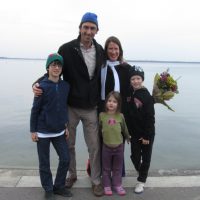
Sarah and Andrew first met in Loveday Conquest’s QSCI 482 class. Statistics isn’t necessarily known for romance, so it’s not surprising that it wasn’t until the Fisheries Interdiscipinary Network of Students (FINS) transition meeting a couple of months later (Andrew was headed out, Sarah had just signed up) that they realized they liked each other. From that point on, Andy looked forward to class even more than usual (it was an excellent class) and thinks that his continued interest in statistics is a result.
Read more
“How do a Japanese guy and a French girl end up in the US?” This might have been the question we were asked the most when we lived in Seattle. We actually met in grad school in France. Although Kotaro is Japanese, he grew up in Africa going to French schools. He then moved to France for higher education and that’s where we met.
Read more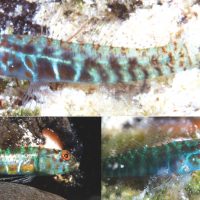
Oceanic discoveries of new species continue at pace, with a new species added to the 34,000 previously described: the Polkadot Dwarfgoby (Eviota maculosa). The new species occurs in New Guinea, Indonesia, and Pohnpei in the Federated States of Micronesia, and is distinguished by unique fin patterns, distinctive genetics, and multiple rows of trident-like teeth in both the upper and lower jaws.
Read moreBristol Bay in Alaska hosts one of the world’s largest salmon fisheries every year, targeting bountiful runs of sockeye salmon. The fishery is managed using escapement goals that ensure sufficient salmon escape the fishery every year to spawn upriver. Recently, increased escapement goals were proposed for Bristol Bay that were intended to allow more salmon to spawn upriver, because of calculations suggesting this would lead to larger average catches.
Read more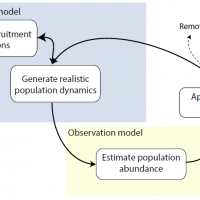
Forage fish are small, densely schooling fish at the heart of many marine ecosystems. These fish, including sardines, anchovies, menhaden and their kin, consume tremendous quantities of plankton and also provide abundant food for top marine predators such as larger fish and whales. A key characteristic of these species is their dramatic fluctuation in numbers between high “bonanza” periods and low “collapse” periods, which make them hard to manage.
Read more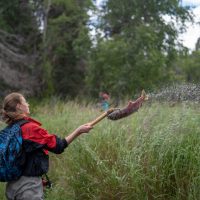
Tom Quinn and colleagues have found that two decades of carcasses — nearly 600,000 pounds of fish — tossed to the left side of Hansen Creek did have a noticeable effect: White spruce trees on that side of the stream grew faster than their counterparts on the other side.
Read more