Filter Results

At the age of five, I was bitten with marine biology when a crab pinched my toe. Ever since, I have sought justice by eating as many crabs as possible.
Read more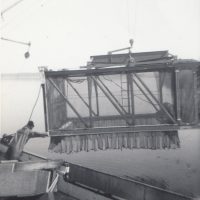
My association with the School of Aquatic and Fishery Sciences and its predecessor, the College of Fisheries, has been 56 years in the making and has been at the center of just about every one of my major life-making decisions; I will be forever indebted to SAFS and its faculty, past and present.
Read more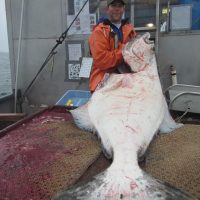
I grew up fishing in the Rocky Mountains of Canada and off the coast of central California. It was when I was a dockworker and unloading fishing boats in Port San Luis, California that I realized I wanted to become more involved with the assessment and management of fisheries.
Read more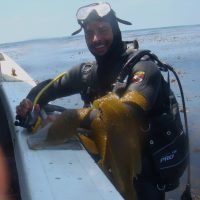
SAFS is not just about academic training, but also about working with fishers, managers, policy-makers and industry to truly understand how fisheries science works in the real world. I will be forever grateful for that opportunity.
Read more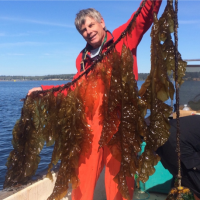
SAFS has been a big part of my career working in shellfish and I treasure my time spent there, especially during the many years following my degree, collaborating with SAFS faculty and students. Having the pleasure of working with graduate students is a true joy in life, and I suppose I am most gratified just helping to expose them to the wonderful world of shellfish.
Read more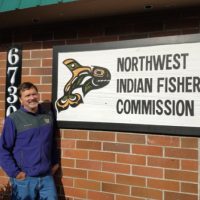
Growing up in Ohio next to a river, I developed an interest in fish at an early age, and—thanks to television, National Geographic, and Jacques Cousteau—a fascination with the ocean.
Read more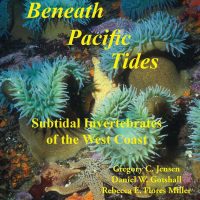
This winter, Greg Jensen is releasing his follow-up book, Beneath Pacific Tides: Subtidal Invertebrates of the West Coast. Like the charismatic crustaceans featured in his debut publication, the colorful and bizarre invertebrates found along the Pacific Coast are explored in this new user-friendly guide, featuring Jensen’s underwater photography.
Read more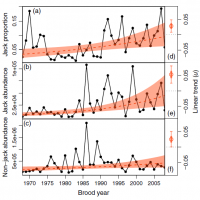
Male Pacific salmon usually compete aggressively with each other to gain access to spawning females, and are most successful when they are old and large. But a few males come back from the ocean early and small, and with less noticeable male traits. These small males are called “jacks” and cannot win battles of aggression but instead compete by sneaking into the spawning arena and fertilizing eggs on the sly.
Read moreGenetic engineering is widely used in plants and animals to promote rapid growth and create resistance to common diseases. One genetic modification that has achieved prominence in fish is the insertion of growth hormone transgenes, which produce dramatically larger sizes and rapid growth rates. However, there is concern that escaped genetically modified fish might breed with their wild counterparts, passing on the genetic modification and changing the wild population.
Read moreLong-term life-support in space requires renewable sources of oxygen and food that can survive and thrive in a closed system without any external inputs. In a closed-system experiment, three species of green algae were added to a nutrient mixture together with a grazer species, the common water flea (Daphnia magna). Despite calculations of the appropriate level of carbon and nitrogen needed in the mixture, the pH in the closed system rapidly increased to become highly alkaline (pH 10-11), so much so that most forms of life would not be able to survive.
Read more